
Why Is Geothermal Heat Pump So Expensive?
When homeowners begin exploring high-efficiency climate control solutions, they inevitably encounter a critical question: Why is a geothermal heat pump so expensive? At Flamingo Heat Pump, we hear this question daily. The initial price tag of a geothermal heat pump can be daunting—often two to three times higher than that of a conventional air source heat pump or traditional HVAC system. Yet, for those who make the investment, the long-term value, comfort, and savings are unparalleled.
To understand the cost, we must look beneath the surface—literally. A geothermal heat pump, also known as a ground-source heat pump, is a sophisticated system that leverages the stable temperatures of the earth to provide heating, cooling, and often hot water for your home. Unlike an air source heat pump, which exchanges heat with the outside air, a geothermal heat pump relies on a buried loop system to transfer thermal energy with the ground. This fundamental difference in design and installation is the primary driver of its higher upfront cost.
In this in-depth guide, we will dissect every component that contributes to the price of a geothermal heat pump, compare it with the more affordable air source heat pump, explore the long-term financial benefits, and explain why, for many homeowners, a geothermal heat pump is not merely an expense but a superior long-term investment in their household heat pump system. By the end, you will have a clear understanding of where your money goes and whether a geothermal heat pump is the right choice for your home.
The Anatomy of a Geothermal Heat Pump System
To appreciate why a geothermal heat pump commands a premium price, it helps to understand what the system comprises. A complete geothermal heat pump installation includes three primary components, each contributing significantly to the total cost.
1. The Ground Loop (Heat Exchanger)
The ground loop is the most distinctive and costly element of a geothermal heat pump system. This network of high-density polyethylene pipes is buried underground and circulates a water-based solution (or refrigerant in direct-exchange systems) to absorb or dissipate heat. The loop configuration depends on site conditions:
Horizontal Loops: Installed in trenches four to six feet deep. This is the most cost-effective loop type but requires a substantial land area—typically 1,200 to 1,800 square feet per ton of heating/cooling capacity.
Vertical Loops: Drilled boreholes 150 to 400 feet deep. Vertical loops are ideal for smaller lots or properties with rocky soil. They are more expensive due to drilling costs but minimize landscape disruption.
Pond/Lake Loops: Submerged in a body of water with sufficient depth and volume. This option can be the most affordable if a suitable water source exists on the property.
Open Loops: Use groundwater from a well as the exchange fluid. While often lower in upfront cost, open-loop systems face stricter regulatory requirements and potential maintenance issues related to water quality.
The materials alone—pipe, fittings, grout (for vertical boreholes), and antifreeze solution—represent a significant expense. However, the bulk of the cost lies in the excavation or drilling labor and the specialized equipment required.
2. The Heat Pump Unit
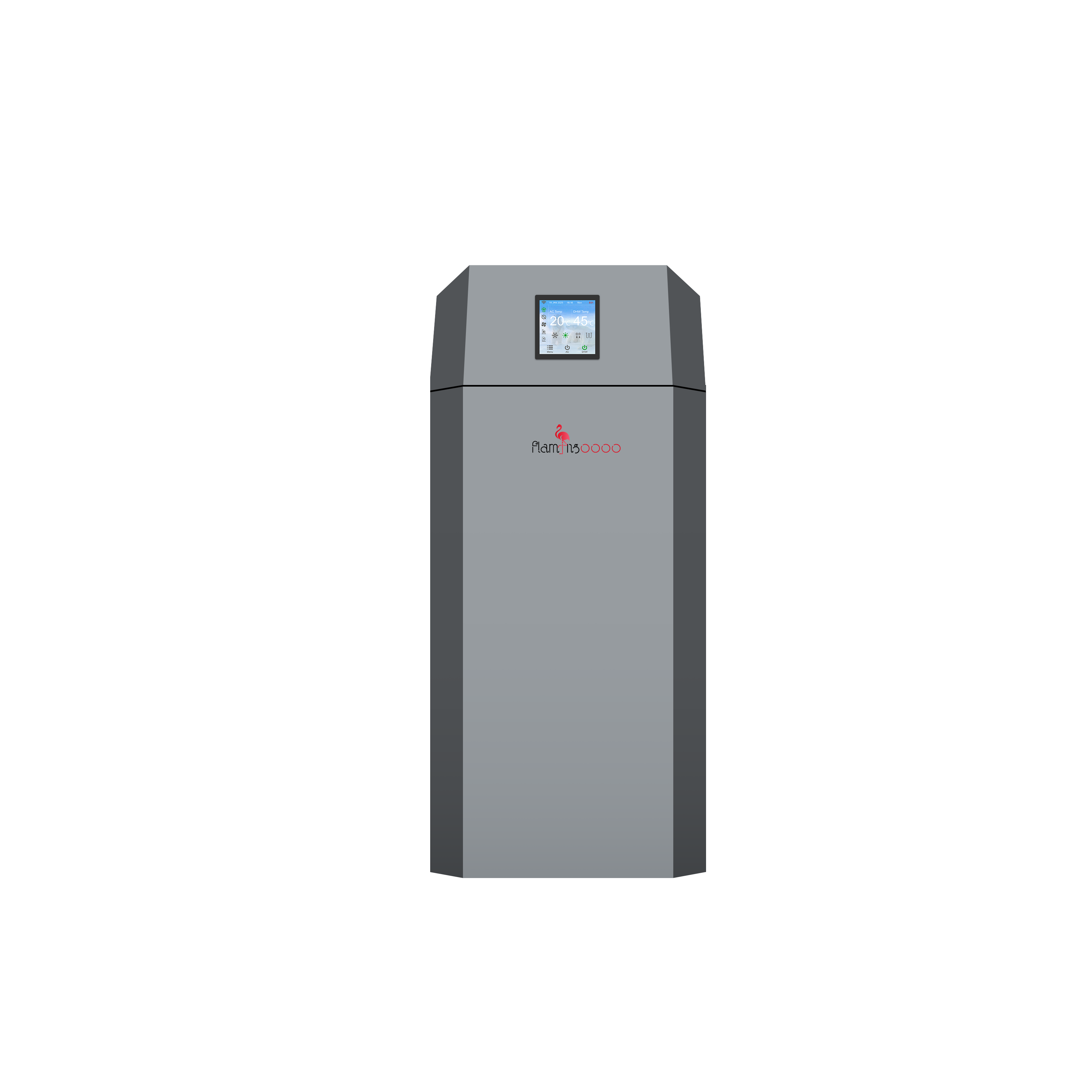
The indoor geothermal heat pump unit itself is more robust than a standard air source heat pump. It contains a compressor, heat exchanger, refrigerant circuit, and controls designed to operate with the ground loop’s stable temperatures. Because the geothermal heat pump unit is protected indoors, it typically features higher-grade components and a longer lifespan. The unit alone can cost between $3,000 and $7,000 depending on capacity and efficiency ratings.
3. Indoor Distribution System
Like any household heat pump, a geothermal heat pump needs a way to deliver conditioned air throughout the home. This may involve connecting to existing ductwork, installing new ducts, or pairing with a hydronic radiant floor system. Ductwork modifications or additions add to the total project cost.
Breaking Down the Costs: Geothermal vs. Air Source
To answer the question “Why is a geothermal heat pump so expensive?” it is helpful to compare it directly with the alternative—an air source heat pump.
| Cost Component | Air Source Heat Pump | Geothermal Heat Pump |
|---|---|---|
| Equipment | $2,000–$5,000 (outdoor unit + indoor air handler) | $3,000–$7,000 (indoor unit only; loop separate) |
| Installation Labor | $1,500–$4,000 (mounting, refrigerant lines, electrical) | $10,000–$25,000+ (excavation, drilling, loop installation) |
| Site Work | Minimal (concrete pad, minor grading) | Extensive (trenching, drilling, backfilling, restoration) |
| Permitting & Engineering | Standard mechanical permits | Often requires drilling permits, thermal conductivity testing, engineered loop design |
| Total Installed Cost | $4,000–$12,000 | $15,000–$35,000+ |
As the table illustrates, the disparity is driven almost entirely by the ground loop installation. While the air source heat pump relies on a simple outdoor unit that can be installed in a day, the geothermal heat pump requires heavy earthwork that can take several days and involves specialized contractors.
The Hidden Value: Why the Higher Price Pays Off
Despite the higher upfront cost, a geothermal heat pump offers compelling financial and operational advantages that, for many homeowners, justify the investment.
1. Unmatched Energy Efficiency
A geothermal heat pump operates with a coefficient of performance (COP) ranging from 4.0 to 5.5, meaning it delivers four to five units of heating or cooling for every unit of electricity consumed. By contrast, even the most advanced air source heat pump achieves COP values of 2.5 to 4.0, with efficiency declining as outdoor temperatures drop. Because ground temperatures remain stable year-round, a geothermal heat pump maintains peak efficiency even during extreme weather events—when an air source heat pump may require backup resistance heat.
Over the course of a year, this translates into energy savings of 30% to 50% compared to an air source heat pump, and 50% to 70% compared to conventional fossil-fuel systems.
2. Extraordinary Longevity
A well-installed geothermal heat pump offers one of the longest service lives of any household heat pump system. The indoor heat pump unit typically lasts 20 to 25 years—substantially longer than the 12-to-15-year lifespan of an air source heat pump. More impressively, the buried ground loop carries a lifespan of 50 years or more, often with manufacturer warranties of 25 to 50 years. For homeowners planning to remain in their property for decades, the geothermal heat pump effectively eliminates the need for a second system replacement.
3. Quiet, Unobtrusive Operation
Because a geothermal heat pump has no outdoor condenser unit, there is no fan noise disturbing your yard or patio. The indoor unit operates with minimal sound, comparable to a modern refrigerator. This silent operation is a significant quality-of-life advantage that many homeowners come to appreciate.
4. Minimal Visual Impact
Once installed, a geothermal heat pump leaves no visible equipment on your property. There is no large metal box adjacent to your home, no need to screen equipment with landscaping, and no risk of outdoor unit damage from weather, falling branches, or vandalism.
5. Consistent Performance in Any Climate
Unlike an air source heat pump, whose output and efficiency vary with outdoor air temperature, a geothermal heat pump delivers consistent performance whether it is 95°F or -10°F outside. This reliability is especially valuable in regions with harsh winters or hot summers, where an air source heat pump may struggle at temperature extremes.
6. Significant Tax Credits and Incentives
The federal government strongly encourages geothermal heat pump adoption through the Inflation Reduction Act’s Energy Efficient Home Improvement Credit. Unlike the $2,000 cap for air source heat pump systems, the credit for geothermal heat pump installations is 30% of the total project cost with no upper limit. A $30,000 geothermal heat pump installation thus qualifies for a $9,000 federal tax credit. Many states and utilities offer additional rebates, sometimes totaling $5,000 or more. After incentives, the net cost of a geothermal heat pump can approach that of a high-end air source heat pump, making the premium far more palatable.
Factors That Influence Geothermal Heat Pump Costs
Not all geothermal heat pump installations carry the same price tag. Several variables affect the final cost, and understanding them can help you identify opportunities to optimize your investment.
Property Size and Loop Configuration
The single biggest cost driver is the type of ground loop installed. Horizontal loops require large, open land with suitable soil conditions. If you have acreage and the soil is easy to excavate, horizontal loops represent the most cost-effective geothermal heat pump option. Conversely, if your property is small, heavily wooded, or has rocky terrain, vertical loops become necessary. Drilling can cost $15 to $30 per foot, and a typical residential system requires 150 to 300 feet of borehole per ton of capacity. For a 4-ton system, that equates to $9,000 to $18,000 in drilling costs alone.
Soil and Geological Conditions
The thermal conductivity of the soil affects how much loop length is required. Sandy, dry soils conduct heat poorly, necessitating longer loops or additional boreholes. Moist, clay-rich soils offer better conductivity, reducing loop requirements. A professional contractor will conduct a thermal conductivity test to size the loop accurately—an essential step that adds some upfront cost but prevents underperformance.
Existing Ductwork
If your home already has ductwork in good condition, integrating a geothermal heat pump is straightforward. If not, you may need to install new ductwork or consider a ductless household heat pump configuration using multiple indoor units. Ductwork installation can add $5,000 to $10,000 or more to the project.
Accessibility and Site Restoration
Installing a geothermal heat pump involves heavy machinery. If your property has challenging access—narrow driveways, steep slopes, or sensitive landscaping—the cost may increase. After loop installation, site restoration (reseeding, regrading, repairing driveways) adds to the final bill.
Contractor Expertise
Geothermal heat pump installation requires specialized knowledge. Contractors must understand loop design, thermal conductivity testing, hydronic system balancing, and local permitting requirements. Choosing an experienced, certified contractor may come with a higher price, but it ensures the system performs as designed and avoids costly mistakes.
Payback Period: When Does Geothermal Become Worth It?
The higher upfront cost of a geothermal heat pump is offset by lower operating costs over time. The payback period—the time it takes for energy savings to equal the initial investment—varies based on local energy prices, the system being replaced, and available incentives.
Consider a typical scenario: a 2,500-square-foot home currently using propane for heating and conventional air conditioning for cooling. Annual energy costs might be $3,500. After switching to a high-efficiency air source heat pump, annual costs might drop to $1,800. With a geothermal heat pump, annual costs could fall to $1,000.
If the air source heat pump installation costs $10,000 and the geothermal heat pump costs $30,000 before incentives, the net difference is $20,000. However, after applying a 30% federal tax credit, the geothermal heat pump net cost becomes $21,000, while the air source heat pump net cost (after its $2,000 credit) is $8,000—a $13,000 difference.
With annual energy savings of $800 compared to the air source heat pump ($1,800 vs. $1,000), the payback period for the geothermal heat pump’s premium is approximately 16 years. But if we compare directly to the original propane system, the geothermal heat pump saves $2,500 per year, yielding a payback of just 8 to 10 years—and after that, pure savings for decades.
For homeowners planning to stay in their home for 15 years or more, the geothermal heat pump consistently outperforms the air source heat pump in total lifetime cost.
Myths and Misconceptions About Geothermal Heat Pump Costs
There are several misconceptions that make the geothermal heat pump seem more expensive than it truly is.
Myth 1: “Geothermal is only for new construction.”
While it is easiest to install a geothermal heat pump during new construction, retrofits are common and successful. Vertical loops minimize yard disruption, and many homeowners find the installation process manageable with an experienced contractor.
Myth 2: “The payback period is too long.”
When factoring in federal tax credits (which are uncapped for geothermal heat pump systems), state rebates, and rising energy costs, the effective payback period has shortened considerably. Many homeowners achieve payback in 7 to 10 years—well within their expected tenure in the home.
Myth 3: “Geothermal heat pumps require huge amounts of land.”
Vertical loops eliminate the need for large land area. Even homes on quarter-acre lots can accommodate a geothermal heat pump with vertical boreholes placed in a small footprint.
Myth 4: “Maintenance is expensive.”
Geothermal heat pump systems have fewer moving parts exposed to weather than air source heat pump systems. Routine maintenance is limited to changing air filters, checking fluid levels, and annual inspections—comparable to or less than conventional systems.
Why Flamingo Heat Pump Recommends Geothermal for the Right Home
At Flamingo Heat Pump, we believe in matching the right household heat pump to the right home and homeowner. We do not recommend a geothermal heat pump for every situation. However, for homeowners who prioritize long-term savings, energy independence, and superior comfort—and who have suitable property conditions—a geothermal heat pump is the best investment available.
Our approach includes:
Comprehensive Site Assessment: We evaluate your property, conduct thermal conductivity testing, and design a loop system tailored to your specific conditions.
Transparent Pricing: We provide detailed quotes that break down every cost component, from excavation to equipment to restoration.
Incentive Maximization: We guide you through federal, state, and utility incentives to reduce your net investment as much as possible.
Quality Installation: Our certified installers ensure your geothermal heat pump system operates at peak efficiency from day one.
Conclusion: Is Geothermal Worth the Price?
So, why is a geothermal heat pump so expensive? The answer lies in the ground loop—a buried infrastructure that delivers unparalleled efficiency, longevity, and comfort. Unlike an air source heat pump, which trades upfront affordability for higher long-term operating costs and a shorter lifespan, a geothermal heat pump asks for a larger initial investment in exchange for decades of reliable, low-cost performance.
When you factor in the uncapped federal tax credit, state and utility incentives, and the rising cost of traditional fuels, the premium for a geothermal heat pump becomes far more manageable. For many homeowners, the question is not whether they can afford a geothermal heat pump, but whether they can afford not to invest in one.
If you are considering upgrading your household heat pump system and want to explore whether a geothermal heat pump is right for your home, contact Flamingo Heat Pump today. We will help you navigate the costs, incentives, and long-term savings to make an informed decision that brings you comfort and peace of mind for years to come.
