
What is EVI in Heat Pumps?
– A Deep Dive into Flamingo’s Next‑Generation Low‑Temperature Heating Technology
1. EVI Technology Explained: From Principle to Benefits
1.1 What Exactly is EVI?
EVI stands for Enhanced Vapor Injection – often called “vapour injection” or “economiser injection”. It is a core technology that optimises the compression process inside the compressor to significantly improve the low‑temperature heating performance of a heat pump. In simple terms, EVI does for a heat pump what a turbocharger does for a car engine – it dramatically boosts performance under extreme conditions through a “second‑stage boost”. More vividly, a conventional heat pump is like a single‑stage thruster, while an EVI heat pump gains a two‑stage boost capability.
From a technical perspective, in low‑temperature environments (e.g., below -5°C), conventional heat pumps suffer from low evaporation pressure, increased specific volume of suction gas, and a rapid rise in discharge temperature, leading to severe heating capacity degradation and even high‑temperature protection shutdown. The breakthrough of EVI technology lies in adding an intermediate injection port on the compressor, injecting medium‑pressure refrigerant vapour into the compression chamber (or the intermediate pocket of a scroll), upgrading the conventional single‑stage compression to a quasi‑two‑stage process. This design increases refrigerant mass flow by about 20–30%, reduces the compression ratio by about 30–40%, and thus dramatically improves low‑temperature heating capacity and operational stability.
The workflow is as follows: low‑temperature, low‑pressure gaseous refrigerant from the evaporator first enters the first compression stage of the compressor, where its pressure is raised to an intermediate level. It then mixes with the medium‑pressure vapour from the economiser (sub‑cooled liquid flashed in the economiser) before entering the second compression stage and finally reaching the discharge state. Through this clever design, EVI both effectively suppresses excessive discharge temperature and substantially increases refrigerant mass flow, resulting in a qualitative leap in heating capacity and Coefficient of Performance (COP) under ultra‑low temperature conditions.
1.2 EVI vs. Conventional Heat Pumps: The Power of Data
To better appreciate the value of EVI technology, let’s look at a set of typical industry test data (based on a 10 HP commercial heat pump unit):
Heating Capacity: At -15°C ambient temperature, the heating capacity of a conventional fixed‑speed heat pump often drops to 60–70% of its nominal value, while an EVI inverter heat pump can maintain 80–90% – some optimised models even achieve near‑nominal output. The improvement in heating capacity can reach 40–45%.
COP Comparison: At -15°C, the COP of a conventional heat pump is typically only 1.8–2.2, consuming a large amount of electricity. By contrast, a high‑performance heat pump equipped with EVI can achieve a COP of 2.8–3.2, representing an energy efficiency improvement of more than 40% over conventional heat pumps. When combined with inverter adaptive control, the seasonal efficiency improvement can exceed 35%.
Minimum Operating Temperature: Conventional heat pumps generally struggle to work stably below -10°C to -15°C and require frequent activation of electric backup heaters. EVI heat pumps can operate reliably down to -25°C to -30°C, and some specially designed products can go as low as -40°C, completely eliminating or greatly reducing the use of electric backup heat.
1.3 “One Unit, Two Duties” – The Breakthrough of Bi‑Directional EVI
It is worth noting that EVI’s outstanding performance in heating does not mean any compromise in cooling. Bi‑direction EVI (also called dual‑stage injection or two‑stage enhancement) simultaneously improves both heating and cooling performance. By optimising the reversing valve control logic and economiser configuration, the heat pump’s cooling performance under high ambient temperatures is also enhanced. This means users get year‑round excellent comfort without seasonal trade‑offs – whether in severe cold or extreme heat, the system remains highly efficient and stable. For regions with four distinct seasons and very cold winters, this “all‑season” capability is particularly valuable.
2. Flamingo’s Technology Roadmap and EVI Product Matrix
As a globally oriented, innovation‑driven heat pump company, Flamingo has always made “stability and efficiency under extreme conditions” the core principle of its product development. The R&D team has accumulated more than a decade of engineering experience in compressor control algorithms, two‑phase flow heat transfer optimisation, and photovoltaic direct‑drive inverter coordination. To date, Flamingo has delivered tens of thousands of EVI heat pump systems across many countries and regions. Flamingo’s core product portfolio covers the EVI DC Inverter Commercial Heat Pump Series, the Ultra‑low Temperature CO₂ Heat Pump, and the PV Direct‑Drive Heat Pump series, meeting the needs of a wide range of applications from space heating in frigid zones to industrial high‑temperature steam.
2.1 Flamingo EVI DC Inverter Commercial Heat Pump Series – The Workhorse for Cold‑Climate Heating
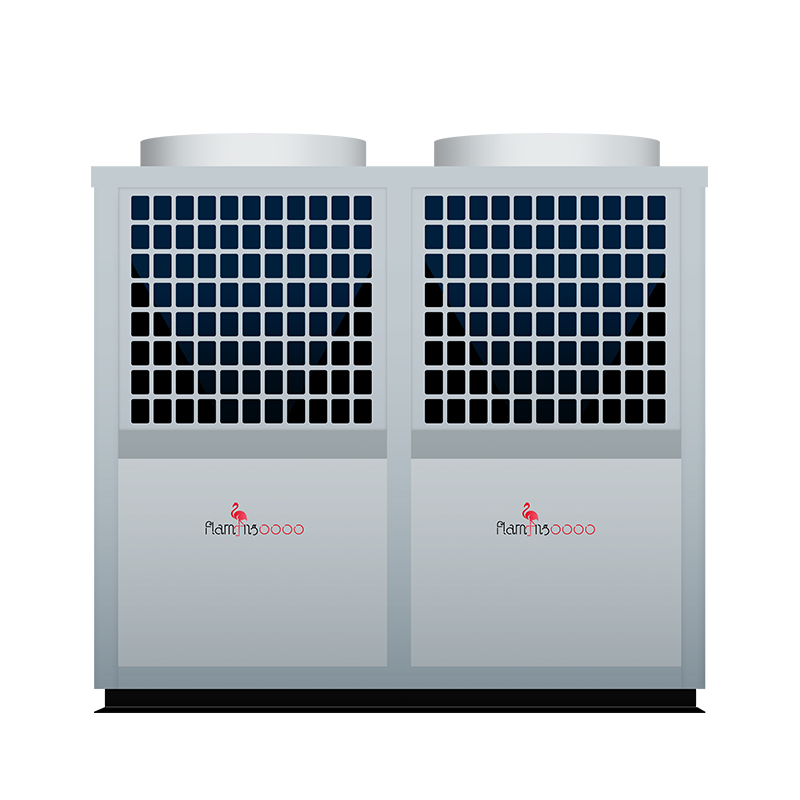
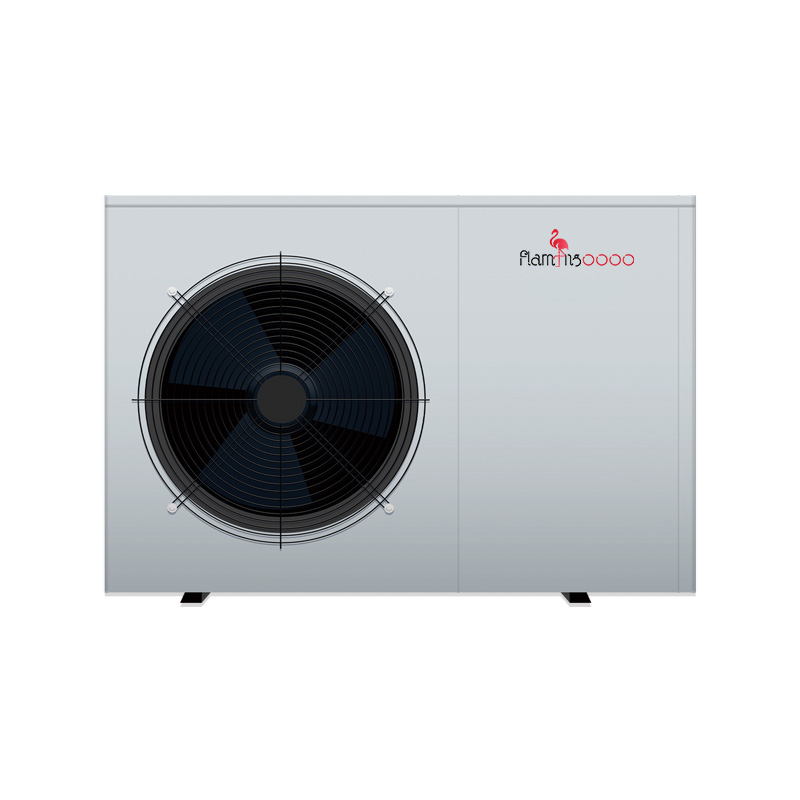
The Flamingo EVI DC Inverter Commercial Heat Pump Series is a high‑performance product line specifically designed for heating in cold regions. It covers a broad capacity range from 10 kW to 240 kW and supports modular parallel expansion of up to 16 units, with total heating capacity exceeding 3000 kW – fully meeting the heating demands of medium‑sized commercial buildings, schools, hospitals, hotels, and district heating projects. The series is equipped with leading brand compressors from Panasonic, Copeland (formerly Emerson), or Danfoss – all scroll compressors optimised for EVI. It uses either R32 (GWP=675, about 30% lower than R410A) or the well‑proven R410A refrigerant, offering flexibility to meet different market requirements regarding environmental regulations and reliability.
Ultra‑low Temperature Stability & Multi‑level Safety Protection
In terms of ultra‑low temperature performance, the Flamingo EVI commercial heat pump supports stable operation in a wide ambient range of -25°C to 43°C (standard version), with a cold‑climate option extending to -30°C. The system integrates multiple safety protections: water flow switch protection, freeze protection, high/low pressure protection, discharge temperature protection, overload protection, and phase sequence protection, ensuring long‑term reliability under harsh conditions. Notably, Flamingo’s proprietary intelligent defrost logic uses a combined judgement of ambient temperature, coil temperature, and pressure differential to accurately determine frost accumulation, enabling “defrost only when needed”. This avoids energy loss from unnecessary defrost cycles and improves defrost efficiency by about 25% compared to conventional timed defrost.
Inverter Control and Energy Efficiency
With Flamingo’s self‑developed inverter control strategy, the system dynamically adjusts compressor speed, electronic expansion valve opening, and injection quantity in real‑time (within seconds) based on ambient temperature, water inlet/outlet temperature, and actual load. This significantly improves the Integrated Part Load Value (IPLV) . In heating mode, the series achieves a claimed COP of up to 4.84 (based on EN 14511 test standards) – meaning that 1 kWh of electricity input delivers about 4.84 kWh of heat, an extremely high level of efficiency. In real‑world commercial applications – for example, a mid‑sized hotel chain in northern China that replaced its coal‑fired boiler with three Flamingo 60 kW EVI inverter commercial heat pumps – annual operating costs were reduced by approximately 42% , while CO₂ emissions were cut by about 85 tonnes per year. The payback period was less than three years.
Compared to conventional fixed‑speed units, the heating capacity degradation of the Flamingo EVI series at -15°C is limited to less than 15%, while ordinary fixed‑speed heat pumps often see degradation exceeding 35%. This “no‑drop‑off‑at‑low‑temperature” performance delivers tangible energy savings for both dealers and end users.
2.2 Flamingo Ultra‑low Temperature CO₂ Heat Pump – Extending EVI to Extreme Conditions
For ultra‑low temperature operation down to -40°C, the Flamingo Solar PV Direct‑Drive CO₂ Heat Pump (Turbo Series) pushes the boundaries of extreme‑environment heat pump technology. This system uses natural refrigerant CO₂ (ODP=0, GWP=1), which does not damage the ozone layer and has a global warming potential only one‑thousandth to one‑three‑thousandth that of traditional fluorocarbons. It is a green technology route highly recommended by the European F‑gas regulation and global environmental agreements.
The unit incorporates a specially optimised Panasonic CO₂ rotary compressor and deeply couples the EVI injection structure with a transcritical cycle. It can operate stably across an extremely wide temperature range from -40°C to 70°C . The maximum hot water outlet temperature reaches 90°C , and it can heat incoming water from 15°C to 90°C in just 2–3 minutes – far exceeding the 55°C limit of ordinary heat pumps. This perfectly covers not only space heating and domestic hot water in cold regions, but also industrial pre‑heating, high‑temperature steam demand, and other diverse applications. It is particularly suitable for polar research stations, high‑altitude agricultural greenhouses, remote military posts, spa heating, and chemical cleaning where high temperature and stability are critical.
AI Intelligent Control & System Efficiency
Combined with Flamingo’s AI intelligent control system, this ultra‑low temperature CO₂ heat pump can self‑learn and optimise based on weather forecasts, electricity price signals, and usage patterns. It dynamically adjusts compressor speed, electronic expansion valve opening, and injection quantity, achieving a year‑round comprehensive energy efficiency improvement of more than 30% compared to conventional fixed‑speed heating solutions (such as electric boilers or diesel boilers). At the same time, the unit’s four‑layer noise reduction technology keeps operating noise as low as 58 dB(A) at 1 metre distance, meeting night‑time noise standards for residential areas.
2.3 Flamingo PV Direct‑Drive Heat Pumps – Empowering EVI with Green Energy
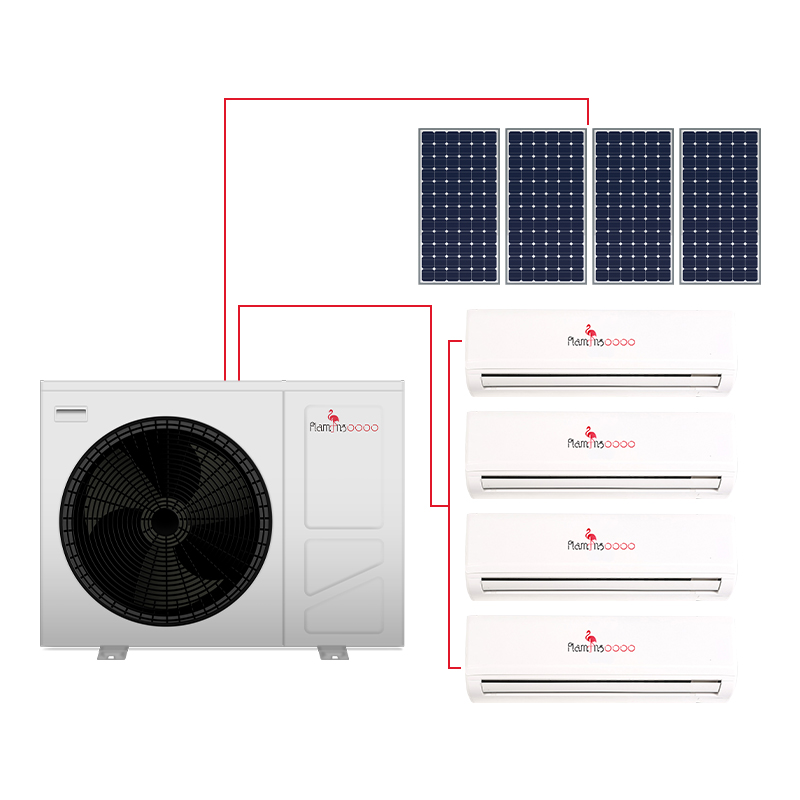
Beyond improving low‑temperature heating performance, Flamingo launched several PV direct‑drive heat pump products in 2025 and 2026, deeply integrating EVI technology with photovoltaic direct‑drive technology. This is a highly forward‑looking direction – conventional PV generation requires inversion, grid connection, and then drawing power to drive the heat pump, incurring multiple conversion losses. Flamingo’s PV direct‑drive solution allows the DC output of the PV modules to directly enter the heat pump’s inverter drive module, reducing AC/DC conversion steps and improving overall system efficiency by 8–12% .
Through long‑term R&D investment in PV‑heat pump synergy, the Flamingo team has successfully solved several key technical challenges: DC bus voltage fluctuation suppression, MPPT (Maximum Power Point Tracking) matching with compressor power demand, and energy storage buffering interfaces. This has resulted in a low‑carbon, multi‑energy complementary system solution.
Product Line Coverage & Patented Technologies
Flamingo’s PV direct‑drive heat pump product line includes the 6P and 30P PV direct‑drive air‑source heat pumps, the PV direct‑drive CO₂ heat pump, and the PV direct‑drive water‑source / ground‑source heat pump series. Among these, the water‑source / ground‑source heat pump – which benefits from a relatively constant underground temperature – is about 30% more efficient than an air‑source heat pump. When combined with PV direct‑drive, the utilisation of renewable energy is further enhanced, and the total energy saving effect is at least 60% higher than that of a conventional air‑source heat pump. Flamingo holds multiple invention patents and utility model patents in these products, covering core areas such as “PV DC direct‑drive inverter control circuit” and “multi‑source complementary thermal management system”, further consolidating its technology leadership in PV‑heat pump integration.
3. Application Case Studies & Techno‑economic Analysis
3.1 Commercial Heating Retrofit in Nordic Countries
Location: A multi‑purpose sports centre in Gävle, Sweden (building area approx. 5,000 m²). The original heating system was an oil boiler + electric backup, with high annual energy costs and significant carbon emissions. Before the 2024 winter season, the project installed four Flamingo 60 kW EVI DC inverter commercial heat pumps operating in parallel, replacing the oil boiler. The outdoor design temperature was -22°C, with an extreme minimum of -28°C. Monitoring data over a full heating season showed:
Average COP of 3.05 (including auxiliary power consumption)
Indoor temperature stable at 21±1°C
69% energy saving compared to the original oil boiler system
Annual CO₂ reduction of approx. 210 tonnes
Payback period (excluding carbon credits) of 4.2 years
User feedback: “Even on the coldest days, the Flamingo heat pumps never once activated the electric backup heater – the water outlet temperature remained stable above 45°C. Our old oil boiler consumed nearly 40,000 litres of oil per year; now our electricity cost is less than half of that.”
3.2 Distributed Rural Heating in Northeast China
Location: A border village in Jilin Province, China – 80 single‑storey houses, each about 80 m², with no district heating network. Average winter temperature around -15°C, extreme low -32°C. Previously, each house used a coal‑fired stove with a primitive water radiator, causing serious pollution and unstable indoor temperatures. In 2025, the project installed one Flamingo EVI inverter commercial heat pump (20 kW) per house, each with a 150 L buffer tank. Operating results: at -25°C ambient temperature, the heat pump still delivered 55°C water, keeping indoor temperature stable above 20°C. The average electricity cost for the entire heating season (about 180 days) was approximately 2,100 RMB per household – about 35% lower than the cost of coal. At the same time, the system completely eliminated the PM2.5 emissions and carbon monoxide poisoning risks associated with burning coal. Local villagers commented: “We used to have to break up coal and clean out ashes every morning. Now we just press a button on the remote and it’s warm – clean and worry‑free.”
3.3 Industrial High‑Temperature Heat Replacement
A food processing company needed 80–85°C hot water for cleaning and CIP (Clean‑in‑Place) processes. It originally used a natural gas steam boiler, with an annual gas cost of about 1.6 million RMB. At the end of 2025, the plant was retrofitted with a Flamingo ultra‑low temperature CO₂ heat pump system (two 150 kW units), combined with a 200 kW PV direct‑drive module and battery storage. Even in winter with ambient temperatures ranging from -20°C to 5°C, the system reliably delivered 85°C hot water, with a comprehensive COP of 2.2–2.5. Taking into account the PV power generation offset, the annual operating cost dropped to below 700,000 RMB – a reduction of more than 55% – while carbon emissions were cut by about 280 tonnes/year. The project received a “Clean Production Demonstration Project” subsidy from the local environmental protection agency, becoming a benchmark for low‑carbon transition in the food industry.
4. Industry Trends & Policy Background – Why EVI is Becoming a “Must‑Have” for Heat Pumps
4.1 Explosive Growth of the Global Heat Pump Market
According to the International Energy Agency (IEA) “The Future of Heat Pumps (2025 Update)”, global heat pump sales grew by 13% year‑on‑year in 2024, with China, Northern Europe and North America being the fastest‑growing regions. Under the EU’s REPowerEU plan, heat pumps are identified as a key technology to end dependence on fossil fuels, with a target of installing 50 million heat pumps in Europe by 2030. In China, driven by the “coal‑to‑electricity” programme, clean heating in northern regions, and the “Dual Carbon” strategy, the market penetration of low‑temperature heat pumps is increasing year by year.
However, in cold and very cold regions (such as Northeast China, northern North China, Nordic countries, and most of Canada), conventional heat pumps suffer from “low‑temperature failure”. EVI technology is the mature, industrialised solution to this problem. According to BSRIA market data, the global EVI heat pump market reached approximately USD 7.8 billion in 2025, with a compound annual growth rate (CAGR) of over 21%, and is expected to exceed USD 20 billion by 2030.
4.2 Environmental Refrigerant Regulations Driving Technology Upgrades
With the global implementation of the Kigali Amendment to the Montreal Protocol, high‑GWP refrigerants (such as R410A, GWP=2088) are being phased out. R32 (GWP=675), R290 (propane, GWP=3) and the natural refrigerant CO₂ (GWP=1) are becoming mainstream alternatives. However, low‑GWP refrigerants often present challenges such as higher discharge temperatures, greater flammability or higher operating pressures – placing new demands on compressor and system design. EVI technology reduces the compression ratio and lowers discharge temperature, thereby mitigating the application challenges of low‑GWP refrigerants under low‑temperature conditions. It has become an important technical enabler for the environmental transition.
Flamingo was among the first to apply EVI technology at scale in both R32 and CO₂ heat pumps. This not only guarantees excellent low‑temperature performance but also helps customers meet future, stricter environmental regulations in advance, reducing life‑cycle compliance risks.
5. Flamingo’s Technology Moat and R&D Strength
5.1 Proprietary Inverter Control Algorithm
Flamingo’s EVI technology is not simply assembling purchased compressors – the company has deep mastery of the core control algorithms. The R&D team independently developed an adaptive injection control strategy based on six sensing variables: compressor discharge temperature, intermediate pressure, suction superheat, and others. Using fuzzy‑PID plus feed‑forward compensation, the algorithm adjusts the electronic expansion valve opening and injection quantity in real time to achieve the optimal injection effect under any operating condition. This algorithm, validated by more than 10,000 hours of bench calibration and field verification, enables Flamingo heat pumps to be 8–12% more energy efficient than the industry average at part‑load conditions.
5.2 Rigorous Reliability Validation System
Every Flamingo EVI product must pass the “Three 8s” test before launch: 800 hours of continuous operation at -30°C without failure, 800 defrost cycle endurance tests at -20°C / 90% relative humidity, and more than 80,000 compressor start‑stop cycles. In addition, Flamingo operates an in‑house -40°C enthalpy difference laboratory that can fully simulate extreme environments such as polar regions, high plateaus, and coastal salt‑fog conditions, ensuring reliable operation worldwide.
5.3 Global Service Network and Local Support
Flamingo has established regional technical service centres in Germany, Poland, Sweden, China, and Canada, offering full‑process support from system selection and design, through installation and commissioning, to after‑sales maintenance. For large commercial projects, Flamingo also provides a remote monitoring cloud platform that allows real‑time viewing of operating parameters, alerts, and energy efficiency reports for each unit. This enables predictive maintenance and greatly reduces the operational risk of unexpected breakdowns.
6. Future Outlook: From EVI to Next‑Generation Heat Pump Technologies
Although EVI technology has already significantly improved the low‑temperature performance of heat pumps, Flamingo is not stopping there. The company is actively investing in next‑generation technology directions:
Two‑stage compression + flash economiser: For extremely cold environments (below -40°C), single‑stage EVI still has limitations. Flamingo is developing a two‑stage compression heat pump that will extend the operating range down to -55°C , serving polar and high‑altitude applications.
Magnetic bearing (oil‑free) compressor heat pump: For large buildings and district energy stations, oil‑free magnetic bearing technology combined with EVI can achieve even higher efficiency and lower noise. Flamingo has already entered the prototype testing phase.
AI + digital twin O&M platform: An energy efficiency diagnostic model trained on operational big data can predict performance degradation trends 7 days in advance and automatically issue optimisation instructions, improving life‑cycle energy efficiency by an additional 5–10% .
PV‑storage‑direct‑drive integrated heat pump: Integrating PV, energy storage, DC fast charging and the heat pump into a single DC flexible energy hub for homes or parks. Flamingo is already conducting pilot projects with several new energy partners.
It is clear that EVI technology – as today’s core pillar for low‑temperature heat pumps – will continue to evolve over the next 5–10 years, deeply converging with trends such as intelligent control, decarbonisation, and energy interconnection. Flamingo will continue with its mission of “Fearless cold, extreme savings” , driving heat pump technology towards wider operating ranges, higher efficiency, and lower carbon emissions.
From the EVI inverter commercial heat pump that delivers efficient heating down to -25°C, to the CO₂ heat pump that operates stably at -40°C, and the deep integration of PV direct‑drive with heat pumps – Flamingo is providing users around the world with truly efficient, reliable and green heating solutions. Driven by the global energy transition and the “Dual Carbon” goals, Flamingo will continue to push the frontiers of heat pump technology, bringing low‑carbon heating into millions of homes and helping industrial heat users move away from the high‑carbon era.
If you are interested in Flamingo’s EVI series products or specific application solutions, please feel free to contact our team of technical experts. Together, we can explore the best practice paths for clean heating in cold regions.
