
Inverter Heat Pumps vs. Non-Inverter Heat Pumps: Industry Data Provides a Clear Answer
— Inverter Technology Has Become the Main Track of the Heat Pump Industry, While Fixed-Speed Products Face Accelerated Phase-Out
I. Core Principle: “On/Off” Control of Fixed-Speed vs. “Stepless Speed Regulation” of Inverter
The fundamental difference between inverter and fixed-speed heat pumps lies in the compressor’s operating mode.
Fixed-speed heat pumps use a constant-speed compressor: when the system reaches the set temperature, the compressor stops completely; when the temperature deviates from the set value, the compressor restarts. This operating mode resembles “on/off” control — the compressor always runs at full rated power, either fully on or fully off, unable to adjust output power according to actual load. In practice, due to temperature fluctuations triggering frequent start-stop cycles, the compressor of a fixed-speed heat pump can start and stop 10 to 20 times per day, significantly increasing mechanical wear, with an average service life of about 8–10 years.
Inverter heat pumps fundamentally change this logic. They incorporate an inverter controller and an inverter compressor, whose rotational speed can be continuously adjusted within a certain range (e.g., 1500–6000 rpm). The system uses sensors to monitor ambient temperature, water temperature and indoor load in real time, automatically adjusting the compressor speed — running at low speed under low load, at high speed under high load — without frequent starts and stops. An inverter heat pump starts at a low speed, adjusts speed according to the load during operation, operates at a noise level of about 35–40 dB (much lower than the 55–60 dB of fixed-speed units), drastically reduces the number of start-stop cycles (only a few times per month), keeps the compressor running more smoothly, and achieves a service life of 10–15 years — 20%–50% longer than fixed-speed units.
This fundamental difference in operating principle determines the full-spectrum divergence between the two in terms of energy efficiency, comfort, lifespan and long-term economics.
II. Energy Efficiency Comparison: Inverter Heat Pumps Lead in COP
The coefficient of performance (COP) is the core indicator for measuring heat pump performance, representing the ratio of heat output to electrical energy input. A higher COP means more heat “moved” per kilowatt-hour of electricity, resulting in lower operating costs.
A fixed-speed heat pump can achieve a high COP only under rated conditions. In actual use — especially with ambient temperature fluctuations or partial load conditions — frequent start-stop cycles consume additional electricity, causing the COP to drop significantly under partial load, resulting in lower annual comprehensive energy efficiency. Data show that the annual comprehensive energy efficiency of inverter heat pumps is 20%–30% higher than that of fixed-speed units. Other industry reports clearly indicate that inverter models can improve annual comprehensive energy efficiency by 20%–35% compared to fixed-speed products, with smaller start-stop impacts and longer life. Inverter heat pump units improve energy efficiency by 20% compared to fixed-speed units, reducing annual operating costs by more than 20%.
At the same time, the COP itself is continuously rising — fourth-generation products using R290 eco-friendly refrigerant already account for 63% of new product launches, with the average COP increasing from 3.2 in 2020 to 4.5. In terms of ultra-low temperature adaptability, the advantage of inverter technology is even more pronounced: taking an inverter air-source floor heating and air-conditioning unit as an example, at -15°C, the heating capacity of the inverter unit is about 60% higher than that of the fixed-speed unit; at -25°C, this gap increases to 80%. Some leading manufacturers have developed inverter two-stage enhanced injection (EVI) compressors that can achieve stable heating at -30°C with a COP above 2.2, successfully solving the industry’s core challenge of heating capacity attenuation under low-temperature conditions and expanding the application of heat pumps in cold regions.
III. Comfort and Precision Control: Inverter Achieves “Constant Temperature and Humidity”
From a user experience perspective, the gap between inverter and fixed-speed heat pumps is equally significant.
Because of its start-stop mechanism, a fixed-speed heat pump has a relatively large temperature fluctuation range, approximately ±1.5°C to ±2°C. During winter heating, room temperature may drop significantly from the set value before the compressor restarts, causing the body to feel alternating hot and cold. In hot-water supply scenarios, the water temperature fluctuation of fixed-speed units can even reach ±5 to 10°C, and when multiple people use the shower consecutively, sudden temperature changes can occur, severely affecting the user experience.
With their continuous compressor speed regulation capability, inverter heat pumps can control temperature fluctuations within ±0.5°C. In hot-water applications, precise regulation keeps water temperature fluctuation stable within ±1–2°C, achieving continuous constant-temperature water supply — particularly suitable for hotels, apartments and other scenarios with consecutive use by multiple people or high water demand.
For commercial applications such as hotels, hospitals and schools — where high comfort requirements are essential — the advantage of inverter heat pumps in temperature control precision is not merely a “nice-to-have” but a core element that directly impacts user experience and operational reputation.
IV. The Economics: 20% Higher Initial Investment, 40%+ Lower Long-Term Operating Costs
Cost is one of the most critical factors in commercial purchasing decisions. The economic comparison between inverter and fixed-speed heat pumps needs to consider four dimensions: initial cost, operating cost, maintenance cost, and total life-cycle cost.
Initial cost: Fixed-speed heat pumps have mature technology and lower component costs, with selling prices typically 15%–25% cheaper than similarly specified inverter products. For a 10kW residential unit, for example, a fixed-speed unit costs about RMB 8,000, while an inverter unit costs about RMB 10,000 — an initial difference of about RMB 2,000. In the commercial sector, due to larger system power and more auxiliary equipment, the absolute difference in initial investment is more significant, but the advantages of inverter products in power regulation range and system integration capability are also more prominent.
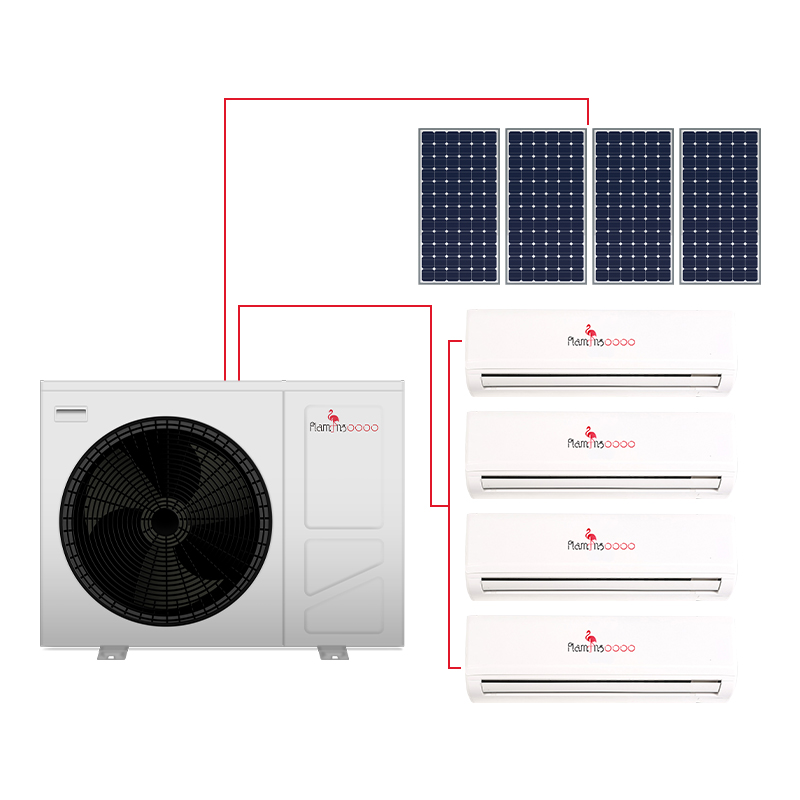
Operating cost: Taking a 100-square-meter residential heating application as an example, a fixed-speed heat pump costs about RMB 300 per month in winter electricity, while an inverter unit costs about RMB 200, saving about RMB 1,200 per year. At the commercial building level, using ultra-low temperature air-source heat pumps to replace traditional gas boilers in a 20,000-square-meter shopping mall can save over RMB 300,000 in energy costs during a single heating season. Flamingo’s latest DC Inverter commercial heat pump products achieve energy savings of more than 75% compared to traditional fixed-speed units, with a heating COP as high as 4.84, and when combined with PV direct drive technology under sufficient sunlight, grid dependency can be further reduced by 95%.
Payback period: In the residential heating case above, the extra RMB 2,000 initially spent on the inverter unit can be recovered in about 2 years through electricity bill savings, after which all savings are net profit. In commercial retrofit projects, the payback period for heat pump systems is typically 2–5 years, depending on energy prices, operating conditions and local subsidies. A dedicated financial analysis on the Flamingo website explicitly states that although inverter heat pumps have a higher initial cost, their 15-year total life-cycle cost is usually the lowest, making the long-term economic advantage very clear.
Maintenance and lifespan: The frequent start-stop cycles of fixed-speed heat pumps accelerate compressor mechanical wear, with an average lifespan of about 8–10 years. Inverter heat pumps, with drastically fewer start-stop cycles, achieve a lifespan of 10–15 years — 20%–50% longer. Fixed-speed units experience more start-stop impacts, leading to more significant wear on key components such as compressors and motors, resulting in higher maintenance frequency and cost. When the longer lifespan and lower maintenance costs are factored in, the life-cycle economic advantage of inverter heat pumps is further amplified.
V. Policy Drivers: Inverter Has Become a Technology Access Threshold
The shift in technology paths is never solely the result of market self-selection; policy direction also plays a key role.
In April 2025, six central government departments including the National Development and Reform Commission jointly issued the Action Plan for Promoting High-Quality Development of the Heat Pump Industry, explicitly requiring that the energy efficiency of key heat pump products be improved by more than 20% by 2030. In March 2026, four central government departments — the Ministry of Industry and Information Technology, the National Development and Reform Commission, the State-owned Assets Supervision and Administration Commission, and the National Energy Administration — jointly issued the *Implementation Plan for High-Quality Development of Energy-Saving Equipment (2026–2028)*, focusing on six categories of energy-saving equipment including industrial heat pumps, industrial refrigeration (heating) and heating equipment, aiming to promote energy saving and carbon reduction in key industries and accelerate the intelligent, green and integrated development of energy-saving equipment.
Local supporting policies are also intensifying. The clean heating implementation plan in northern China continues to advance, with one province providing a 30% purchase subsidy for high-efficiency electric heating equipment such as air-source heat pumps, implementing residential heating electricity pricing, and reducing off-peak electricity prices to as low as RMB 0.3/kWh. Hebei Province’s 2026 trade-in policy explicitly includes grade‑1 energy‑efficiency air‑source heat pumps in the subsidy scope, providing a subsidy of 15% of the product’s sale price, up to RMB 1,500 per unit.
Achieving grade‑1 energy efficiency standards, meeting low-temperature operating conditions, and passing energy efficiency assessments linked to “rewards instead of subsidies” — these “hard indicators” of policy are almost all directly tied to inverter technology. Brands that rely on low-cost assembly and lack core inverter technology are seeing their market space shrink rapidly. The industry’s competitive focus is shifting from “who is cheaper” to “who is more efficient,” and inverter technology has moved from a technical option to a market access threshold.
VI. Flamingo DC Inverter Commercial Heat Pump: Tailored for Commercial Scenarios
In this technological transition, Flamingo New Energy Technology, with its leading DC Inverter full variable-speed technology, provides a one‑stop high‑efficiency energy-saving solution for large commercial scenarios including hotels, office buildings and industrial facilities.
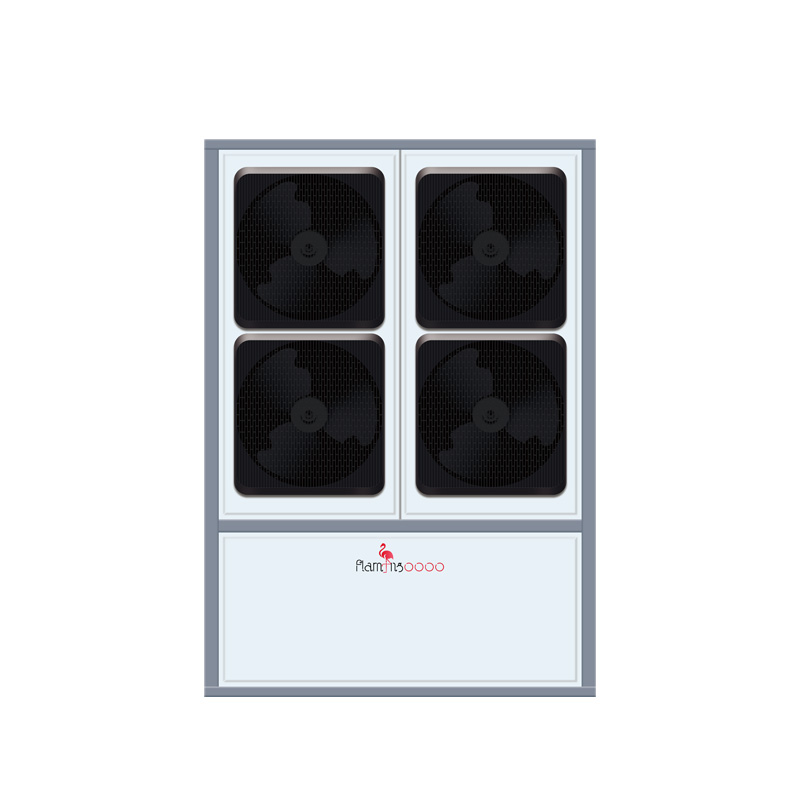
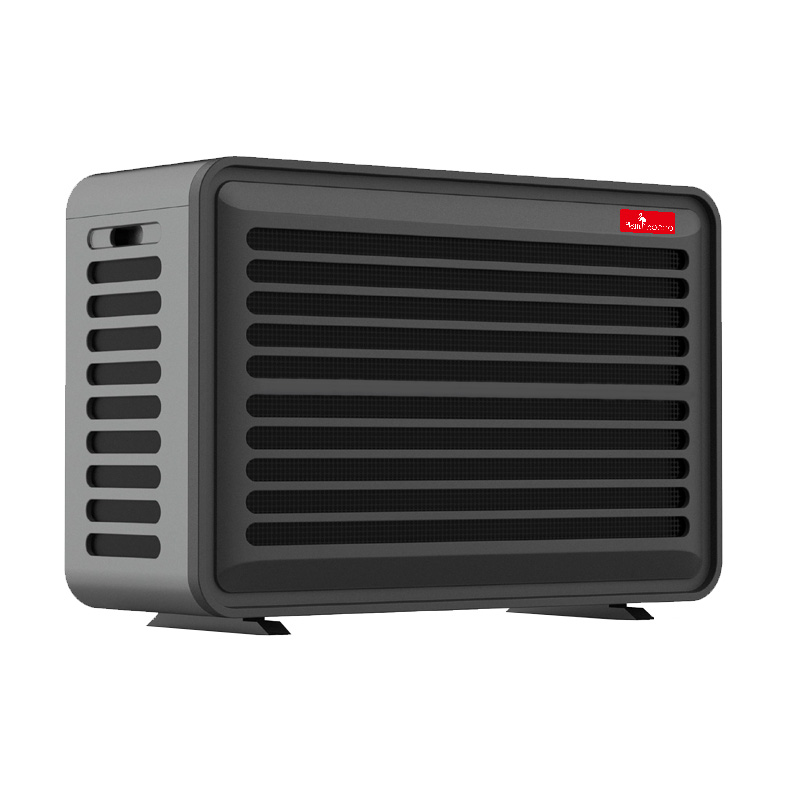
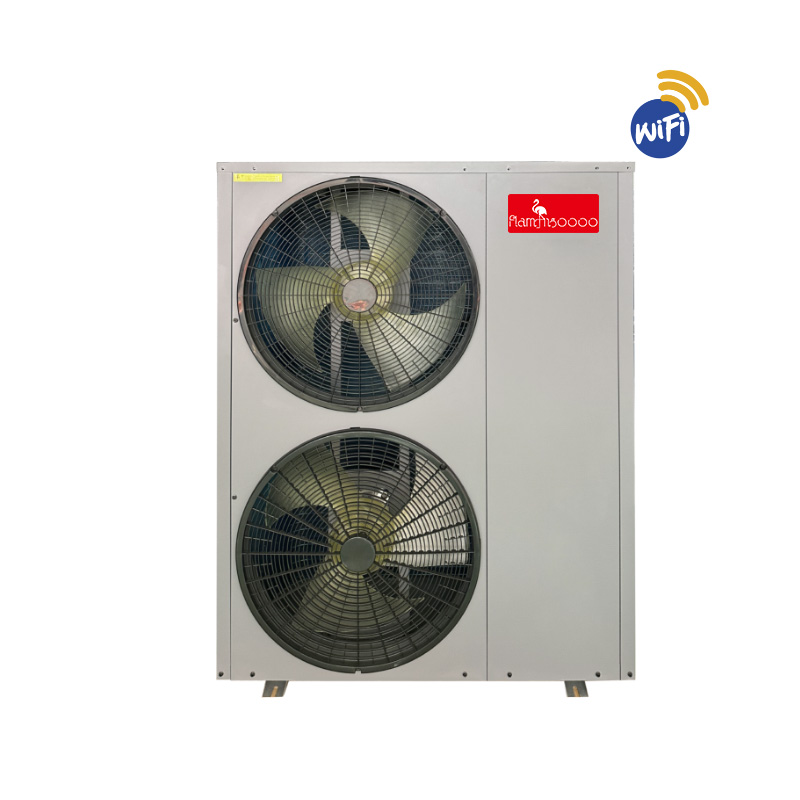
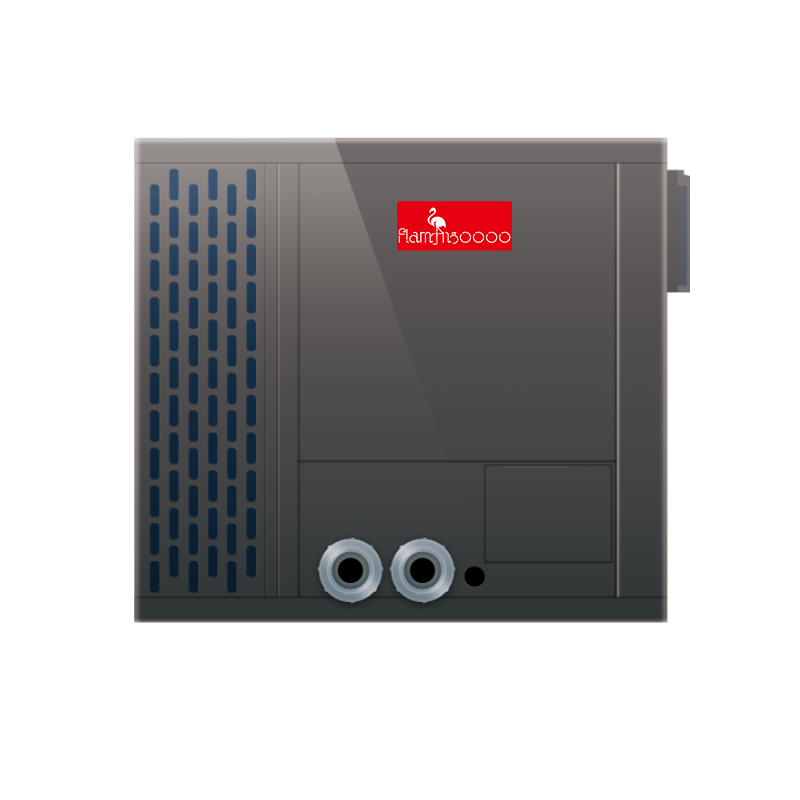
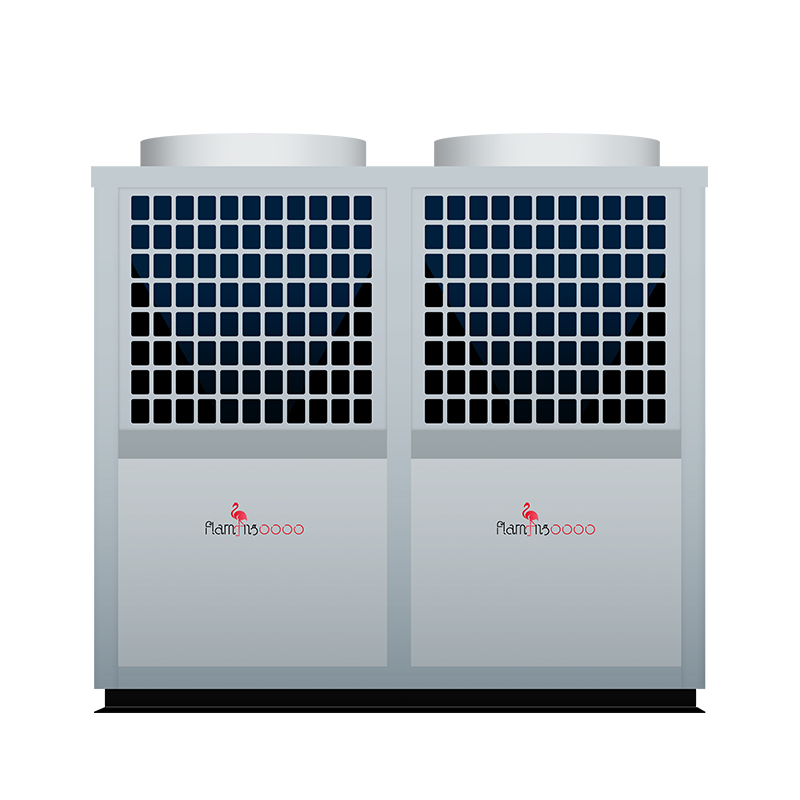
Flamingo commercial heat pump products cover a heating capacity range of 10kW to 240kW, with a modular design that allows flexible combination and expansion according to actual load. Core components use DC inverter compressors from world‑leading brands such as Panasonic, Copeland and Danfoss, ensuring efficient and stable operation even under extreme conditions. The product series covers all commercial scenarios including central hot water heat pumps, EVI ultra‑low temperature heating & cooling heat pumps, and pool heat pumps. Among them, the EVI DC inverter heating & cooling heat pump series operates stably over a wide temperature range from -25°C to 43°C, providing reliable year‑round operation even in severe cold regions.
In terms of energy saving, Flamingo’s full DC inverter technology achieves energy savings of more than 75%, with operating noise as low as 53 dB(A) and a COP of up to 4.84 in heating mode. Using PID‑controlled electronic expansion valves and high‑efficiency heat exchangers, along with multiple safety protection mechanisms (water flow switch, freeze protection, high/low pressure protection, overload protection, etc.), the system ensures long‑term stable and reliable operation. In the environmental field, Flamingo also offers product options with R32 low‑GWP refrigerant, as well as hybrid systems supporting PV direct drive integration — covering up to 95% of electricity demand during sunny periods, significantly reducing electricity bills and carbon footprint.
Flamingo heat pump products are already serving hotels, hospitals, schools and commercial complex projects in more than 20 countries worldwide, and are becoming the first choice for more and more commercial customers, thanks to their comprehensive product matrix and one‑stop system integration capability.
VII. Industry Trends: The Shift to Inverter Is Irreversible, the Fixed-Speed Market Is Shrinking Rapidly
The current technology trends in the heat pump industry show several clear directions:
Inverter models are fully dominant. Inverter models now account for 89% of compliant products, and fourth‑generation products using R290 eco‑friendly refrigerant already account for 63% of new product launches. In the commercial heat pump sector, full DC inverter technology is rapidly penetrating from large projects downward, covering more small and medium‑sized commercial scenarios.
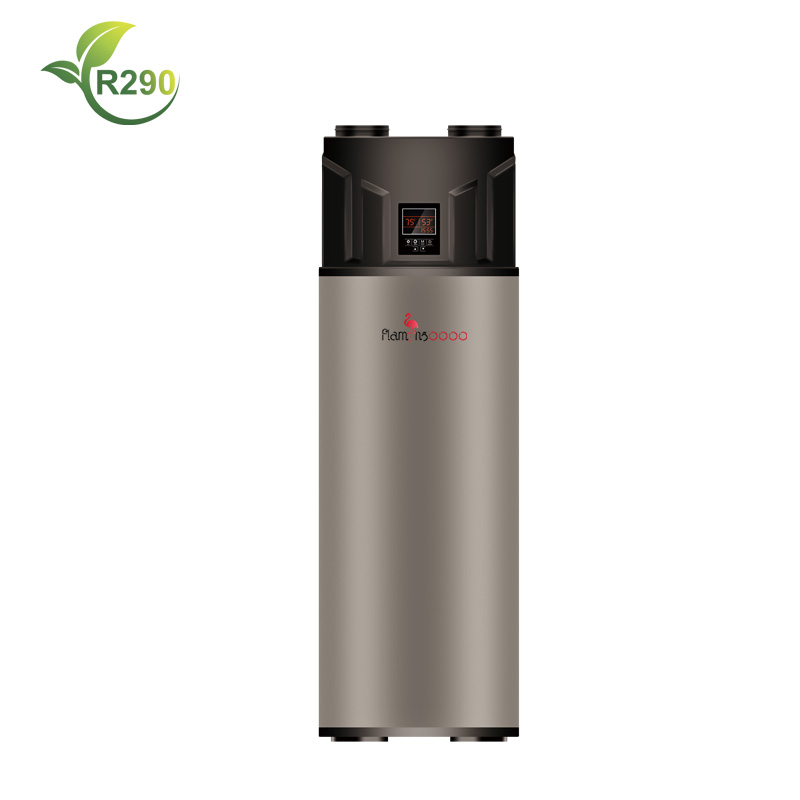
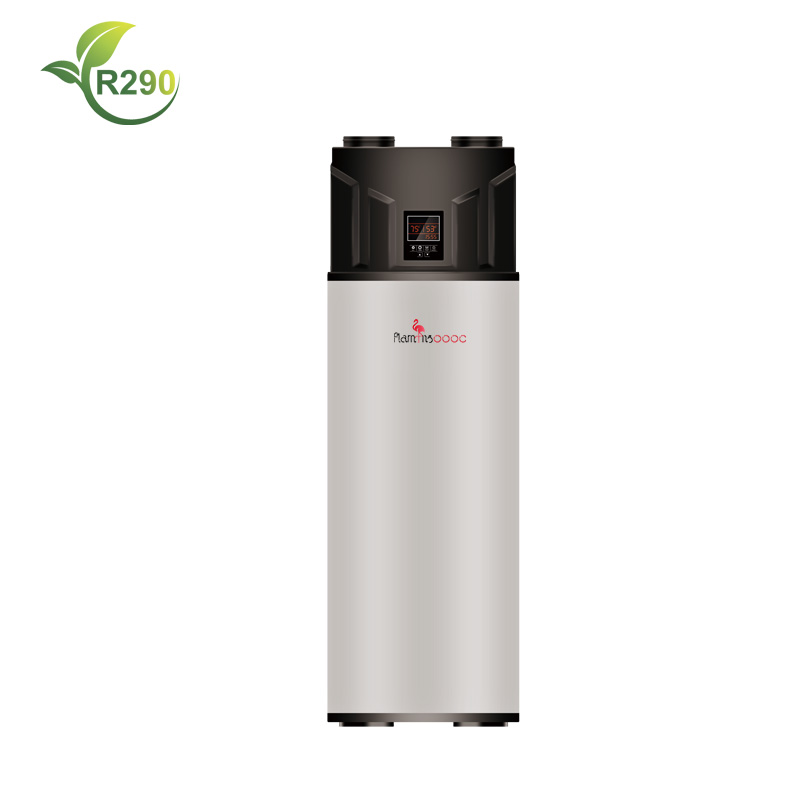
Deep integration of eco‑friendly refrigerants and inverter technology. The widespread application of low‑GWP refrigerants such as R32 and R290 imposes higher requirements on compressor control precision, and inverter technology happens to provide the ideal technical foundation for achieving precise control. With the combination of the two, the average COP continues to rise, and energy efficiency standards are constantly being refreshed.
Intelligent control is becoming a new direction. Adaptive control systems based on neural network algorithms can learn user habits and weather changes to dynamically adjust operation strategies, increasing the system’s annual average energy efficiency by 12%. Combined with IoT platforms to achieve coordinated operation of multiple heat pumps, peak power consumption can be further reduced by 15% through load forecasting and intelligent scheduling.
Policy and market together accelerate the shift to inverter. From the national level (High-Quality Development of Energy-Saving Equipment Implementation Plan) to local equipment subsidy policies, high‑efficiency, low‑emission technology paths have become a clear orientation. Inverter products enjoy more policy benefits due to their energy‑saving advantages, while the market space for fixed‑speed products is further compressed.
VIII. Conclusion: Inverter Heat Pumps Are the Right Choice for the Present and the Future
Based on multi‑dimensional analysis of technical principles, energy efficiency data, operating costs, service life, and policy trends, the conclusion is clear and unambiguous:
Inverter heat pumps are significantly superior to traditional fixed‑speed products in almost every dimension. From an energy efficiency perspective, inverter heat pumps achieve annual energy savings of 20%–40% or more, with heating capacity 60%–80% higher under low‑temperature conditions. From a comfort perspective, inverter units control temperature fluctuation within ±0.5°C, completely eliminating the experience of “alternating hot and cold.” From an economic perspective, although the initial investment is 15%–25% higher, the difference is recovered within 2–5 years, after which net benefits continue for more than a decade. From a lifespan perspective, inverter units last 20%–50% longer, with lower maintenance costs.
For commercial scenarios such as hotels, office buildings, hospitals and schools — all of which have extremely high requirements for temperature control precision, operational stability and long‑term economics — inverter heat pumps are not only a better choice, but the only choice that aligns with the industry’s future development direction.
Fixed-speed heat pumps are only suitable for limited special scenarios: extremely tight budgets, short usage times, constant load without fluctuation, and users who are insensitive to temperature and cost. But in 2026, with policy standards tightening continuously, inverter technology costs falling, and energy-saving subsidies growing stronger, the reasons for insisting on fixed‑speed products are becoming fewer and fewer.
As industry insiders say: inverter technology is moving from a “nice‑to‑have” to a “must‑have.”
