
Which Type of Heat Pump Is Best for Home Use?
As homeowners across the country seek smarter, more sustainable ways to heat and cool their living spaces, the question on everyone’s mind has become increasingly urgent: Which type of heat pump is best for home use? At Flamingo Heat Pump, we’ve made it our mission to help families navigate this crucial decision—because the choice you make today will impact your comfort, your energy bills, and your environmental footprint for decades to come.
In this comprehensive guide, we’ll explore the two dominant contenders in the residential market: the air source heat pump and the geothermal heat pump (also known as ground-source systems). We’ll break down how each technology works, their respective advantages and drawbacks, installation considerations, long-term savings, and which type of household heat pump ultimately emerges as the superior investment for different scenarios. By the end, you’ll have all the information you need to choose the ideal household heat pump for your home—with Flamingo Heat Pump by your side every step of the way.
The Rise of the Household Heat Pump
Before diving into the technical comparisons, it’s worth acknowledging why household heat pump systems have captured the spotlight in recent years. Traditional heating methods—furnaces fueled by natural gas, oil, or propane—remain common, but they come with significant drawbacks: volatile fuel prices, carbon emissions, and the inherent inefficiency of generating heat through combustion.
A household heat pump, by contrast, doesn’t generate heat; it moves it. In winter, it extracts thermal energy from the outside air (or ground) and transfers it indoors. In summer, it reverses the process, pulling heat from your home and releasing it outside, functioning as a highly efficient air conditioner. Because moving heat requires far less energy than creating it, heat pumps deliver efficiency ratings that can exceed 300–400%, meaning they produce three to four units of heating or cooling for every unit of electricity consumed.
This fundamental efficiency advantage has made the household heat pump a cornerstone of modern home climate control. But not all heat pumps are created equal. The choice between an air source heat pump and a geothermal heat pump hinges on a range of factors unique to your property, climate, and long-term goals.
Air Source Heat Pumps: The Popular Contender
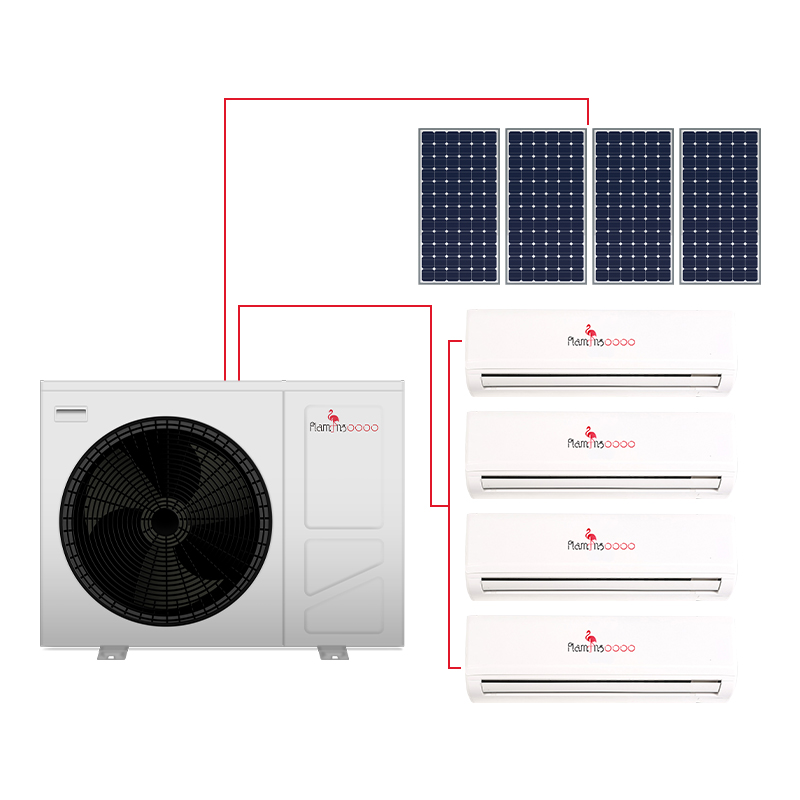
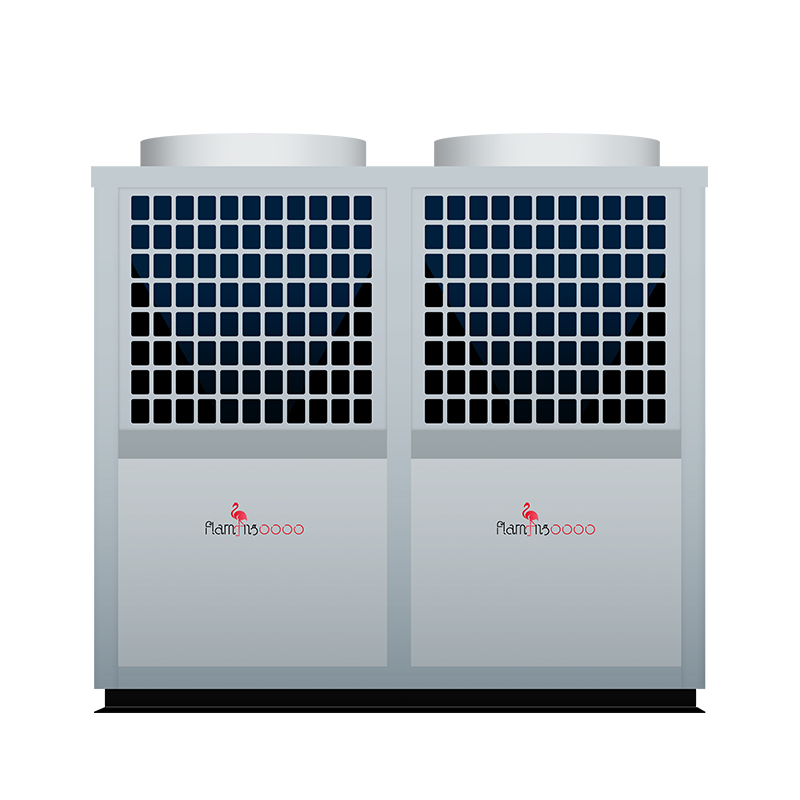
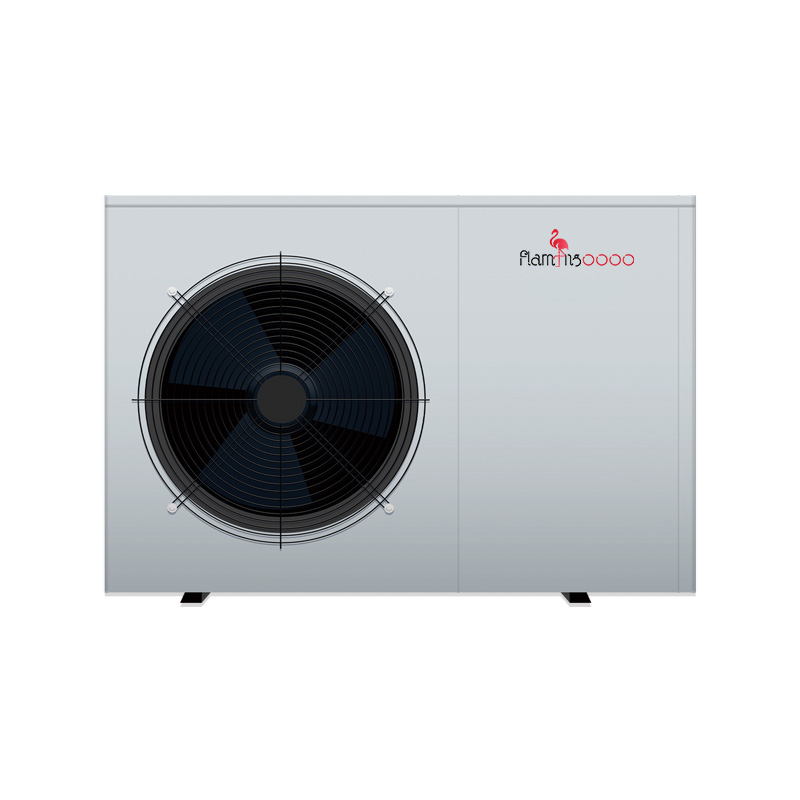
The air source heat pump is the most widely installed type of household heat pump in the United States and Europe today. As the name suggests, this system exchanges heat with the outdoor air. An outdoor unit contains a coil and a fan that draws air across the coil, allowing refrigerant to absorb heat from the air (even in sub-freezing temperatures) and carry it indoors.
How Air Source Heat Pumps Work
Modern air source heat pump systems use advanced inverter-driven compressors and enhanced vapor injection technology to maintain high efficiency even when outdoor temperatures drop as low as -15°F to -25°F. Inside the home, the system connects to a ducted air handler or ductless mini-split units, giving homeowners flexibility based on their existing infrastructure.
In cooling mode, the process reverses: the indoor coil becomes the evaporator, absorbing heat from your home, while the outdoor coil acts as a condenser, dumping that heat into the outside air.
Advantages of Air Source Heat Pumps
Lower Upfront Cost
The most compelling advantage of an air source heat pump is its initial affordability. A typical installation costs between $4,000 and $12,000, depending on the size of the home, whether ductwork exists, and the complexity of the installation. For many households, this lower barrier to entry makes the air source heat pump the accessible entry point into high-efficiency electric heating and cooling.Simplified Installation
Installing an air source heat pump rarely requires major excavation or landscape disruption. The outdoor unit sits on a concrete pad or mounting brackets, and the indoor components connect via refrigerant lines that run through a small hole in the wall. For homes with existing ductwork, a ducted air source heat pump can often be installed within a few days.Dual-Purpose Functionality
Like all household heat pump systems, an air source heat pump provides both heating and cooling in one package. This eliminates the need for separate furnaces and air conditioners, simplifying maintenance and reducing equipment footprint.Continuous Improvement in Cold-Climate Performance
Early air source heat pump models struggled in extreme cold, often requiring backup electric resistance heat. Today’s cold-climate air source heat pump systems maintain high coefficient of performance (COP) values even in northern climates, making them viable from Maine to Minnesota.
Disadvantages of Air Source Heat Pumps
Efficiency Fluctuates with Outdoor Temperature
While modern units perform admirably in cold weather, the efficiency of an air source heat pump still declines as temperatures drop. The system works hardest on the coldest days of the year—exactly when you need the most heat. This can lead to higher operating costs during winter peaks compared to a geothermal heat pump, which experiences stable ground temperatures year-round.Audible Outdoor Unit Noise
An air source heat pump’s outdoor unit produces operational noise, typically between 50 and 70 decibels. While this is comparable to a standard air conditioner, it may be a consideration for homeowners with noise-sensitive outdoor living spaces or strict local ordinances.Aesthetic Impact
The outdoor unit of an air source heat pump is visible and requires clearance around it for proper airflow. For some homeowners, this visual presence detracts from landscaping or architectural aesthetics.Shorter Lifespan
Because the air source heat pump’s outdoor components are exposed to rain, snow, ice, and temperature extremes, the typical lifespan is 12 to 15 years—comparable to a conventional air conditioner. This is notably shorter than the expected life of a geothermal heat pump.
Geothermal Heat Pumps: The Premium Solution
A geothermal heat pump—often called a ground-source heat pump—represents the pinnacle of household heat pump technology. Instead of exchanging heat with the volatile outdoor air, a geothermal heat pump leverages the stable temperatures found just below the earth’s surface. Depending on latitude, the ground at a depth of six to ten feet remains between 45°F and 75°F year-round. This consistency allows a geothermal heat pump to operate with remarkable efficiency regardless of whether the surface experiences blazing summers or freezing winters.
How Geothermal Heat Pumps Work
A geothermal heat pump system consists of three primary components: the ground loop, the heat pump unit itself, and the indoor distribution system (ductwork or hydronic radiant floors).
The ground loop is a closed or open network of pipes buried in the ground. A water-based solution circulates through the loop, absorbing heat from the earth in winter and depositing heat into the earth in summer. The geothermal heat pump unit then concentrates that thermal energy and transfers it to the indoor distribution system.
There are several loop configurations:
Horizontal loops – Installed in trenches about four to six feet deep, ideal for properties with ample land.
Vertical loops – Drilled boreholes extending 150 to 400 feet deep, suitable for smaller lots or rocky terrain.
Pond/lake loops – Submerged in a body of water with sufficient depth and volume.
Open loops – Use groundwater from a well as the exchange fluid, discharging it into a drainage field (subject to local regulations).
Advantages of Geothermal Heat Pumps
Unmatched Efficiency
The most celebrated benefit of a geothermal heat pump is its extraordinary efficiency. While an air source heat pump might achieve a COP of 3.0 to 3.5 at moderate temperatures, a geothermal heat pump routinely delivers COP values between 4.0 and 5.5, meaning it produces four to five times as much energy as it consumes. In cooling mode, Energy Efficiency Ratio (EER) ratings often exceed 30, far surpassing even the most advanced air source heat pump systems.Extreme Longevity
A geothermal heat pump’s indoor components typically last 20 to 25 years, and the ground loop itself carries a lifespan of 50 years or more. For homeowners planning to stay in their property for the long term, a geothermal heat pump represents a generational investment.Incredible Comfort and Quiet Operation
Because a geothermal heat pump draws heat from the stable ground, it delivers warm air at a higher temperature (around 95°F–110°F) compared to an air source heat pump (typically 85°F–95°F). This translates to warmer supply air and fewer drafts. Additionally, there is no noisy outdoor unit—the ground loop is silent, and the indoor unit operates with minimal sound.Minimal Visual and Environmental Impact
Once the ground loop is installed, a geothermal heat pump leaves no visible outdoor equipment (except perhaps a small access panel). There is no condenser unit marring your landscape, no fan noise disturbing your patio, and no exposed components subject to weather damage or vandalism.Consistent Performance in Any Climate
Unlike an air source heat pump, whose efficiency is tied to the whims of outdoor air temperature, a geothermal heat pump operates at near-constant efficiency all winter long—even during polar vortex events. For homes in regions with extreme temperature swings, this reliability is invaluable.
Disadvantages of Geothermal Heat Pumps
High Upfront Investment
The primary barrier to adopting a geothermal heat pump is the initial installation cost. Depending on loop configuration, property conditions, and system size, a geothermal heat pump installation typically ranges from $15,000 to $35,000 or more. This figure can be intimidating compared to an air source heat pump.Installation Complexity and Disruption
Installing the ground loop requires excavation or drilling, which can temporarily disrupt landscaping, driveways, or yard areas. For retrofit projects, this process may take several days and requires coordination with contractors experienced in geothermal heat pump installations.Land or Water Source Requirements
A geothermal heat pump requires sufficient land for a horizontal loop, suitable geology for vertical boring, or an adequate water body for a pond loop. While vertical loops minimize surface footprint, they add cost due to drilling.Longer Payback Period
Even though a geothermal heat pump delivers dramatically lower operating costs, the payback period typically ranges from 5 to 12 years, depending on local energy prices and available incentives. For homeowners planning to move within a few years, the upfront premium may be harder to justify.
Side-by-Side Comparison: Air Source vs. Geothermal for Household Use
To help you evaluate which type of household heat pump aligns with your priorities, let’s compare the two technologies across key dimensions:
| Factor | Air Source Heat Pump | Geothermal Heat Pump |
|---|---|---|
| Upfront Cost | $4,000–$12,000 | $15,000–$35,000+ |
| Annual Operating Cost | Moderate (efficiency varies with temperature) | Very low (stable high efficiency year-round) |
| Lifespan | 12–15 years | 20–25 years (indoor); 50+ years (loop) |
| Efficiency (COP) | 2.5–4.0 (varies with outdoor temp) | 4.0–5.5 (consistent) |
| Noise Level | Moderate (outdoor fan noise) | Very low (no outdoor unit) |
| Visual Impact | Outdoor unit visible | No visible outdoor equipment |
| Installation Disruption | Minimal (2–3 days) | Moderate to significant (excavation/drilling) |
| Climate Suitability | Good; cold-climate models available | Excellent in all climates |
| Incentives | Federal tax credits; utility rebates | Larger federal tax credits; state/utility incentives often higher |
| Best For | Budget-conscious homeowners, short-term occupancy, limited yard space | Long-term owners, high efficiency priority, properties with suitable geology |
The Financial Picture: Crunching the Numbers
For many homeowners, the decision between an air source heat pump and a geothermal heat pump comes down to economics. While the air source heat pump wins on upfront affordability, the geothermal heat pump delivers superior long-term value.
Consider a typical 2,500-square-foot home in a mixed climate (such as the Mid-Atlantic or Midwest) with current heating costs based on propane or electric resistance. An air source heat pump might reduce annual heating and cooling bills by 40–50% compared to conventional systems. A geothermal heat pump often achieves reductions of 60–70% or more.
If we assume annual energy costs of $2,500 for a conventional system, switching to an air source heat pump might bring that down to $1,250–$1,500 per year. A geothermal heat pump could reduce it to $750–$1,000 per year. Over 15 years, the cumulative savings with geothermal can exceed $10,000 to $15,000 compared to the air source heat pump, easily offsetting the higher initial price when combined with available incentives.
Incentives and Tax Credits
The federal government offers significant support for household heat pump adoption through the Inflation Reduction Act’s High-Efficiency Electric Home Rebate Act (HEEHRA) and the Energy Efficient Home Improvement Credit.
Air Source Heat Pump: Homeowners can claim a tax credit of 30% of the project cost, up to $2,000.
Geothermal Heat Pump: The same 30% credit applies, but with no maximum limit, making it possible to claim credits of $5,000 to $10,000 or more on qualifying geothermal heat pump installations.
Many states and local utilities offer additional rebates for both air source heat pump and geothermal heat pump systems, with geothermal often qualifying for higher incentive amounts due to its greater energy savings and grid benefits.
Installation Considerations for the Household Heat Pump
Choosing the right household heat pump also involves a careful assessment of your property and existing systems.
For Air Source Heat Pump Installations:
Ductwork: If your home has existing ductwork, a ducted air source heat pump is often the most straightforward installation. If not, ductless mini-split air source heat pump systems offer a solution without extensive renovation.
Placement: The outdoor unit requires adequate clearance (typically 12–24 inches from walls, 5 feet from property lines depending on local codes) and should be located away from bedroom windows to minimize noise concerns.
Cold-Climate Considerations: In northern regions, specify a cold-climate air source heat pump model that retains high efficiency at low temperatures and includes features like a heated base pan to prevent ice buildup.
For Geothermal Heat Pump Installations:
Site Assessment: A professional contractor will conduct a thermal conductivity test, soil analysis, and determine the optimal loop configuration. This step is critical for sizing the loop correctly—undersizing leads to efficiency losses, while oversizing increases cost unnecessarily.
Loop Installation: Horizontal loops require adequate land area (roughly 1,200–1,800 square feet per ton of capacity). Vertical loops require drilling rig access and may require permits for groundwater protection. Pond loops require a body of water with minimum surface area and depth.
Integration: A geothermal heat pump can integrate seamlessly with existing ductwork, or it can be paired with hydronic radiant floor systems for ultra-efficient distribution.
Environmental Impact: The Green Choice
Both air source heat pump and geothermal heat pump systems offer significant environmental benefits compared to fossil-fuel-based heating. By eliminating on-site combustion, they reduce greenhouse gas emissions and improve indoor air quality.
However, the geothermal heat pump stands out as the most environmentally sustainable household heat pump option. Because of its superior efficiency, a geothermal heat pump consumes 25–50% less electricity than an air source heat pump to deliver the same heating and cooling output. When paired with a renewable electricity source (such as rooftop solar), a geothermal heat pump can enable a home to achieve near-zero operational carbon footprint.
Additionally, the refrigerant charge in a geothermal heat pump is typically contained entirely within the indoor unit, eliminating the risk of refrigerant leaks from outdoor components that are exposed to weather and physical damage.
Real-World Applications: Which Household Heat Pump Fits Your Home?
No single answer fits every homeowner. At Flamingo Heat Pump, we guide our customers through a personalized assessment to determine whether an air source heat pump or geothermal heat pump is the ideal household heat pump for their unique circumstances.
Choose an Air Source Heat Pump If:
Your upfront budget is limited, and you want to maximize immediate savings.
You plan to move within the next 5–8 years.
Your property lacks sufficient land for a horizontal geothermal loop and vertical drilling is cost-prohibitive.
You live in a moderate climate where extreme cold is rare.
You prefer a quick, minimally invasive installation.
Choose a Geothermal Heat Pump If:
You intend to remain in your home for 10+ years and want to maximize lifetime savings.
Your property has adequate land, suitable geology, or a pond that accommodates a loop.
You prioritize energy independence and want the lowest possible utility bills.
You value silent operation and wish to eliminate outdoor equipment.
You are interested in pairing with solar panels for a net-zero energy home.
Why Flamingo Heat Pump Is Your Trusted Partner
At Flamingo Heat Pump, we specialize in helping homeowners navigate the transition to high-efficiency electric heating and cooling. Our expertise spans both air source heat pump and geothermal heat pump systems, ensuring that we recommend the best household heat pump based on your home’s specifications, your comfort goals, and your financial objectives.
We take pride in:
Comprehensive Site Assessments: Our team conducts detailed load calculations, ground conductivity tests (for geothermal heat pump projects), and existing system evaluations to ensure precise sizing and optimal performance.
Turnkey Installation: From permitting to final commissioning, we manage every aspect of your household heat pump installation with minimal disruption to your daily life.
Incentive Navigation: We help you maximize federal tax credits, state rebates, and utility incentives, often reducing the net cost of a geothermal heat pump by thousands of dollars.
Ongoing Support: Our commitment doesn’t end at installation. We offer maintenance plans, troubleshooting, and system optimization to ensure your household heat pump delivers peak performance year after year.
The Future of Home Climate Control
As energy codes tighten, utility rates fluctuate, and environmental consciousness grows, the household heat pump is no longer a niche alternative—it is the new standard. Whether you choose an air source heat pump or invest in a geothermal heat pump, you are making a choice that enhances your comfort, reduces your carbon footprint, and adds value to your home.
The question of “which type of heat pump is best for home use” ultimately depends on your unique circumstances. But one thing remains constant: with Flamingo Heat Pump as your partner, you can move forward with confidence, knowing that your household heat pump system is designed, installed, and supported to the highest standards in the industry.
Ready to Make the Switch?
If you’re ready to explore whether an air source heat pump or a geothermal heat pump is right for your home, contact Flamingo Heat Pump today. Our team of certified professionals will guide you through every step—from initial consultation to final installation—ensuring that you enjoy the unparalleled comfort, efficiency, and savings that only a modern household heat pump can deliver.
Visit our website or call our office to schedule your free home assessment. Experience the Flamingo Heat Pump difference—where innovation meets comfort, and sustainability meets savings.
