
Can an Air Source Heat Pump Provide Hot Water? Unveiling the Science, Efficiency, and Versatility of Flamingo Heat Pumps
By Flamingo Technical Team | Published March 2026
In an era where energy efficiency and carbon reduction are at the forefront of global consciousness, the quest for sustainable home heating solutions has never been more critical. Homeowners and business operators alike are constantly seeking systems that can reduce reliance on fossil fuels, lower electricity bills, and provide consistent comfort. Among the most revolutionary technologies to emerge in the HVAC sector is the air source heat pump (ASHP). However, a common and fundamental question persists: Can an air source heat pump provide hot water?
The simple and emphatic answer is yes. But to stop there would be to ignore the fascinating engineering, the significant economic benefits, and the versatile capabilities that make modern ASHPs a superior choice for domestic hot water (DHW) production.
At Flamingo, we specialize in harnessing the ambient energy in the air to deliver comprehensive heating solutions. This in-depth article will explore the intricacies of how air source heat pumps generate hot water, their efficiency metrics, their performance in various climates, and why they represent the future of residential and commercial water heating.
1. The Fundamentals: How Air Source Heat Pumps Harvest Heat for Water
To understand how an air source heat pump can produce hot water, one must first abandon the traditional notion that heat must be created. Traditional water heaters—whether electric resistance or gas-fired—generate heat by converting electricity or burning fuel. In contrast, a heat pump doesn't generate heat; it moves it .
This principle is based on the laws of thermodynamics. Even when the outside air feels cold, it still contains a significant amount of thermal energy. Until absolute zero (-273°C), molecules are in motion, and that motion represents heat. An air source heat pump is designed to capture this diffuse energy, concentrate it, and transfer it to your water tank.
The Thermodynamic Cycle: A Step-by-Step Breakdown
The process of heating water with an air source heat pump relies on a closed-loop refrigeration cycle involving four key components: the evaporator, compressor, condenser, and expansion valve.
Heat Absorption (The Evaporator): The cycle begins when a fan in the outdoor unit draws ambient air across the evaporator coil. Inside this coil flows a liquid refrigerant with an extremely low boiling point. As the air passes over the coil, the refrigerant absorbs the thermal energy from the air. This absorption causes the liquid refrigerant to warm up and evaporate into a low-pressure, low-temperature gas .
Compression (Raising the Stakes): This cool gas is then drawn into the electrically powered compressor. The compressor acts as the heart of the system, pressurizing the refrigerant gas. According to the gas laws, when you compress a gas, its temperature rises dramatically. In a matter of seconds, the refrigerant transforms into a high-pressure, high-temperature gas (often exceeding 100°C) .
Heat Release (The Condenser): This super-heated gas is now channeled to a heat exchanger—the condenser. In an air-to-water heat pump, this is where the magic happens for your hot water supply. The hot refrigerant gas flows through one side of the heat exchanger, while water from your storage tank flows around it. The heat from the refrigerant transfers to the water. As the refrigerant loses its heat, it condenses back into a high-pressure liquid.
Expansion (Resetting the Cycle): The high-pressure liquid passes through an expansion valve, which suddenly reduces its pressure. This pressure drop causes the refrigerant's temperature to plummet. It becomes a cold, low-pressure liquid mixture, ready to flow back to the evaporator to absorb more heat from the outside air, and the cycle repeats .
Through this continuous loop, the system absorbs low-grade heat from the air and "upgrades" it to a high-temperature state capable of heating your water to usable temperatures, typically between 55°C and 75°C, and in some advanced systems, even higher .
| Phase | Component | State of Refrigerant | Function |
|---|---|---|---|
| 1. Evaporation | Evaporator | Liquid to Low-Pressure Gas | Absorbs heat from ambient air |
| 2. Compression | Compressor | Low to High-Pressure Gas | Increases temperature drastically |
| 3. Condensation | Condenser | Gas to High-Pressure Liquid | Transfers heat to the water tank |
| 4. Expansion | Expansion Valve | Liquid to Low-Pressure Mix | Cools refrigerant, resetting the cycle |
2. Quantifying Efficiency: The Magic of COP and SCOP
When discussing the capability of air source heat pumps to provide hot water, the conversation inevitably shifts from if they can do it to how efficiently they can do it. This efficiency is primarily measured by the Coefficient of Performance (COP) .
Understanding COP vs. SCOP
The COP is an instantaneous measurement that represents the ratio of heat output (in kW) to electrical input (in kW). If a heat pump has a COP of 4.0, for every 1 kW of electricity it consumes, it delivers 4 kW of heat energy. This represents an efficiency of 400%. Traditional electric water heaters have a COP of 1.0 (100% efficiency), meaning 1 kW of electricity yields just 1 kW of heat .
However, because outside temperatures fluctuate, a more accurate metric is the Seasonal Coefficient of Performance (SCOP) . The SCOP measures the system's efficiency over an entire heating season, accounting for variations in climate and the energy used for standby and defrost cycles. Modern, high-quality ASHPs, like those developed by Flamingo, routinely achieve SCOPs of 3.0 to over 4.0, even in temperate climates .
The Economics of Moving Heat
To put this into perspective, consider the task of heating a 200-liter hot water tank for a family of four. An electric resistance heater would consume a significant amount of electricity to raise the water temperature. An air source heat pump, however, would use only one-quarter to one-third of that electricity to accomplish the same task. This translates directly to bottom-line savings on utility bills. While the exact savings vary based on local electricity prices and climate, users can expect to reduce their water heating costs by 65% to 80% compared to conventional electric systems .
3. Beyond Basic Heating: Advanced Technologies in Hot Water Production
While standard air source heat pumps are highly efficient at producing hot water up to around 55-60°C, Flamingo recognizes that modern living demands more. Higher water temperatures are often required for larger volumes of water, to prevent bacterial growth like Legionella, or for compatibility with older radiator systems. This is where advanced engineering comes into play.
High-Temperature Heat Pumps and "Free" Hot Water
Recent innovations in the industry have shattered previous temperature limitations. Advanced systems can now produce domestic hot water at temperatures up to 75°C or even 80°C without activating inefficient electric backup heaters . This is achieved through sophisticated compressor technology and optimized refrigerants.
Furthermore, one of the most exciting developments is the ability to produce hot water "at no additional cost" during certain operating modes. This is often achieved through a component called a desuperheater or through advanced heat recovery systems .
Here’s how it works: When the heat pump is running in cooling mode during the summer (providing air conditioning), it extracts heat from inside your home. Instead of dumping all of this waste heat into the outside air, the system can divert it to pre-heat your domestic water. You get air conditioning and hot water simultaneously, with the hot water being a byproduct of the cooling process that would otherwise be wasted . Similarly, some advanced systems can recover excess heat from the compressor discharge during heating mode to boost DHW temperatures, maximizing every joule of energy consumed.
The Role of Refrigerants
The choice of refrigerant is critical in determining the efficiency and environmental impact of a heat pump. Traditional refrigerants, while effective, have a high Global Warming Potential (GWP). The industry is rapidly shifting towards natural, sustainable alternatives.
Flamingo is at the forefront of this transition, utilizing next-generation refrigerants in our hot water heat pumps:
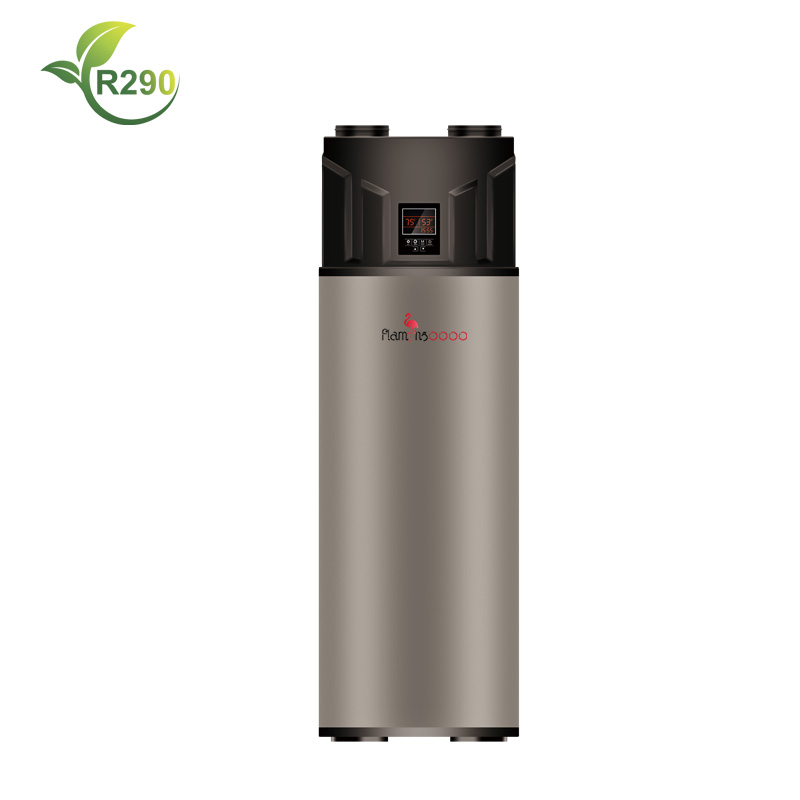
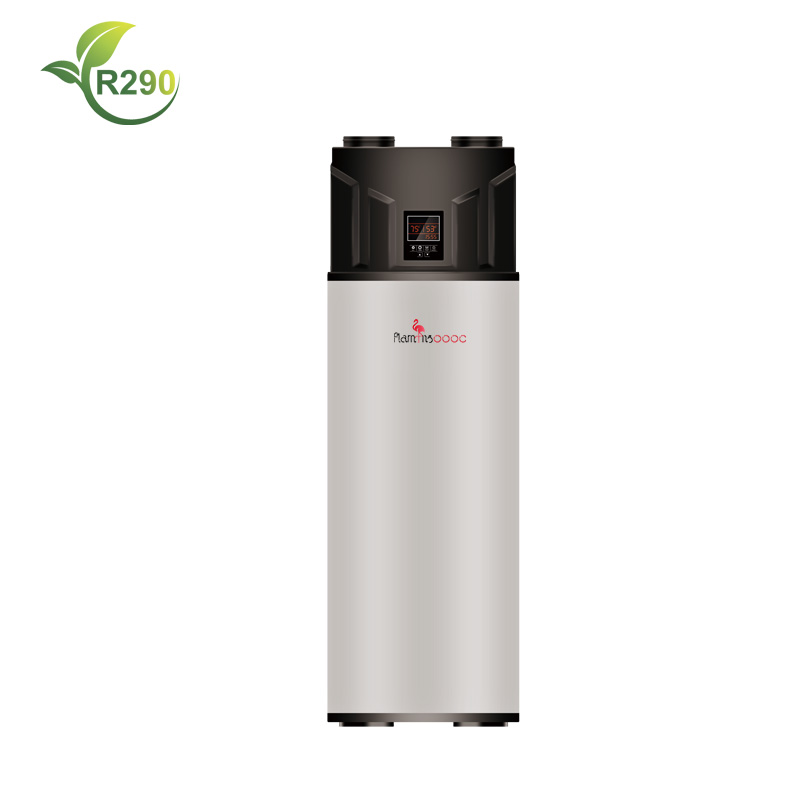
R290 (Propane): This natural refrigerant has an extremely low GWP (3) and excellent thermodynamic properties. It allows for higher water outlet temperatures and maintains high efficiency even in low ambient temperatures, making it ideal for producing domestic hot water year-round .
R744 (CO₂): For larger commercial applications, CO₂ heat pumps are a game-changer. They operate in a transcritical cycle and are exceptionally efficient at heating water to very high temperatures (often 75°C to 90°C), even in cold climates, making them perfect for apartment complexes, hotels, and hospitals .
4. Real-World Performance: Can It Handle Cold Climates?
A persistent myth about air source heat pumps is that they cannot function in cold weather. Given that they extract heat from the air, it is a logical question: What happens when the air temperature drops below freezing?
The answer is that modern air source heat pumps are specifically engineered for cold climates. Units from leading manufacturers, including the principles Flamingo employs, are designed to operate efficiently at temperatures as low as -20°C, -25°C, and even -28°C .
Cold Climate Technology: EVI and Defrost Cycles
Enhanced Vapor Injection (EVI): For climates with extreme winter conditions, Flamingo offers heat pumps with EVI technology. This advanced compressor design injects an intermediate stream of refrigerant vapor into the compression process. This boosts the capacity and efficiency of the heat pump at low ambient temperatures, ensuring a reliable supply of hot water even when the mercury plummets .
Intelligent Defrost Cycles: One challenge of operating in cold, humid conditions is the formation of frost on the evaporator coil, which can block airflow and reduce efficiency. Advanced systems utilize sophisticated defrost logic, such as Dynamic Defrost Cycle (DDC) . This allows the system to sense when frost is accumulating and initiate a defrost cycle only when necessary. Crucially, some advanced units can defrost without shutting down the compressor, ensuring a continuous supply of heat to the home and minimizing temperature fluctuations in the water tank .
Field monitoring studies have confirmed that while the Coefficient of Performance does decline in winter compared to mild seasons (e.g., from over 4.0 to the 2.0-2.5 range), the systems continue to provide the necessary hot water reliably and far more efficiently than electric resistance heaters, which would have a COP of 1.0 under the same conditions .
5. System Configurations: Integrated vs. Dedicated Hot Water Solutions
Flamingo understands that one size does not fit all. The way an air source heat pump integrates with your hot water system depends on the building's existing infrastructure and specific needs. Generally, there are two main approaches:
1. Integrated Systems (Hydronic Heating & DHW)
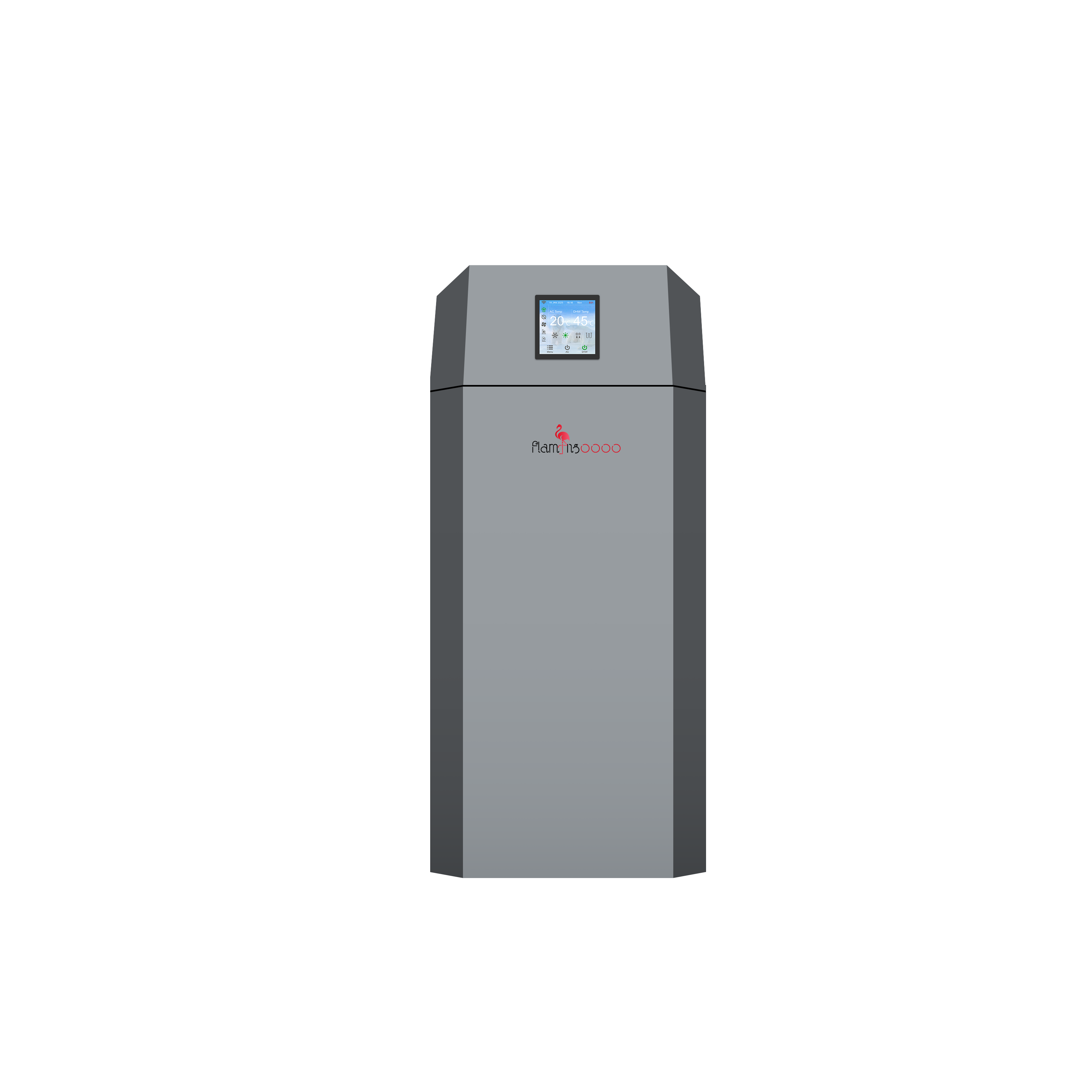
This is the most common setup for whole-home comfort. In this configuration, a single air-to-water heat pump serves a dual purpose: it provides hot water for space heating (through underfloor heating, radiators, or fan coils) and for domestic use.
How it works: The heat pump heats water that is stored in a large thermal store or buffer tank. This tank has two separate heat exchangers or zones. One zone circulates water to the heating system. The other zone contains a coil that heats the domestic water that flows to your taps and showers.
Pros: This is a highly efficient, all-in-one solution. The system can prioritize DHW production when needed, ensuring you always have hot water.
Cons: Requires a well-designed system with proper controls and sufficient tank volume.
2. Dedicated Heat Pump Water Heaters (HPWH)
These are standalone units designed specifically for producing domestic hot water. They are often installed in a garage, basement, or utility room.
How it works: The entire unit (or a split system with an outdoor compressor) sits on top of or next to a water tank. It draws heat from the air in the room (or via ductwork from outside) and transfers it to the water in the tank. As a bonus, it exhausts cool, dehumidified air, which can be a benefit in a hot, humid basement or laundry room.
Pros: Perfect for retrofits where a home already has a separate space heating system. They are easy to install and can significantly reduce the cost of water heating in unconditioned spaces.
Cons: In cold climates, if installed in an unconditioned space, they will cool that space and may need to draw air from outside to maintain efficiency.
6. The Flamingo Advantage: Engineered for Versatility and Reliability
At Flamingo, we believe that providing hot water is not just about meeting a basic need; it is about doing so intelligently, sustainably, and reliably. Our range of air source heat pumps is designed with the end-user in mind, incorporating features that maximize hot water production while minimizing environmental impact and operational costs.
Why Choose Flamingo for Your Hot Water Needs?
Uncompromised Efficiency: Our units are engineered to achieve market-leading COP and SCOP values, ensuring that your water heating bill is as low as possible. We utilize inverter technology, allowing the compressor to modulate its speed. This means it runs for longer periods at a lower, more efficient capacity rather than constantly switching on and off, which saves energy and prolongs the life of the system .
Reliability in All Climates: Whether you are in a region with mild winters or one that faces sub-zero temperatures, Flamingo has a solution. Our cold-climate models feature EVI technology and intelligent defrost systems to guarantee hot water 365 days a year.
Quiet Operation: We understand that noise pollution is a concern. Flamingo heat pumps are designed with acoustically optimized components, including low-noise fans and vibration-dampening compressor mounts, ensuring quiet operation that won't disturb the peace of your home.
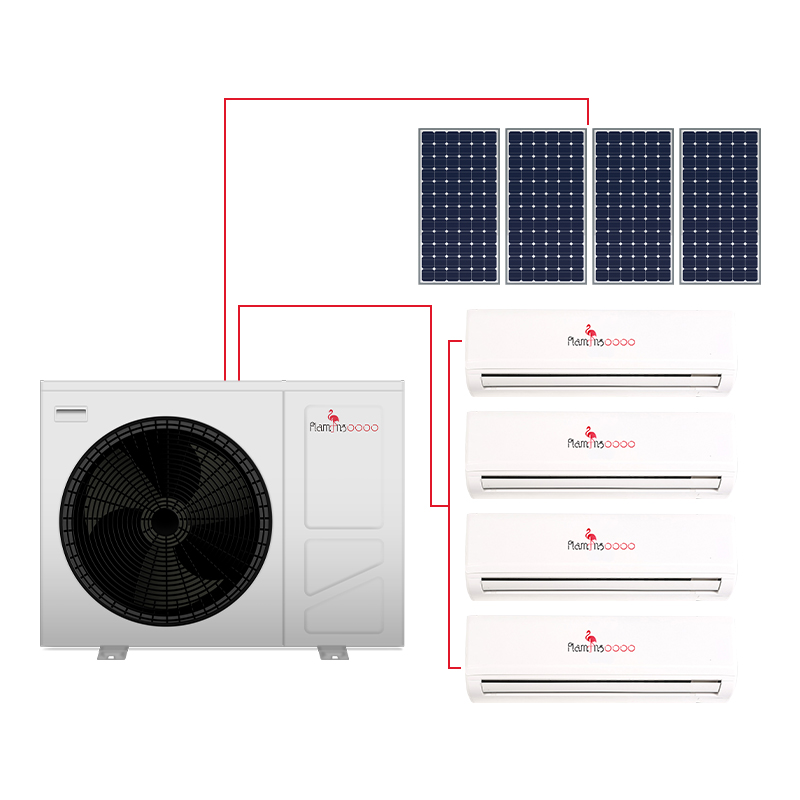
Smart Controls and Integration: Take control of your hot water production with our advanced control systems. Schedule hot water heating for off-peak hours to take advantage of lower electricity tariffs, or integrate your heat pump with a photovoltaic (PV) solar system. With smart grid integration, you can use your own self-generated solar power to produce hot water, driving your household energy costs toward zero .
Sustainability: By choosing a Flamingo air source heat pump, you are making a conscious decision to reduce your carbon footprint. Our systems utilize environmentally friendly refrigerants with low GWP and significantly cut CO₂ emissions compared to fossil fuel boilers and electric heaters .
7. Real-World Applications and Case Studies
The versatility of air source heat pumps for hot water production is demonstrated in their wide range of applications, from single-family homes to large commercial enterprises.
Residential: The Modern Home
A typical 4-person household can replace their gas boiler or electric water heater with a Flamingo ASHP. They will enjoy endless hot water, lower bills, and the ability to integrate with solar panels. The system can be programmed to heat the water tank during the day when the sun is shining, storing energy for the evening.
Multi-Family Dwellings
A 48-unit apartment complex, similar to the one featured in a recent New York installation, can drastically cut its energy bills by switching to a centralized CO₂ heat pump system . These systems can provide water at 75°C-80°C to satisfy the high demand of multiple residents simultaneously, eliminating the need for fossil fuel backup and contributing to the building's overall sustainability goals.
Commercial: Hotels and Gyms
Businesses that require massive volumes of hot water—such as hotels, swimming pools, and spas—are ideal candidates for commercial-scale ASHPs. The ability to produce high-temperature water efficiently, even in winter, provides a rapid return on investment. Furthermore, in summer, the pool or spa water can be heated largely as a byproduct of cooling the hotel's public areas .
8. Conclusion: A Resounding Yes for a Sustainable Future
To return to the original question: Can an air source heat pump provide hot water? The evidence, rooted in physics and proven in real-world applications, is definitive. Not only can they provide hot water, but they do so with a level of efficiency, environmental responsibility, and versatility that traditional systems simply cannot match.
From the fundamental refrigeration cycle that harvests ambient energy, to advanced technologies like desuperheaters and EVI compressors that deliver high-temperature water in any climate, air source heat pumps represent the pinnacle of water heating technology. They offer a pathway to energy independence, significant cost savings, and a drastic reduction in household carbon emissions.
At Flamingo, we are proud to be part of this energy revolution. Our commitment to innovation, quality, and sustainability means that when you choose a Flamingo air source heat pump, you are not just buying a piece of equipment; you are investing in a system that will provide comfort and efficiency for decades to come. Whether you are building a new home, retrofitting an old one, or managing a commercial property, we invite you to experience the Flamingo difference.
Contact us today to learn more about how our air source heat pump solutions can transform the way you heat water. Embrace the power of air. Choose Flamingo.
About Flamingo:
Flamingo is a global leader in the development and manufacturing of high-efficiency air source heat pumps. With a focus on cutting-edge technology and sustainable practices, we provide heating, cooling, and hot water solutions for residential and commercial clients worldwide. Our mission is to deliver unparalleled comfort while protecting the planet for future generations.
Contact Us:
For more information, please visit our website or contact our sales team
