
The Energy Revolution for "Hot Water Freedom": Can I Use a Heat Pump Just for Hot Water?
As we enjoy an invigorating morning shower or wash greasy dishes with steaming hot water, we rarely stop to ponder: How much energy do these simple acts of daily life actually consume? In 2026, with the "Dual Carbon" goals deeply embedded in our consciousness, the energy consumption of buildings—especially for domestic hot water—has become the "last mile" on the path to carbon neutrality for homes and commercial properties. A key question is emerging among consumers and engineers alike: Can we abandon complex heating systems and use a single, ultra-efficient device dedicated to one purpose only: providing that comforting stream of hot water?
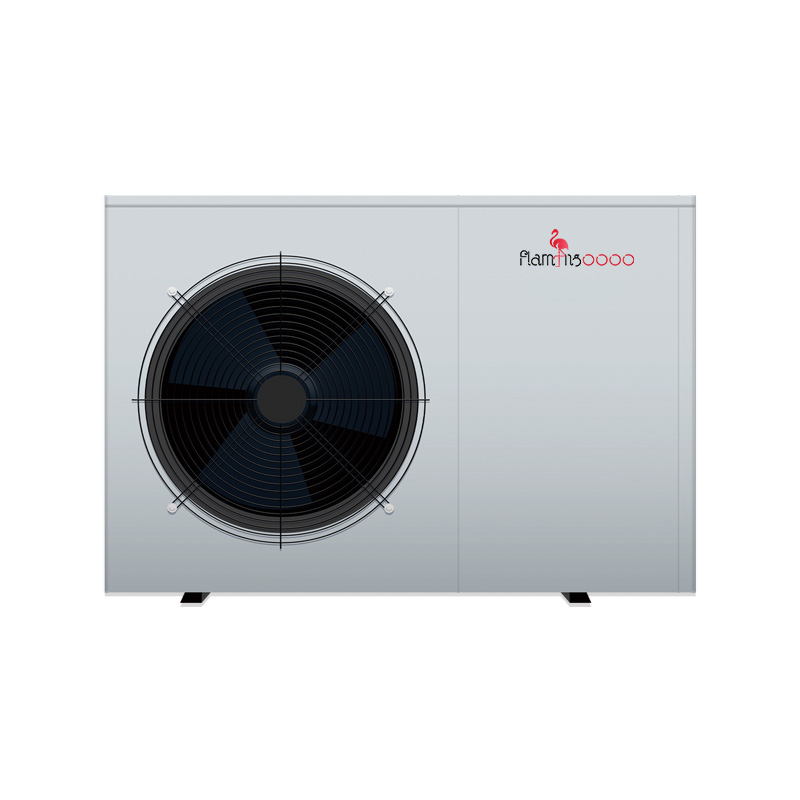
The answer is a resounding yes. The core driver of this global "Hot Water Revolution" is air-source heat pump technology. Today, we delve into heat pump solutions specifically designed for Domestic Hot Water (DHW). We will focus on the innovative leader in this field, Flamingo New Energy Technology Co., Ltd. , and explore how their focused product philosophy is redefining modern access to hot water.
Chapter 1: Back to Basics: Why Heat Pumps Are the "Optimal Solution" for Hot Water
To understand the concept of a heat pump "dedicated only to hot water," we must first break a common mindset: Heat pumps are not just for heating and cooling spaces.
Traditionally, heat pumps are viewed as "dual-purpose" systems capable of providing winter warmth and summer cooling. However, for the vast regions south of the Yangtze River that don't require winter heating, or for northern households with existing independent heating systems, the major energy consumption pain point is often "domestic hot water."
Traditional electric water heaters use heating elements to heat water directly, with a Coefficient of Performance (COP) often below 0.95. This means nearly half the energy is lost in the conversion process. Gas water heaters offer instant heat, but they produce combustion emissions and are subject to fluctuating gas prices and the availability of gas pipelines.
Air-source heat pump water heaters, however, operate on a principle of "energy搬运魔术" (energy transfer magic). They use the reverse Carnot cycle, where a compressor drives a refrigerant to absorb low-grade thermal energy from the ambient air. This energy is then compressed to raise its temperature, and finally released into the water. Crucially, electricity is used only to power the system, not to generate heat directly.
This means that for every 1 kWh of electricity consumed, the heat pump can "transfer" 3 to 4 kWh worth of thermal energy into the water. On the rooftop of an industrial park dormitory in Guangdong, eight 20 HP heat pump water heater units work around the clock, providing 160 tons of constant-temperature hot water daily for over 3,500 workers. Estimates show this system saves approximately 70% energy compared to traditional electric heating. This visible energy efficiency is the fundamental reason heat pumps are transitioning from a "nice-to-have" to a "must-have."
However, can these industrial-scale giants be adapted for everyday homes? The market demands a purer, more integrated, and smarter hot water machine.
Chapter 2: Perfecting the Single Product: Flamingo's "Water Heater" Philosophy
In Foshan, Guangdong, Flamingo, a company dedicated to perfecting heat pump technology, provides the answer. While many manufacturers compete in the complex field of heating and cooling central air conditioners, Flamingo has chosen a path that seems niche but holds immense potential: Focusing exclusively on creating the most efficient water heaters.
"Our research shows that whether for apartments, villas, or small commercial spaces, the most fundamental and frequent user need is simple: hot water," a Flamingo technical engineer shared. "Mastering this single task to perfection is the ultimate responsibility to our users."
1. Integrated Design, Redefining Installation Aesthetics
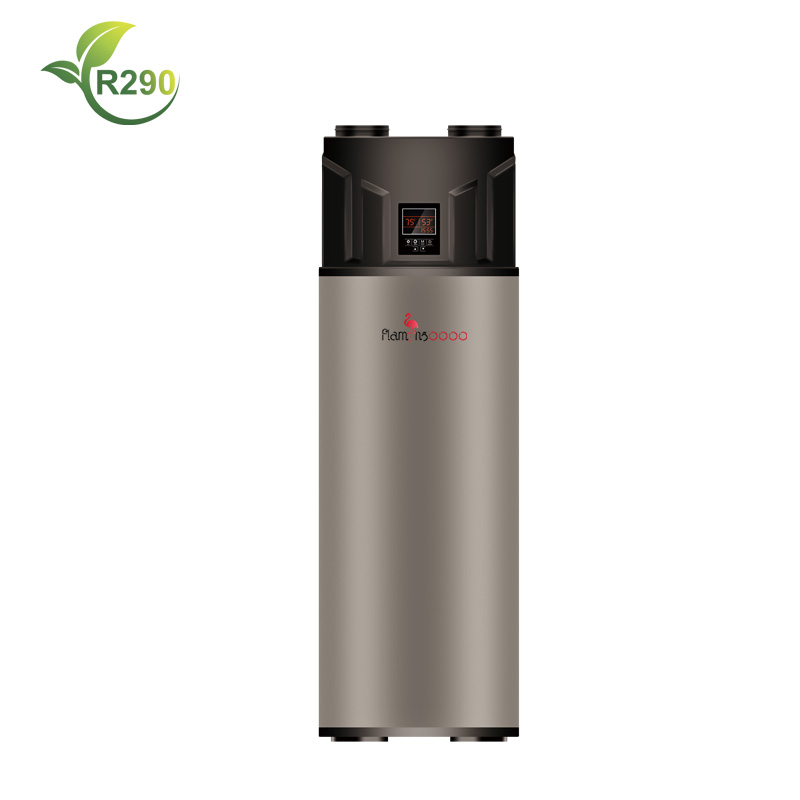
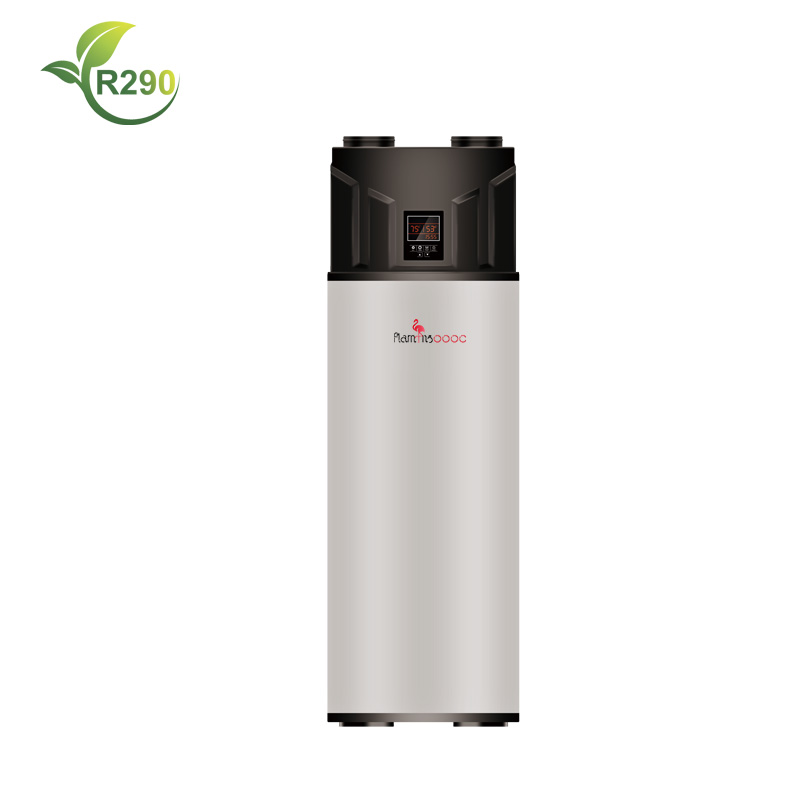
Upon entering Flamingo's showroom, one is immediately drawn to a sleek, rounded "All-in-One" integrated heat pump water heater. Unlike traditional split systems (an outdoor unit plus a water tank), Flamingo seamlessly integrates the core heat pump components—compressor, evaporator, and condenser—with a large-capacity 300L stainless steel tank. The result is a standalone unit, roughly 1.7 meters tall, with a minimal footprint of just 0.24 square meters.
This design philosophy is revolutionary. It eliminates the need for installers to connect complex piping and charge refrigerant on-site like assembling a computer. Users can simply connect the unit to their water and power supply, much like a conventional electric water heater, and it's ready to run. The top-discharge air outlet design allows for flexible installation on balconies, in equipment rooms, or even under outdoor eaves, significantly lowering the barrier to adopting high-end heat pump technology.
2. Energy Efficiency Meets "Luxurious Comfort"
For hot water, temperature is key. Addressing the common shortcomings of traditional heat pump water heaters—reduced efficiency in low ambient temperatures and maximum water temperatures struggling to exceed 55°C—Flamingo's All-in-One unit delivers a powerful response.
Utilizing environmentally friendly R134a refrigerant and a high-efficiency rotary compressor, it not only ensures a low Global Warming Potential (GWP) but also achieves a maximum output water temperature of 75°C. What does this 20-degree difference mean? 75°C high-temperature water effectively kills most bacteria and, more importantly, provides a significantly larger volume of comfortable hot water when mixed with cold water via a thermostatic valve.
Consider a 300L tank heated to 75°C. When mixed down to a comfortable 40°C shower temperature, the effective usable hot water volume far exceeds 300L, effectively providing a reserve of nearly 500L. For families with bathtubs or multiple bathrooms, this completely eliminates the anxiety of "running out of hot water."
3. An Intelligent "AI Butler"
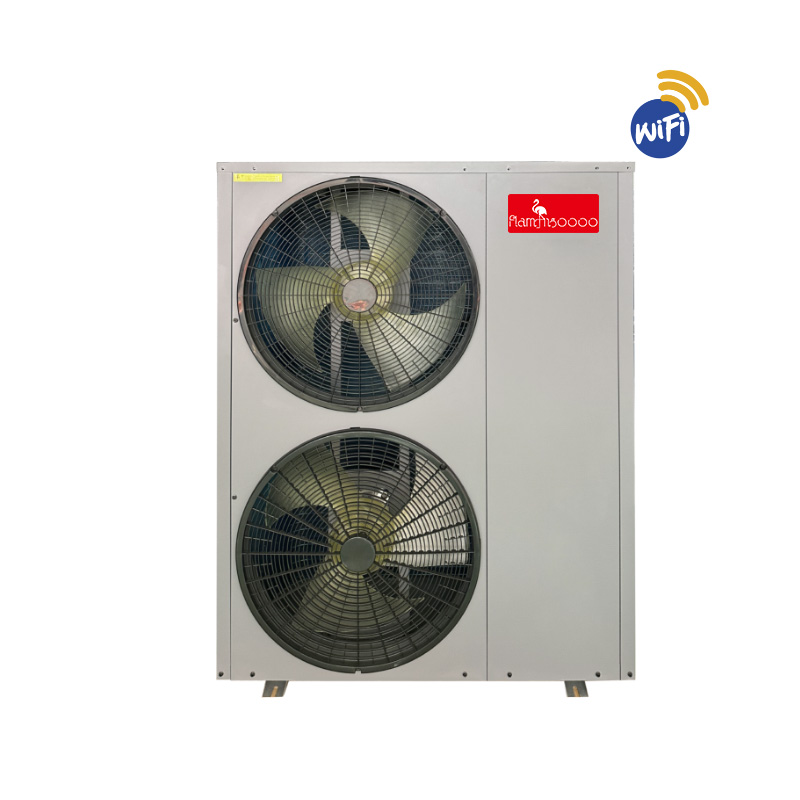
In 2026, a smart home product that cannot connect to the internet lacks a vital soul. Flamingo has keenly anticipated the reliance of Generation Z consumers on smart technology. All Flamingo water heater models come standard with built-in WiFi smart modules.
Through a dedicated mobile app, users can monitor real-time tank temperature, review historical energy consumption, and schedule heating cycles. On the way home from work, a simple tap on the phone activates the water heater, ensuring you're greeted not just by a warm home, but by hot water ready for an immediate shower. More intelligently, the system can learn user habits and automatically activate heating during off-peak electricity hours (lower rates), conserving energy during peak grid demand. This maximizes both energy savings and economic efficiency.
Chapter 3: Scenario Expansion: Beyond Home Use, a Powerful Commercial Tool
If the 300L All-in-One unit fulfills all residential hot water needs, Flamingo's expansion into commercial applications demonstrates the remarkable scalability of its core technology.
"We don't just sell equipment; we provide complete solutions for achieving 'Hot Water Freedom'," emphasized a Flamingo overseas market manager.
Case Study 1: The "Cost Revolution" in the Hospitality Industry
A premium business hotel in Jinan, Shandong, long struggled with high operating costs. Previously reliant on municipal central heating, costs were high, and guests often complained about unstable temperatures. After retrofitting with heat pump water heater units, heating costs dropped dramatically, achieving savings of over 55%.
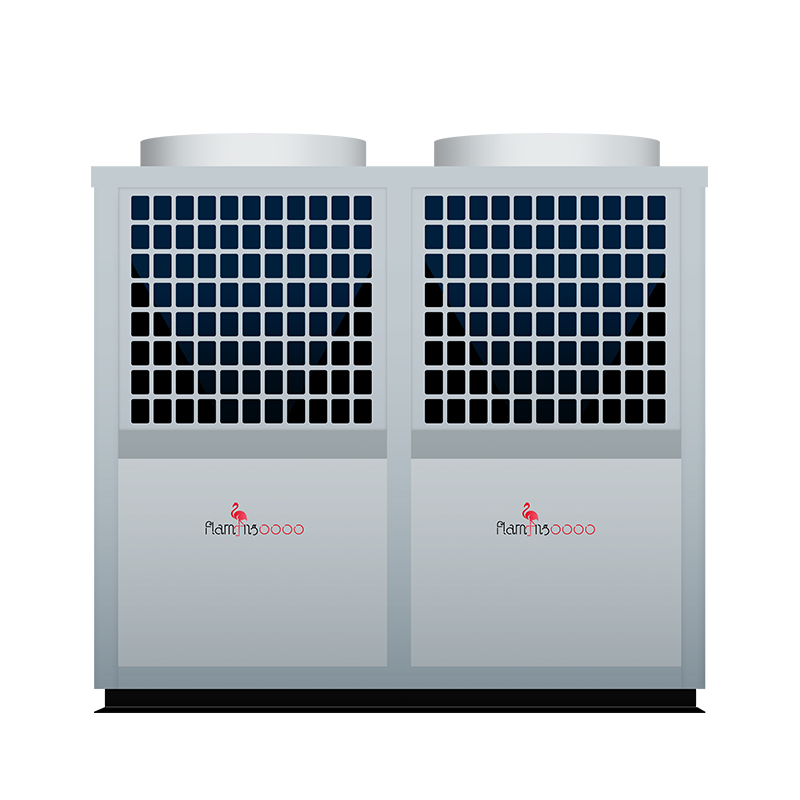
For such scenarios, Flamingo's split-type, large-capacity heat pump water heaters are ideally suited. By paralleling multiple units, they can easily supply hotels, schools, and factories with several tons or even hundreds of tons of hot water daily. Crucially, its ultra-low temperature models, optimized for cold climates, operate stably even in harsh -25°C environments. This allows heat pump water heaters, once dominant only in the south, to successfully penetrate markets in the north, northwest, and northeast China.
Case Study 2: "Constant Temperature Protection" for Campuses & Dorms
Facing the challenge of thousands of people using hot water simultaneously during peak hours, stability is paramount. Flamingo's central hot water system, combining "air-source heat pumps + pressurized tanks," creates a closed pressurized system. This fundamentally solves the problems of unstable water pressure and fluctuating temperatures common in traditional systems.
The underlying heat pump logic applied in projects like the one at a campus near the South-to-North Water Diversion Project in Henan is replicated in Flamingo's approach. Multiple high-capacity units, installed on rooftops of dormitories, canteens, and gymnasiums, provide a reliable daily supply of over 1000 tons of hot water for the entire campus, meeting not only student bathing needs but also maintaining constant temperature for the gymnasium swimming pool. This "distributed installation, centralized control" strategy is core to Flamingo's commercial project promotion.
Case Study 3: Ultimate Eco-Technology with CO₂
While the industry debates the safety of refrigerants like R32 and R290, Flamingo has focused on the most natural and environmentally friendly option: CO₂ (R744) .
The Solar PV Direct-drive Inverter CO₂ Heat Pump, launched in 2025, represents the pinnacle of Flamingo's technological capability. Utilizing the transcritical cycle properties of the natural refrigerant CO₂, this unit not only operates stably in extreme conditions down to -40°C but can also instantly produce high-temperature hot water or even steam up to 90°C and beyond.
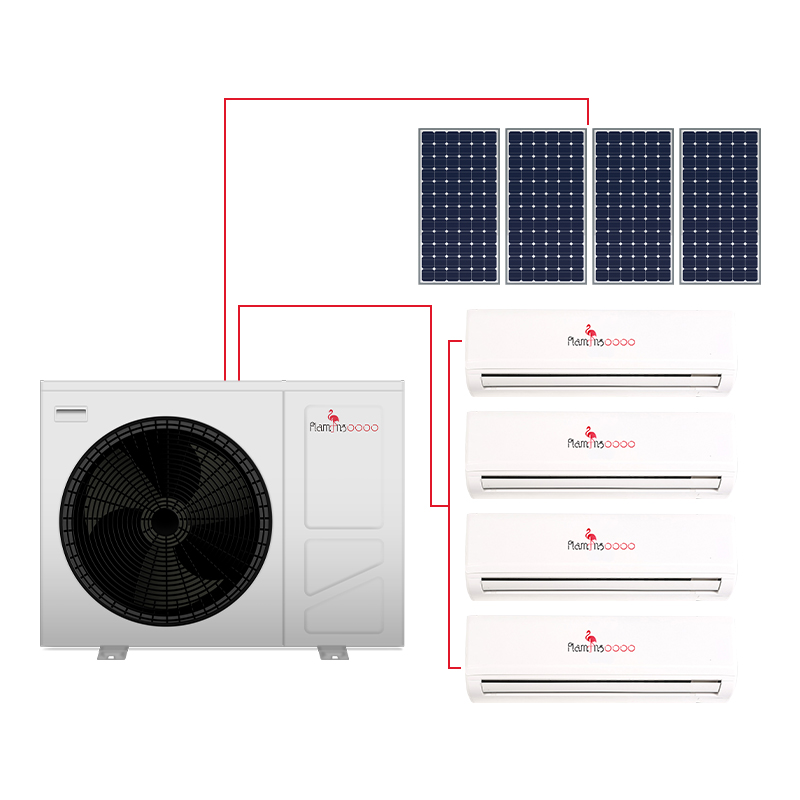
This transcends mere washing purposes; it opens doors to light industrial applications. In sectors requiring high-temperature water, such as food processing, textile printing & dyeing, and electroplating, Flamingo's CO₂ heat pumps are progressively replacing traditional fuel-fired boilers, achieving true "zero-carbon emissions and high-temperature output." Optimized by AI algorithms, these units can also integrate directly with rooftop solar PV, storing surplus daytime green energy as hot water—maximizing the value of every kilowatt-hour for the facility.
Chapter 4: Industry Trend: From Single Heat Source to Integrated Energy Management
With technological advancements by Flamingo and other industry leaders, the role of the heat pump water heater is undergoing a profound shift. It is no longer an isolated appliance but is becoming a vital component of the building's "PV + Storage + Direct Current + Flexibility" ecosystem.
A "cloud-based smart hot water module" developed by another industry player illustrates the future of hot water: using photovoltaic power to directly drive the heat pump, creating a "dual-energy superposition effect." More critically, it establishes a dynamic "consume-return" electricity cycle. When hot water demand is met but solar PV generation is abundant, surplus power is automatically redirected to other building loads; when demand is high and sunlight is low, the system draws from the grid.
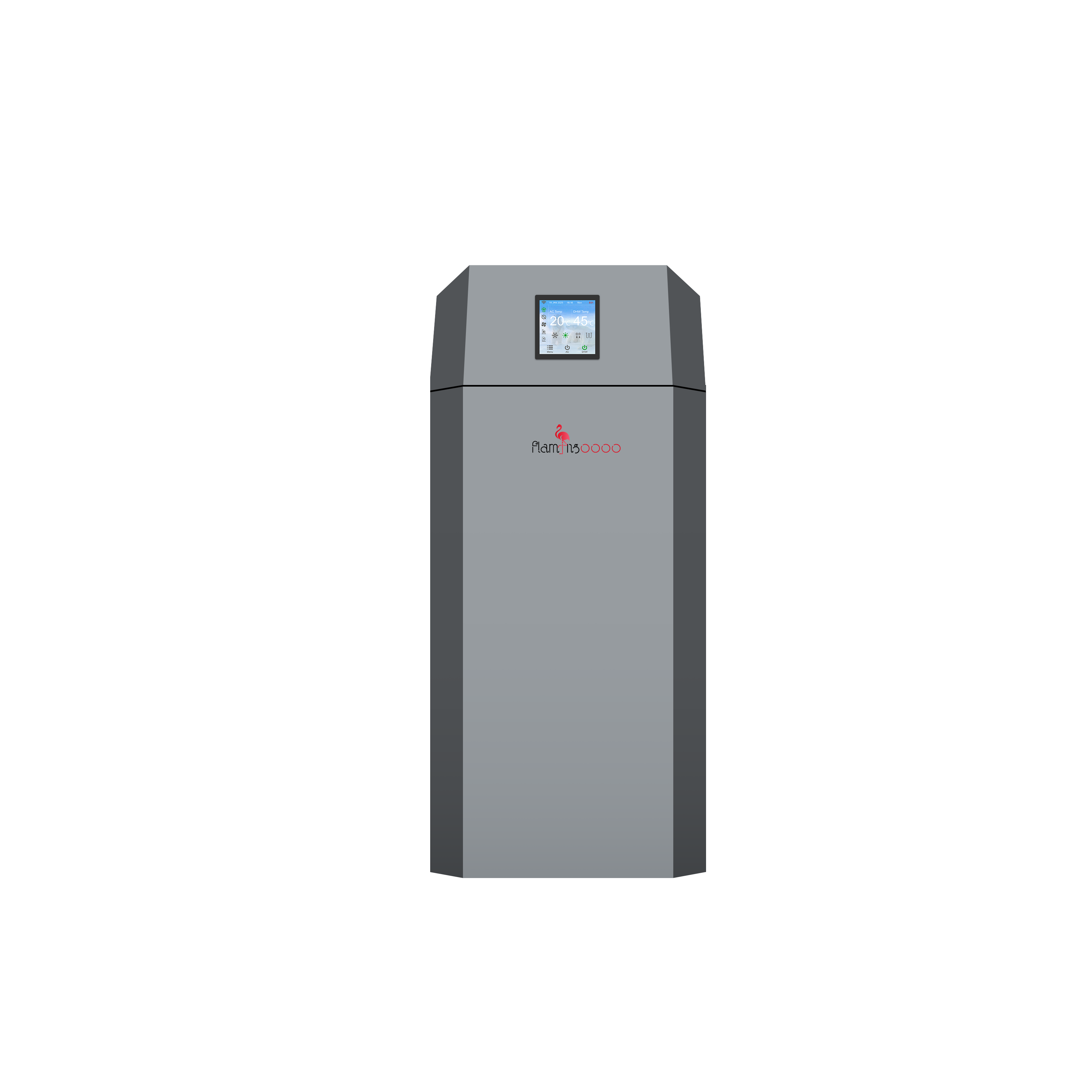
This aligns perfectly with Flamingo's smart energy vision. Its integrated intelligent control system is designed to manage not just hot water, but also to interconnect with home energy storage and electric vehicle chargers, effectively turning the hot water tank into a giant "virtual battery." It can pause heating when the grid is stressed and absorb energy when green power is plentiful. Hot water is becoming a flexible resource in the Energy Internet of Things.
Chapter 5: User's Guide: How to Choose the Perfect Dedicated Water Heater?
Faced with a multitude of options, if you agree with the philosophy "I just want a top-tier water heater," Flamingo's product matrix offers a clear path to selection.
Assess Your Household Size, Choose the Right Capacity
Based on Flamingo's usability studies:For 2-3 person families, a 200L-300L All-in-One heat pump water heater is more than sufficient.
For 4-6 person families or homes with a bathtub, a 300L-400L large-capacity model is essential to guarantee a continuous, comfortable showering experience.
For villas or small commercial spaces, consider split systems or a multi-unit central hot water system.
Check Core Specifications: Focus on "High Temp" and "Low Temp"
High-Temp Capability: Can the unit reach 60°C or even 75°C? This directly determines if your hot water supply is "adequate."
Low-Temp Performance: If you live in the Yangtze River region or further north, pay close attention to the unit's specified operating range. The ability to operate stably at -15°C or even -25°C is a key indicator of the unit's robustness.
Evaluate Smart Features: Embrace "AI"
In 2026, a water heater must be as smart as a smartphone. Models equipped with WiFi remote control, energy consumption statistics, and off-peak scheduling can save enough in annual electricity costs to offset the initial price difference.Look for Quality Materials: Insist on "Stainless Steel"
Water quality dictates lifespan. Flamingo insists on using 304 Stainless Steel Tanks. Compared to traditional enamel-lined tanks, stainless steel offers superior corrosion resistance and pressure tolerance, eliminating the risk of leaks caused by enamel spalling. If you were to cut open a Flamingo water heater after ten years of use, the inner tank would still be bright and smooth.
Conclusion: Embrace the Era of Pure Heat Pump Hot Water
Let's return to our initial question: Can I use a heat pump just for hot water?
From the industrial park in Jiangmen, Guangdong, to the business hotel in Jinan, to the university campus in Henan, and to the countless homes currently being renovated—the answer is already clear: Not only can you, but you should.
In the tidal wave of the energy transition, heat pump technology shines as one of the brightest stars. Companies like Flamingo, with their specialized focus, are polishing this star to even greater brilliance through innovations like the "All-in-One" unit, CO₂ ultra-high-temperature heat pumps, and smart IoT connectivity. They demonstrate that even the seemingly simple task of "just making hot water," when approached with technological reverence and deep user insight, can lead to a monumental achievement.
The next time you turn on a tap and feel that steady, comforting stream of warm water, remember: it may no longer be the product of burning gas or the resistive heating of an element. It could be a gift of free thermal energy harvested from the air around us, a gift delivered to you by innovators like Flamingo.
