
What Size Yard Do You Really Need for a Ground Source Heat Pump?
1. Key factors affecting the land footprint of a GSHP system
The land area required by a GSHP system depends mainly on the type and configuration of the ground heat exchanger. According to China’s national standard GB 50366, ground heat exchangers are divided into two basic types – horizontal and vertical – and their land requirements differ significantly.
1.1 Horizontal loop systems: “A large green space” needed
Horizontal heat exchangers are buried in shallow soil, typically at depths of 1.2 to 3 metres, using single‑layer or multi‑layer parallel or series configurations. This approach is relatively simple to install and has a lower upfront cost, making it popular where land is abundant. However, the disadvantages are obvious: heat exchange efficiency is influenced by surface temperature fluctuations, operational stability is lower, and the land area required is roughly twice the heated floor area.
For example, a typical home with 200 m² of heated area would need more than 400 m² of outdoor space for a horizontal loop system. In other words, a substantial yard or open area is essential.
1.2 Vertical loop systems: A solution for tight spaces
In contrast, vertical heat exchangers use boreholes that go tens or hundreds of metres deep, effectively converting the heat exchange space from “planar” to “three‑dimensional”. The small footprint of vertical systems makes them the first choice when land is limited – ideal for urban houses, townhouses, or properties with modest gardens. Industry experience shows that a 300 m² building requires only about 80 m² of drilling area, and 400 m² of building needs roughly 110 m².
However, vertical systems have a higher initial cost – drilling usually accounts for about 50% of total system investment. For normal geological conditions, at a depth of around 100 m, drilling costs range from RMB 150 to 300 per metre. This is an economic factor that many consumers must weigh.
1.3 Plant room area and other supporting needs
In addition to the outdoor loop field, a GSHP system also needs space for the equipment. Typically the heat pump unit requires 5–6 m², depending on the model and configuration. Moreover, domestic units normally need a 380 V three‑phase power supply, so the electrical service must be checked and upgraded before installation.
Geological conditions are another prerequisite. Rock or other difficult ground can increase drilling difficulty and cost, and in extreme cases may even affect the feasibility and economics of the system.
2. Quantifying the real yard requirement: from calculation to decision
For an owner preparing to install a GSHP, the core question has shifted from “Is my yard big enough?” to “Which solution is best for me?” Below we provide a reference framework for evaluation.
2.1 Cooling and heating load calculation: the starting point of every design
Every well‑designed GSHP system begins with an accurate calculation of the building’s cooling and heating loads. Designers must consider the building’s orientation, envelope insulation performance, usage type (residential, commercial, office), and local climate to determine the peak cooling and heating demands. Notably, the peak cooling load usually occurs during the day, while the peak heating load occurs at night – this time difference gives valuable leeway for designing the ground heat exchanger and is an important basis for system optimisation.
2.2 A rule of thumb for loop field area: a simple reference
In practical engineering, a fairly mature rule of thumb has emerged: the borehole area is roughly 1:1 with the building footprint. More specifically:
200 m² of building area → about 40 m² of outdoor drilling area
300 m² of building area → about 60 m²
400 m² of building area → about 80 m²
These numbers can serve as a preliminary reference for consumers. Note that borehole spacing is typically about 4.5 metres (larger spacing improves heat exchange), which further affects the usable construction area. If the borehole area is too small, heat exchange efficiency drops and system performance will degrade year by year.
2.3 Choosing a strategy: a trade‑off between cost and space
The choice between a horizontal and a vertical system is essentially a trade‑off between upfront cost and available land. Horizontal systems are simpler to install and cheaper, but consume a lot of yard space. Vertical systems have a small footprint and stable operation, but drilling costs are high.
For villa owners, this choice is especially important. Four factors must be weighed: availability of sufficient drilling area, geological suitability, location of the plant room, and availability of a 380 V three‑phase power supply. Only when all these conditions are met can a GSHP system deliver long‑term stable, highly efficient, and energy‑saving performance.
3. Flamingo: reinventing yard‑space requirements with innovative technology
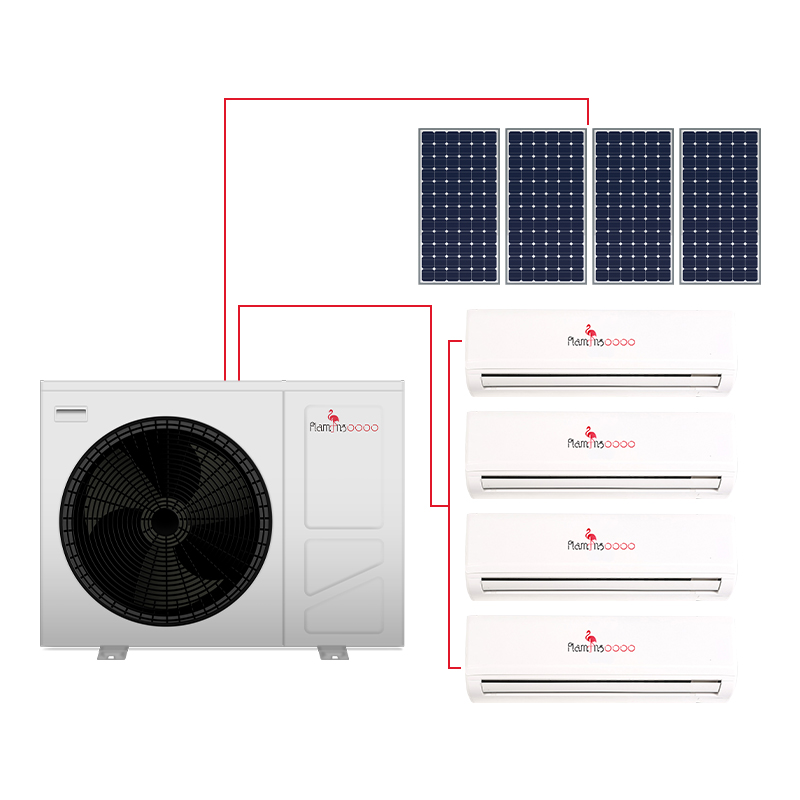
When traditional GSHP solutions face the twin challenges of high upfront cost and demanding land requirements, Flamingo (Flamingo New Energy Technology Co., Ltd.) opens a new value space with its innovative PV‑direct‑drive and intelligent control technology. Flamingo focuses on two core technology paths: inverter heat pumps and PV‑direct‑drive heat pumps. Headquartered in Foshan, Guangdong, the company has long been devoted to deeply integrating PV power generation with heat pump technology, providing efficient, low‑carbon, and smart heating/cooling solutions to users worldwide.
3.1 PV‑direct‑drive technology: from “energy saving” to “visible savings”
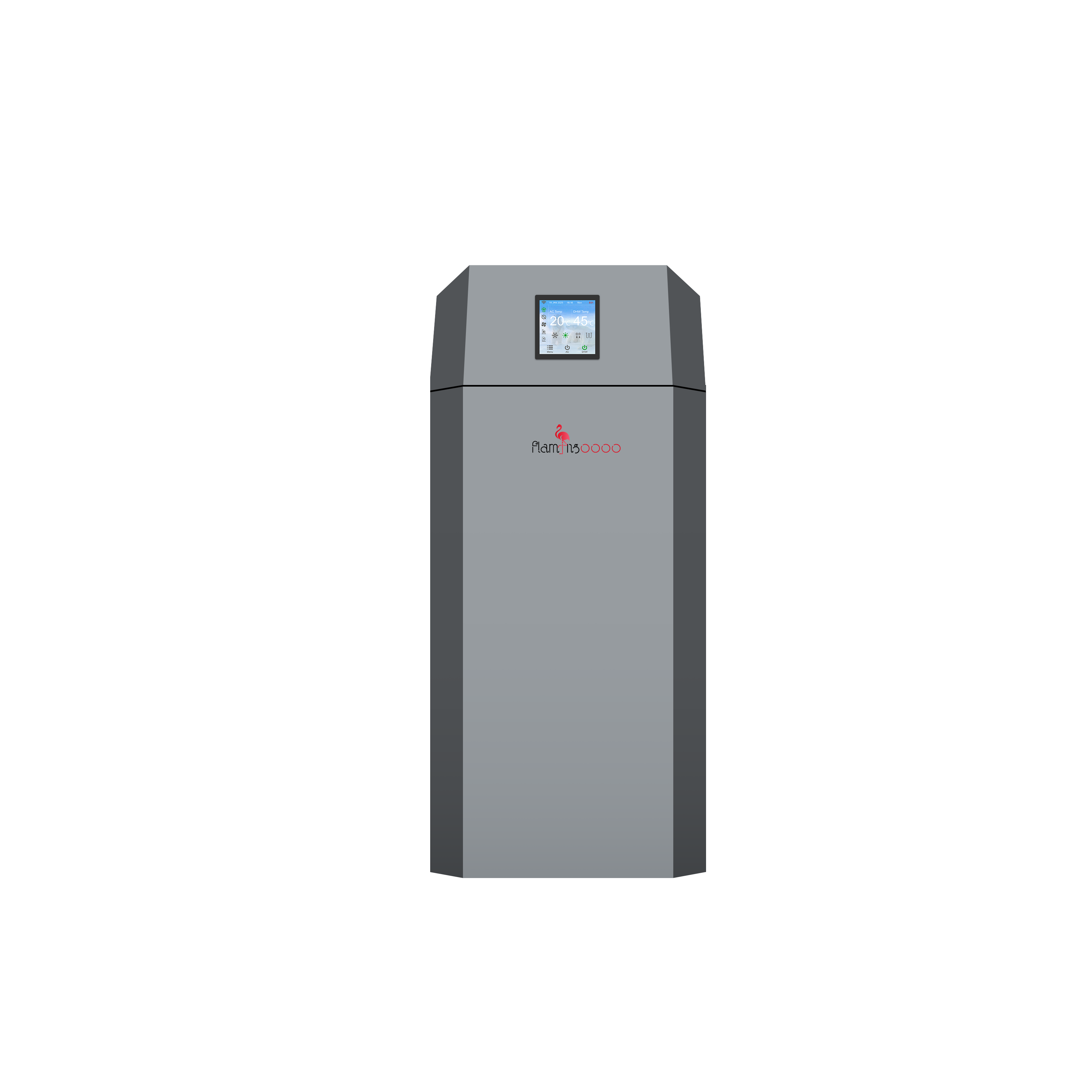
Flamingo’s proprietary PV‑direct‑drive water‑to‑water heat pump was a highlight at the 2025 ISH China供热展. The product combines several proprietary patents, seamlessly integrating PV direct drive with DC inverter technology, and is equipped with an AI intelligent control system that automatically optimises operating parameters according to environmental changes and user needs – achieving precise temperature control and minimal energy consumption.
The benefits are clear: Flamingo’s water‑to‑water heat pump saves 30% energy compared to an air source heat pump; with the PV direct drive function, total energy savings reach at least 60%. The system operates with near‑zero emissions – no fluorine, no chlorine, no harmful gases or pollutants. For the user, this means that for the same heating/cooling demand, the demands on the ground heat exchanger are reduced, thus alleviating dependence on outdoor space.
3.2 Mitsubishi compressor & AI intelligent control: quality and efficiency combined
Flamingo’s water‑to‑water heat pump is equipped with a Mitsubishi compressor, ensuring reliability, durability, and world‑class performance. The unit can simultaneously meet the heating, cooling, and domestic hot water needs of both residential and commercial buildings.
The AI intelligent control system elevates the heat pump from “passive operation” to “active optimisation”. It senses ambient temperature changes and user patterns in real time, automatically adjusting compressor frequency, water pump speed, and other operating parameters to keep the coefficient of performance (COP) in its optimal range, while also reducing the need for redundant loop field area.
3.3 Full‑scene coverage: from villas to commercial complexes
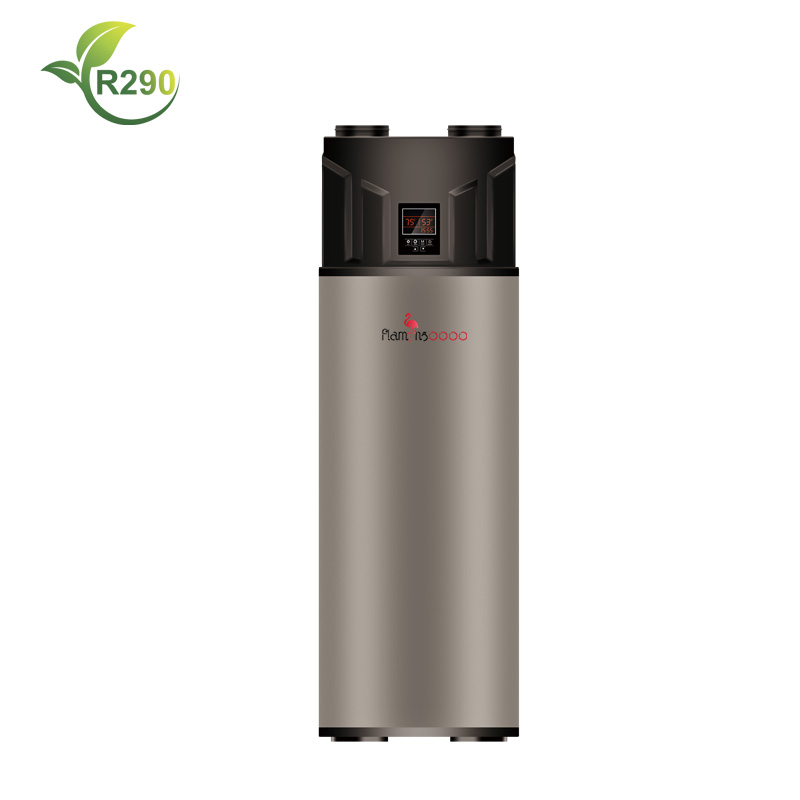
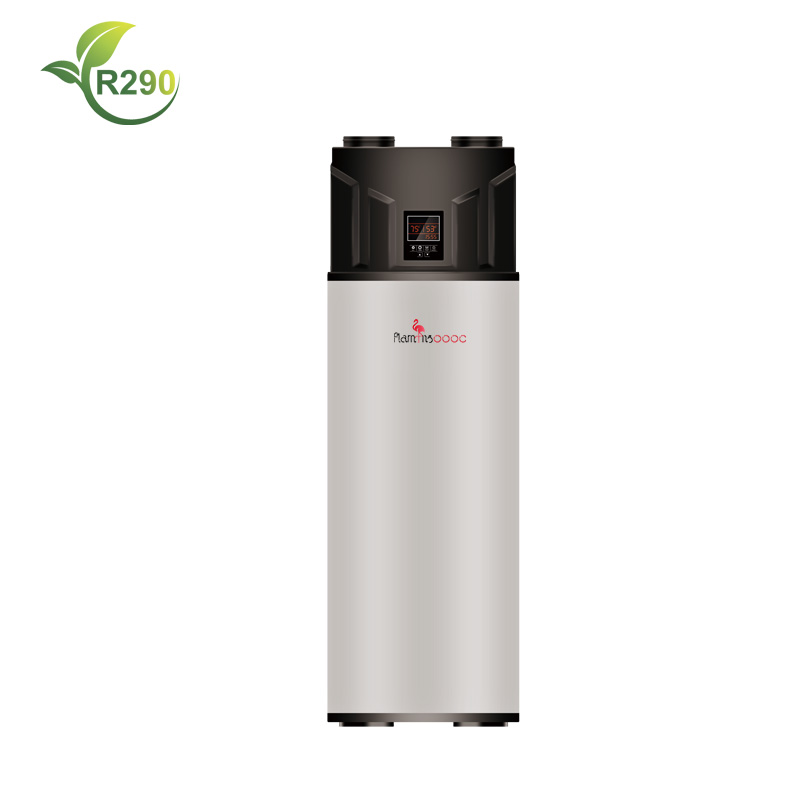
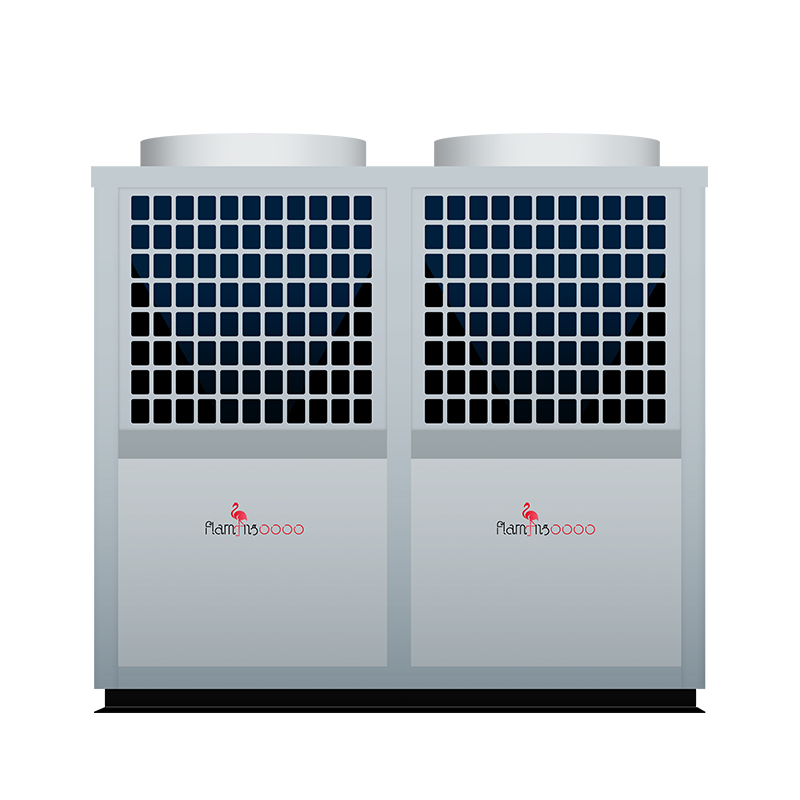
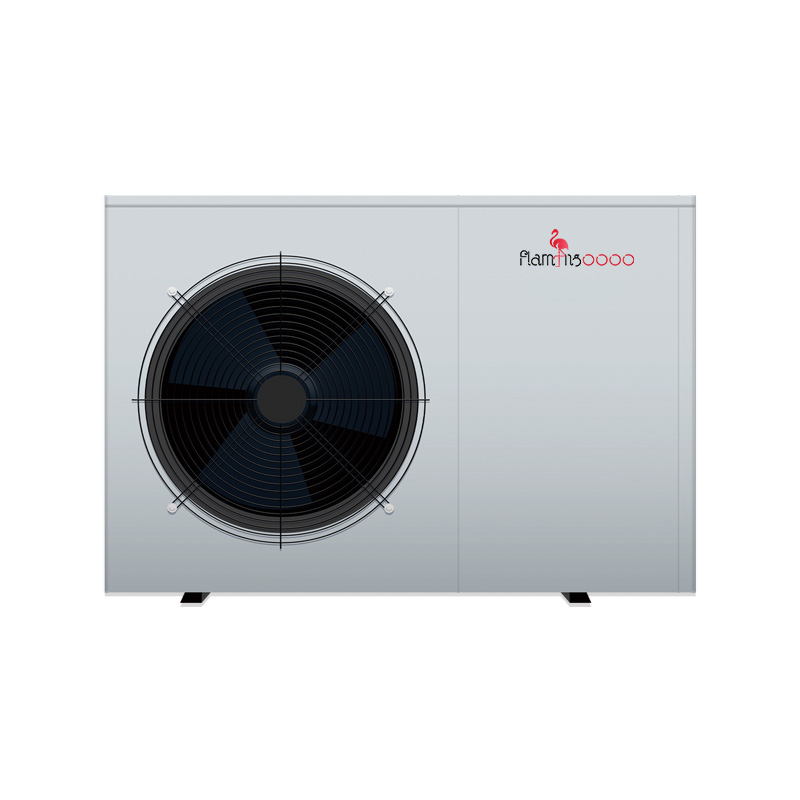
Flamingo’s product portfolio covers residential, commercial, and industrial applications, including multiple power sizes such as 6 HP and 30 HP PV‑direct‑drive air source heat pumps, PV‑direct‑drive CO₂ heat pumps, and water‑to‑water heat pumps. The 30 HP PV‑direct‑drive water‑to‑water heat pump features a dual‑system design, liquid cooling technology, and AI intelligent regulation, tailored for commercial scenarios such as hotel heat recovery, hot water supply, and combined heating/cooling.
At the 2025 ISH China fair, Flamingo’s live efficiency demonstration area attracted many professional visitors, and several domestic and foreign heating engineering companies expressed strong interest in cooperation. Flamingo’s founder, Zou Zhizhong, said: “Through the global stage of ISH China, we look forward to working with industry peers to advance the green energy revolution, letting Chinese smart manufacturing contribute to global carbon neutrality.”
3.4 Core technical barriers: from the world’s first R410 inverter ground source heat pump to patented innovations
Flamingo’s technical foundation is deep and well‑defined. From the launch of the world’s first R410 inverter ground source heat pump to the implementation of multiple core patents in 2024, Flamingo has continuously broken through industry technical barriers, infusing its products with solid technological know‑how. The team has successfully overcome the challenge of PV‑heat pump synergy and built a multi‑energy complementary low‑carbon system. This accumulated expertise enables Flamingo to offer more flexible and efficient system configurations – allowing customers with limited yard space to still maximise the benefits of a GSHP.
4. Industry trends and national policy: a historic window for GSHP
Today, the GSHP industry enjoys strong policy support and rapid market growth, creating an unprecedented favourable environment for consumers to install and use such systems.
4.1 Market size: steady growth, promising outlook
The global GSHP market shows strong momentum. According to industry reports, the global market was valued at approximately USD 11.3–13.7 billion in 2025, and is expected to grow to USD 22.1–22.8 billion by 2033–2034, with a CAGR of about 7.8% over the forecast period. This growth is driven by increasing demand for efficient, sustainable heating and cooling solutions, and reflects GSHP’s important contribution to combating climate change and reducing greenhouse gas emissions.
4.2 Policy tailwinds: national direction, local action
In April 2026, Premier Li Qiang chaired a State Council special study session on “Balancing energy security with green and low‑carbon transition”, explicitly stating: “Develop biomass, geothermal, and ocean energy according to local conditions, and promote the integrated development of new energy sources.” This important statement elevates the previously multi‑ministerial “Action Plan for Promoting High‑Quality Development of the Heat Pump Industry” to a new level of national energy strategy – signifying that heat pump technology has been upgraded from a building‑efficiency “bonus” to a key path for ensuring energy security and achieving clean heating and cooling.
At the local level, many provinces have introduced differentiated support policies. Beijing offers up to 30% construction investment subsidies for eligible new energy heating projects. Shaanxi pioneered a “non‑interference geothermal” policy, making medium‑deep non‑interference geothermal (downhole heat exchange without extracting groundwater) a priority direction, with green‑channel treatment for approval, land use, water use, and subsidies. In many places, GSHP projects for non‑heating season cooling and industrial waste heat recovery are being intensively deployed.
4.3 Maturing technical standards: laying the foundation for high quality
In March 2026, the 2026 China (Weifang) Geothermal (Heat Pump) High‑Quality Development Conference was held, where two national standards for magnetic bearing technology were officially released, along with a collection of typical engineering cases for geothermal energy development. Academician Teng Jiwen of the Chinese Academy of Sciences said at the conference that geothermal energy, as one of the most stable and reliable clean energy sources given to us by the earth, requires strengthened quantitative surveys of deep geothermal resources to lay a solid foundation for large‑scale, scientific development.
4.4 Industry pain points and future direction: high upfront investment remains a key constraint
Despite favourable policies and market growth, the global GSHP market still faces challenges. Compared with traditional heating/cooling solutions, GSHP systems often require extensive excavation and underground infrastructure, resulting in high initial costs – an economic barrier that may deter potential users. In addition, low soil thermal conductivity can lead to large loop field areas and more construction work.
However, technological progress is gradually breaking these constraints. Flamingo’s PV direct drive and AI control technologies are a typical example of reducing upfront pressure and land requirements by improving system efficiency and lowering overall energy consumption.
5. In‑depth comparison: GSHP vs. air source heat pump vs. conventional HVAC
When evaluating yard‑space requirements and making a final system selection, focusing only on the land footprint of a GSHP is not enough. Consumers should compare GSHP with other mainstream solutions – air source heat pumps and conventional A/C + boiler combinations – to assess overall cost‑effectiveness and long‑term benefits.
5.1 Performance comparison
| Aspect | Ground Source Heat Pump | Air Source Heat Pump | Conventional A/C + Boiler |
|---|---|---|---|
| Outdoor land footprint | Vertical: tens to >100 m²; Horizontal: hundreds+ m² | About 1–3 m² (outdoor unit) | About 1–2 m² (outdoor unit) + boiler room space |
| Upfront investment | Residential RMB 50k–150k; Villa RMB 400k–800k | Residential about RMB 20k–50k | A/C about RMB 20k–40k + boiler about RMB 10k–20k |
| Annual operating cost | 50%–60% of conventional central A/C | Higher than GSHP | Highest (gas + electricity) |
| COP | 4.0+, up to 6 | About 2.5–3.5 | A/C 2.5–3.0; boiler 0.9–1.0 |
| Unit lifespan | 20+ years | About 10–15 years | A/C 10–15 yrs; boiler 10–15 yrs |
| Environmental impact | Zero emissions, no outdoor heat rejection equipment | Outdoor unit noise and hot air discharge | Combustion emissions |
| Best for | Properties with adequate yard or drilling conditions | No special site requirements | No special site requirements |
Sources: industry data compilation
5.2 Value conclusion: “invisible wealth” in the long run
From an operating cost perspective, a GSHP system costs only 50%–60% as much to run as a conventional central A/C. For a 200 m² home, annual heating/cooling savings can amount to several thousand to over ten thousand RMB. The underground loop can last 50 years or more, and the heat pump unit often exceeds 20 years – far longer than conventional A/C and boiler equipment.
Moreover, a GSHP system is discreetly installed – the outdoor loop is buried in the yard and the unit is indoors – no outdoor units, preserving the building’s clean aesthetics with almost no noise or hot air discharge. In the context of green building certifications (LEED, BREEAM) and China’s “dual carbon” goals, properties equipped with renewable energy systems are more marketable and hold their value better.
6. From “invisible housekeeper” to green living: the long‑term value of GSHP
For owners who pursue high quality of life and long‑term asset value, a GSHP is far more than a heating/cooling appliance. Industry experts call it an “invisible housekeeper” – its unobtrusive design, superior comfort, long service life, and remarkable energy savings make it a smart choice for modern, high‑end residences.
6.1 Operational convenience and stability
A GSHP system operates very stably, with minimal impact from outdoor temperature swings. The underground soil temperature remains within a stable range of about 10–25 °C all year, providing excellent heat exchange conditions for the unit. Unlike air source heat pumps, whose efficiency degrades in severe cold or heat, the GSHP maintains consistently high performance, ensuring constant indoor comfort.
It is important to note that “three‑tenths product, seven‑tenths design and installation” applies to GSHPs. A rigorous process – including an on‑site thermal response test to accurately determine soil thermal conductivity – is the scientific basis for designing the loop length and type. Professional system design, standardised construction, and comprehensive after‑sales service are all indispensable.
6.2 Future‑proof asset appreciation
Against the backdrop of the global green energy transition, properties with renewable energy systems are gaining a clear market edge. As carbon trading and green electricity markets mature, GSHPs as flexible loads will increasingly be able to participate in demand response programmes and generate additional revenue.
Flamingo’s founder Zou Zhizhong is confident about this future. He emphasises that heat pump technology is evolving from standalone equipment to systematic energy solutions, and Flamingo will continue its innovation‑driven development, launching high‑quality products that meet market demands and contributing to global energy transformation and a low‑carbon future. For Flamingo, this is not just a business mission, but a cross‑border responsibility for sustainable development.
Conclusion
Back to the original question: “What size yard do you really need for a ground source heat pump?”
The answer is not a single fixed number, but a dynamic decision that balances technology, space, budget, and usage goals. Horizontal loop systems demand the most yard space – typically twice the heated floor area. Vertical loop systems compress the land footprint to about one times the building footprint. And if you choose Flamingo’s PV‑direct‑drive water‑to‑water heat pump, with its at‑least‑60% overall energy savings, the required loop field area can be smaller for the same heating/cooling demand – making the best use of a limited yard.
With strong policy guidance and a rapidly expanding market, GSHP technology is now integrating into thousands of homes and businesses at an unprecedented pace. Flamingo, as a technology pioneer in this transformation, uses PV direct drive, AI intelligent control, Mitsubishi compressors and other advanced technologies to continuously offer users lower energy consumption, smaller footprints, and smarter, more efficient choices.
When a green lifestyle meets cutting‑edge energy technology, the size of your yard is no longer the decisive threshold. What really matters is whether you are ready to take the first step towards “zero‑carbon comfortable living”.
