
Are Inverter Heat Pumps Worth the Investment?
Data Analysis Reveals Substantial ROI and Efficiency Gains
In a residential Beijing neighborhood, Mr. Zhang’s winter heating electricity bill is nearly 40% lower than his neighbors', while his indoor temperature remains a steady 22°C. This change began five years ago with the installation of an inverter heat pump.
Five years ago, when Mr. Zhang invested 28,000 RMB in a complete inverter heat pump heating system, many questioned the rationale. Today, as energy prices continue to rise and extreme weather becomes more frequent, the price of a similar system has increased by 15%, while the Return on Investment (ROI) for Mr. Zhang's household has reached a remarkable 23%.
01 Cost Structure Analysis: Breaking Down the Investment
Determining whether an inverter heat pump is a worthwhile investment begins with understanding its complete cost structure, which is more complex yet transparent compared to traditional gas boilers or resistive heating systems.
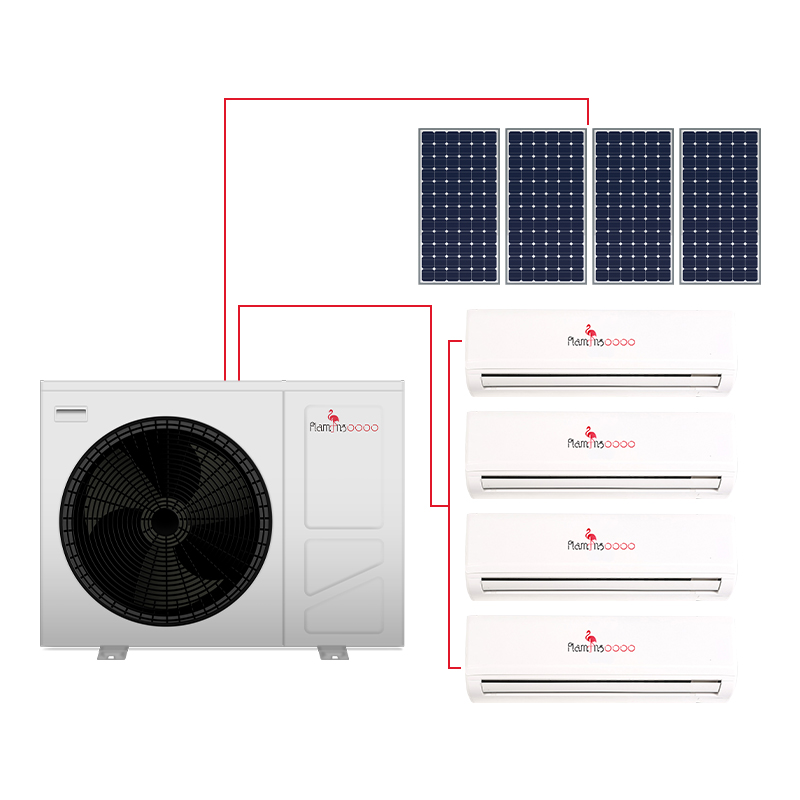
The total cost for a complete system typically includes equipment, installation, and potential retrofitting expenses. For a standard 120㎡ residence in northern China, equipment costs account for 50-60% of the total investment. This includes the outdoor unit, indoor fan coils or underfloor heating system, and intelligent controls. Installation costs comprise 20-30%, varying based on building structure and electrical requirements.
Market research indicates prices for full-house domestic inverter heat pump systems range from 25,000 to 40,000 RMB, while imported premium brands can reach 50,000 to 80,000 RMB. Government subsidies significantly lower the investment threshold. Under Beijing's "Coal-to-Electricity" policy, for example, eligible households can receive a 30% subsidy on equipment purchases, capped at 24,000 RMB, alongside preferential off-peak electricity tariffs as low as 0.3 RMB/kWh.
The long-term ownership cost is a crucial value assessment factor. Compared to the annual maintenance cost of approximately 800-1,500 RMB for a gas boiler, the average yearly maintenance for an inverter heat pump is about 500-800 RMB, a figure that is decreasing due to technological advancements and standardized components.
02 Operational Efficiency: Comparative Energy Consumption Analysis
Operational efficiency directly determines the long-term economics of inverter heat pumps, with comparative data revealing their significant energy-saving advantages.
Taking a 120㎡ residence in Beijing as an example, the energy consumption data for an entire heating season (November 15 to March 15) shows:
A traditional gas wall-mounted boiler consumes approximately 1,500 cubic meters of natural gas, costing about 4,500 RMB.
Resistive electric heaters consume about 12,000 kWh, costing about 6,000 RMB (at 0.5 RMB/kWh).
An inverter heat pump consumes about 4,000 kWh, costing about 2,000 RMB (utilizing off-peak night rates).
The Coefficient of Performance (COP) is the core metric for measuring heat pump efficiency. While standard fixed-speed heat pumps have a COP of approximately 2.8-3.2 under standard conditions, modern DC inverter heat pumps can achieve a COP of 3.5-4.2, potentially exceeding 5.0 in optimal conditions. This stems from the core advantage of inverter technology: the ability to modulate output smoothly based on demand, avoiding the energy waste caused by frequent on/off cycling.
Smart control systems further enhance operational efficiency. Modern inverter heat pumps with learning capabilities can analyze household patterns and predict heating needs. Data shows that systems with intelligent learning functions can save 10-15% more energy compared to basic timer-controlled systems.
03 Environmental Value: Quantifying Carbon Emission Reductions
The environmental value is an increasingly important factor in evaluating the ROI of inverter heat pumps, with the actual impact of carbon reduction exceeding most intuitive estimates.
The annual carbon reduction per unit can be calculated precisely. For a standard 5 HP inverter heat pump in Beijing:
Replacing a traditional gas boiler avoids approximately 3.2 tons of CO₂ emissions annually, equivalent to the annual carbon absorption of 17 mature trees.
Replacing a coal-fired boiler avoids about 5.8 tons of CO₂ emissions.
Replacing resistive electric heating still avoids about 2.1 tons of CO₂ emissions, especially in grids reliant on coal power.
From a macro perspective, building operations account for 22% of China's total carbon emissions, with heating in northern cities comprising 25% of that. Large-scale adoption of efficient inverter heat pump technology could alter this energy structure.
Beyond CO₂, traditional heating methods produce other pollutants. A gas boiler emits about 1.5 kg of NOx and 0.3 kg of particulates annually. Inverter heat pumps produce zero local emissions, transferring potential pollution to power plants where it is easier to manage centrally.
From an energy security standpoint, the share of renewable energy in China's power grid continues to rise, reaching 32% in 2023. Using an inverter heat pump means the heating energy automatically becomes cleaner as the grid decarbonizes—an unparalleled advantage over gas or coal heating.
04 Comfort and Performance: Beyond Quantifiable Metrics
Beyond economics and environmental benefits, the enhanced comfort provided by inverter heat pumps represents significant "implicit value" in the investment, offering tangible improvements in quality of life.
The precision of temperature control is a primary comfort advantage. While traditional systems can cause indoor temperature fluctuations of 3-5°C, inverter heat pumps can limit this variation to within 0.5°C. This stability comes from their modulating capability, allowing micro-adjustments to output power instead of simple on/off cycling.
Improvements in indoor air quality are another key benefit. Unlike traditional radiators which can dry the air, inverter heat pumps used with fan coils can maintain optimal indoor humidity levels of 40-60%. Some advanced models also include air purification modules.
Multi-functionality adds practical value. The same system provides heating in winter, cooling in summer, and can supply domestic hot water year-round. This integrated design saves space and simplifies home management. For hot water production, the energy efficiency of an inverter heat pump is 3-4 times higher than that of a traditional electric water heater.
Smart controls enhance user experience, allowing remote temperature adjustment, energy consumption monitoring, and maintenance alerts via smartphone apps. Learning systems can automatically analyze user habits to pre-heat the home before arrival and conserve energy after departure.
05 Investment Payback: A Complete Financial Analysis Framework
A rigorous financial analysis is essential for determining if an inverter heat pump is worth the investment, encompassing initial cost, operating expenses, maintenance, subsidies, and residual value.
The payback period is the most intuitive metric. For typical household users, it generally ranges from 3 to 6 years, depending on:
The existing heating method being replaced (gas, electric, or coal).
Local energy prices.
Climate conditions and usage patterns.
Available government subsidies.
A lifecycle cost analysis provides a more comprehensive view. Considering a 15-year equipment lifespan and discounting all costs (initial investment, 15 years of operation and maintenance, minus residual value) to present value reveals the true cost comparison between heating methods. This analysis consistently shows that while the upfront cost for an inverter heat pump is higher, its 15-year total cost is typically the lowest, demonstrating clear long-term economic superiority.
Sensitivity analysis reveals the impact of various uncertainties. Fluctuations in energy prices are a primary risk factor. However, technological advancements improving efficiency and increasing policy support, which can improve the financial Return on Investment (ROI) by 3-8 percentage points, positively influence the payback period.
From a broader social investment perspective, the widespread adoption of inverter heat pumps delivers external benefits like improved public health (reducing illnesses linked to air pollution), better grid balance (utilizing off-peak electricity), and enhanced energy security (reducing dependence on natural gas imports). These significant values, though not directly reflected on a user's bill, contribute substantially to overall societal value.
