
What Is the Expected Lifespan of an Inverter Heat Pump?
Industry Insights Reveal 15+ Years of Reliable Operation
An ordinary farmhouse in Beijing’s Fangshan District quietly houses an industry record—a DC inverter air-source heat pump has been running continuously for 15 winters, its compressor starting and stopping smoothly over 50,000 times.
In Nanshangle Village, Beijing, a DC inverter air-source heat pump has provided stable heating for a rural family for 15 consecutive winters, accumulating over 50,400 hours of operation. In April 2024, an authoritative inspection confirmed the equipment still meets all operational standards, becoming a benchmark case in the industry.
01 Industry Standard: The Technical Basis Behind the 15-Year Benchmark
The lifespan standard in the heat pump industry is not arbitrarily set but is based on extensive operational data and technological trajectories.
According to data from the New York State Energy Research and Development Authority (NYSERDA), the expected lifespan of air-source heat pumps is approximately 15 years. This figure is widely recognized within the industry and serves as a crucial reference for product design and market positioning.
A study sponsored by the Electric Power Research Institute (EPIR) provides more granular data. Covering 2,184 heat pumps of various brands and models, the research indicates a median service life of about 19 years for the units, with the core compressor component averaging 14.5 years.
These findings align closely with research conclusions from the EU’s “Heat Pump 2020 Plan,” suggesting a globally accepted technical standard within the industry.
Leading international manufacturers often commit to product lifespans exceeding the industry baseline. Danfoss explicitly states in its product documentation a design life of at least 20 years, while brands like Mitsubishi Electric and Trane generally claim design lives between 18 to 25 years.
This “over-engineering” reflects manufacturers’ commitment to reliability and has become a key selling point for premium products.
02 The Longevity Code: Decoding 50,400 Hours of Stable Operation
The “long-lived heat pump” at Mr. Tian’s home provides a valuable real-world sample for studying long-term equipment reliability.
Installed in 2010, this DC inverter air-source heat pump served a 74-square-meter typical northern rural home, maintaining indoor winter temperatures between 18-22°C. Over 15 years, it has endured Beijing’s extreme climate, including historical lows of -25°C and prolonged smog.
Maintenance records reveal only three professional services and one control board upgrade in 15 years, with core components like the compressor and heat exchangers remaining original. This combination of low maintenance and high reliability highlights the advantages of inverter heat pump technology.
An inspection report noted the unit’s coefficient of performance (COP) remains above 92% of its original value after prolonged use, demonstrating the performance stability of inverter technology and breaking the conventional pattern of significant performance degradation in heating equipment.
03 Lifespan Variations: Key Influencing Factors Revealed by Data
The lifespan of a heat pump system is not fixed but influenced by multiple factors, leading to significant product variations.
Environmental conditions significantly impact heat pump longevity. Research indicates that in regions with an average winter temperature of -10°C, a heat pump’s lifespan may be 15-20% shorter compared to regions with an average of 5°C, due to longer high-load operation in colder conditions.
Compressor quality, as the “heart” of the heat pump, directly determines the unit’s lifespan. Heat pumps utilizing high-quality compressors from brands like Mitsubishi, Panasonic, or Danfoss can achieve 12-18 years of service, whereas units with standard compressors typically last 6-10 years.
Installation quality, often overlooked, profoundly affects longevity. Professionally installed heat pumps can show a 30-50% longer lifespan compared to amateur installations, encompassing proper location selection, piping, and system calibration.
04 Core Technology: How Inverter Technology Extends Heat Pump Life
The life-extending effect of inverter technology stems from its fundamental change in operation compared to traditional fixed-speed units.
Traditional fixed-speed heat pumps operate like conventional air conditioners: they shut down completely upon reaching the set temperature and restart when needed. This frequent cycling subjects the compressor to significant electrical and mechanical stress, with startup currents 5-7 times higher than normal operation, accelerating wear.
Inverter heat pumps operate differently. By adjusting the compressor speed via an inverter, the system can continuously modulate its output to match demand, maintaining a near-constant operating state. This “soft start, continuous operation” mode reduces compressor cycling by over 80%, significantly decreasing mechanical wear.
DC inverter technology further optimizes efficiency and reliability. Compared to AC inverter systems, DC inverters offer higher control precision and faster response, allowing rapid adjustment to sudden outdoor temperature changes and preventing extended operation under non-design conditions.
The “full DC inverter” concept represents advanced technological integration, applying variable-speed control not only to the compressor but also to fan motors and pumps, enhancing system synergy.
Comparative operational data confirms the advantages of inverter technology. Under identical conditions, inverter heat pumps show approximately 40% lower failure rates than fixed-speed models, with major component replacement cycles extended by over 30%.
05 Extreme Environments: Pushing the Limits of Heat Pump Durability
Heat pump performance under extreme conditions critically tests their longevity potential. China’s vast and diverse climate provides a unique testing ground for this technology.
The extreme cold of Mohe, Heilongjiang, where temperatures can drop below -35°C, presents the harshest heating challenge. Here, inverter heat pumps equipped with dual-channel jet injection technology have proven reliable, maintaining over 70% of rated heating capacity at -35°C and showing less than 1% annual performance degradation over eight winters of operation.
Coastal regions with high-salinity, humid environments pose corrosion challenges. Manufacturers have developed multi-layer protection: enclosures using galvanized steel with anti-corrosion coatings, hydrophilic blue anti-corrosion fin coatings on heat exchangers, and corrosion-resistant alloy elements in copper tubing.
The hot and humid climate of southern China tests electrical components and heat dissipation. Specially designed “high-humidity models” employ moisture-resistant circuit board coatings and enhanced heat dissipation to ensure stability in environments exceeding 85% humidity.
High-altitude, low-pressure environments like the Tibetan Plateau require specialized system design. Optimized heat pumps for altitudes over 3,000 meters show less than a 10% lifespan difference compared to plain areas, thanks to redesigned fan and heat exchanger parameters.
06 The Science of Maintenance: A Systematic Approach to Extending Lifespan
A heat pump’s long life depends not only on initial design but also on systematic, scientific maintenance.
Professional installation is the cornerstone of long-term reliability. Heat pumps installed by certified technicians show over 60% lower failure rates and 30-40% longer lifespans than non-professional installations, due to proper site assessment, load calculation, and precise setup.
A structured maintenance schedule is essential:
| Maintenance Frequency | Key Tasks | Expected Benefit |
|---|---|---|
| Monthly | Check operational noise; clean or replace air filters | Maintains airflow, reduces energy consumption |
| Quarterly | Check refrigerant pressure; clean heat exchanger surfaces | Preserves system efficiency, prevents issues |
| Annually | Comprehensive electrical inspection; safety device testing | Ensures safe operation, extends component life |
| Every 3-5 Years | Professional deep cleaning; key component inspection | Restores performance, prevents major repairs |
Intelligent monitoring systems are transforming maintenance approaches. IoT-enabled heat pumps can transmit real-time operational data to cloud platforms, enabling predictive maintenance. By analyzing data trends, the system can alert users or technicians to potential issues before failure occurs, reducing unexpected breakdowns by over 70%.
07 Future Trends: How Technological Advances Are Redefining Lifespan Expectations
Heat pump technology continues to evolve rapidly, with new materials, designs, and concepts consistently pushing the boundaries of product longevity.
Advanced materials science is providing the foundation for longer-lasting heat pumps. Next-generation corrosion-resistant composite materials are gradually replacing traditional metal enclosures, potentially extending equipment life in harsh environments by over 30%. Ceramic bearings and specialized coatings inside compressors reduce friction coefficients to one-fifth of traditional materials, significantly cutting wear on moving parts.
Intelligent control systems are enabling heat pumps to “sense” their own state and optimize operation. Using built-in artificial intelligence algorithms, modern systems can learn usage patterns, predict weather changes, and adjust operating parameters to maintain optimal performance. This adaptive capability not only improves efficiency but also reduces system stress.
Modular design philosophy is changing maintenance and upgrade paradigms. Unlike traditional monolithic designs that often require extensive repair for any fault, modular heat pumps allow for individual replacement of faulty modules, drastically reducing maintenance costs and downtime. Furthermore, users can upgrade core components (like control systems) to enhance overall performance without replacing the entire unit.
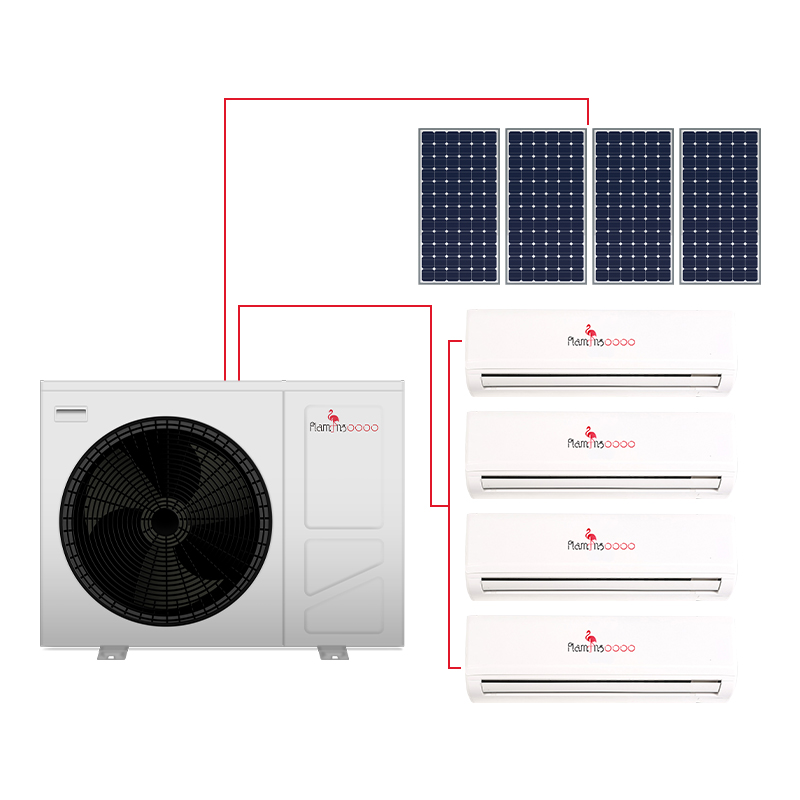
The deep integration of heat pumps with renewable energy systems is opening new avenues. Photovoltaic-direct-drive heat pump technology enables units to operate directly on solar power, reducing grid conversion losses and improving overall system efficiency. Coupling heat pumps with energy storage systems allows for heat storage during off-peak hours and release during peak demand, smoothing load fluctuations and extending equipment life.
The development of international standards and certification systems is also driving improvements in heat pump longevity. The International Organization for Standardization (ISO) is developing standardized testing protocols for long-term heat pump reliability, including accelerated life testing methods and extreme environment simulation procedures. These standards will enable more scientific and transparent comparisons between products, fostering healthy competition among manufacturers to the ultimate benefit of consumers.
