
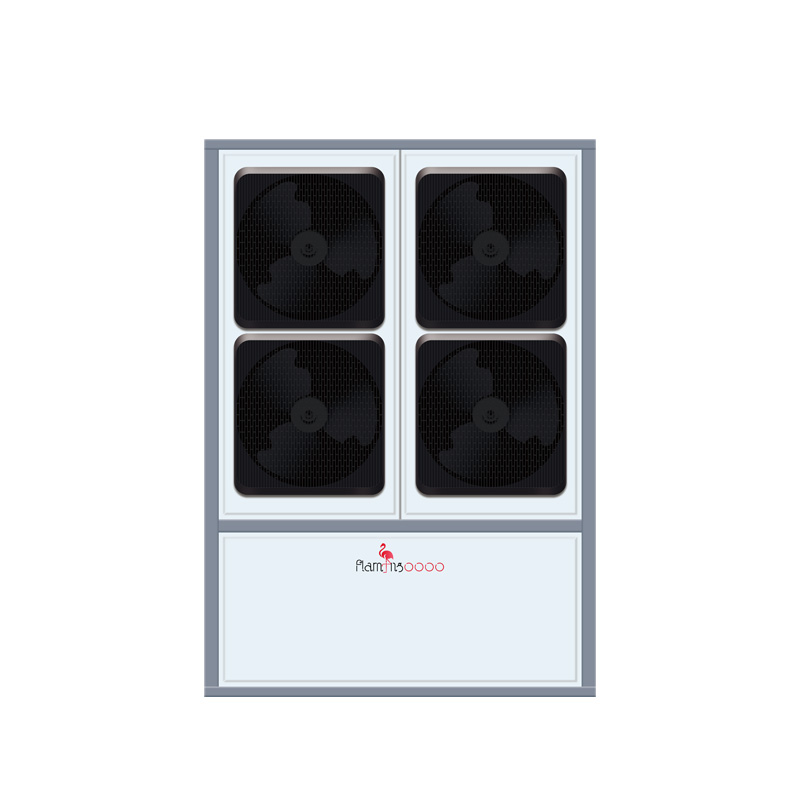
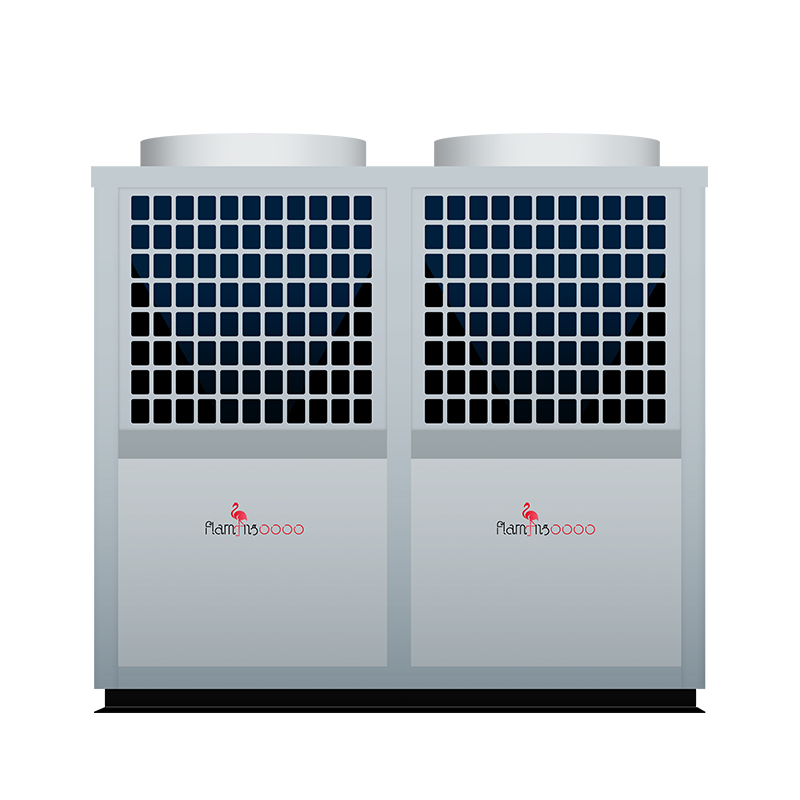
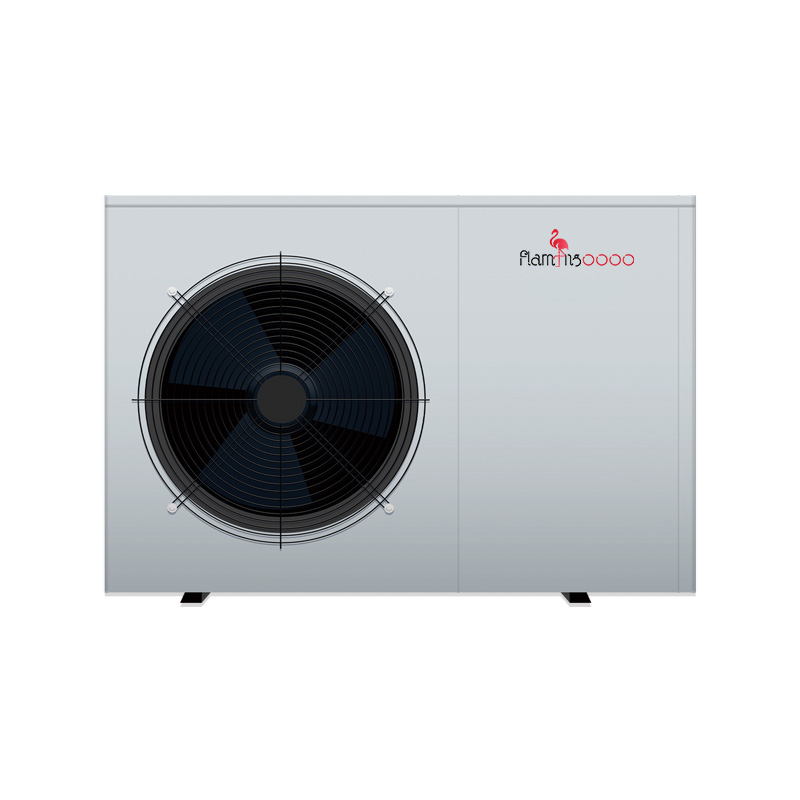
Redefining the Boundary of Temperature: Flaminga's Full-Scene Heat Pumps Challenge the Concept of "Optimal Operating Temperature"
From a Single Value to a Wide Temperature Range: The Paradigm Shift in Commercial Heat Pump Temperature Concepts
In the heat pump industry, "optimal operating temperature" is a frequently mentioned yet often misunderstood concept. For commercial users, this question directly impacts equipment selection, return on investment, and year-round operational reliability. Traditionally, the "comfort zone" for air-source heat pumps has been defined within an ambient temperature range of -20°C to 40°C, with outlet water temperatures concentrated between 55°C and 60°C.
However, as the global energy transition deepens and commercial application scenarios become increasingly diverse, the concept of "optimal operating temperature" is being redefined. From extreme cold heating in severe cold regions to high-temperature steam requirements in food processing, from constant-temperature swimming pools to industrial drying, different scenarios impose vastly different temperature demands on heat pumps. The true "optimal" is not a fixed numerical value, but rather the equipment's ability to maintain efficient and stable operation across a wide temperature range.
As a technology pioneer in the commercial heat pump sector, Guangdong Flaminga New Energy Technology Co., Ltd. is rewriting the technical standards of heat pump temperature performance with its multi-scenario, multi-refrigerant, multi-technology product matrix. From R32 small residential units to R134a commercial hot water systems, and to the groundbreaking PV direct-drive CO₂ heat pump, Flaminga demonstrates the infinite possibilities of heat pump technology under extreme temperature conditions.
I. Deconstructing "Optimal Operating Temperature": A Technical Analysis from Three Dimensions
To understand the operating temperature of heat pumps, a systematic analysis from three dimensions is required: ambient temperature (external conditions for equipment operation), outlet water temperature (quality of thermal energy provided), and Coefficient of Performance (COP, the balance point between temperature and energy consumption).
1. Ambient Temperature: The "Survival Boundary" of Heat Pumps
Air-source heat pumps operate by absorbing thermal energy from the air, so ambient temperature directly determines their operational feasibility. Traditional heat pumps face challenges such as heating capacity attenuation, sharp COP decline, and even shutdown risks under low-temperature conditions.
Industry research data indicates that under operating conditions of -12°C ambient temperature and 55°C outlet water temperature, the COP of conventional heat pumps typically drops to around 2.0. When the ambient temperature further decreases below -20°C, ordinary heat pumps struggle to operate stably.
2. Outlet Water Temperature: The "Quality Benchmark" of Thermal Energy
Outlet water temperature determines the application boundaries of heat pumps. Conventional heat pumps (55°C outlet) primarily meet heating and domestic hot water needs; medium-temperature heat pumps (60-75°C outlet) can be compatible with radiator systems and some industrial applications; high-temperature heat pumps (75-100°C outlet) can replace boilers and enter industrial thermal processing fields.
3. Coefficient of Performance (COP): The Art of Balancing Temperature and Economy
COP is not a fixed value but fluctuates with operating conditions. Experimental studies on R32 heat pump systems show that under optimized conditions with a heat source inlet temperature of 25°C and hot water inlet temperature of 30°C, the maximum system COP can reach 5.665. This data reveals a key principle: the optimal operating temperature is not a single point, but a dynamic equilibrium range.
II. Flaminga's Temperature Technology Spectrum: Multi-Refrigerant Synergy, Full-Scene Coverage
Addressing diverse commercial demands, Flaminga has constructed a product matrix based on different refrigerant characteristics, achieving wide temperature range coverage from -40°C to 100°C.
1. R32 Refrigerant Series: The Efficiency Choice for Small to Medium Commercial Applications
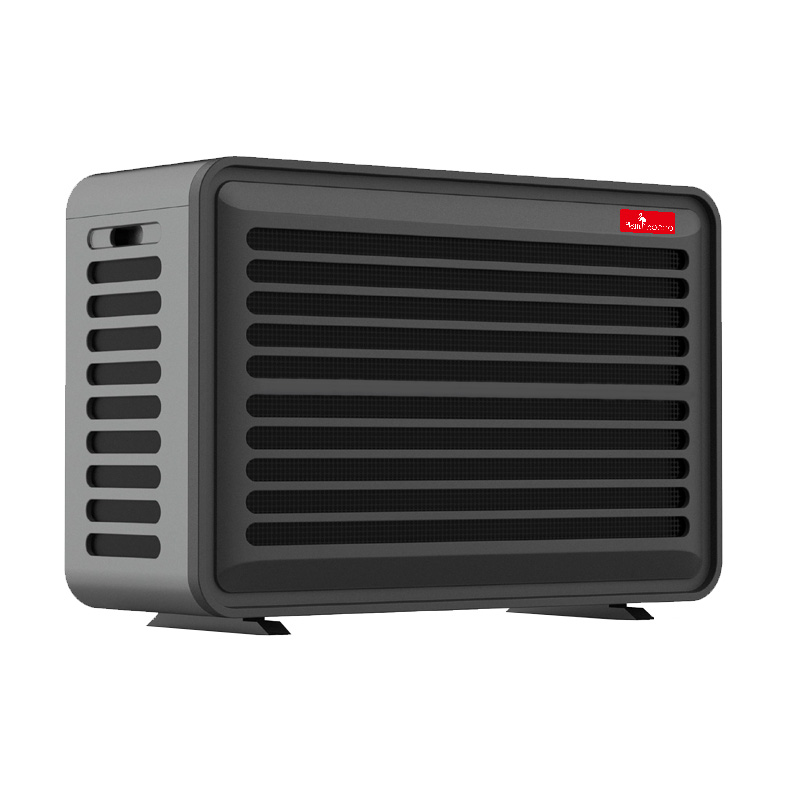
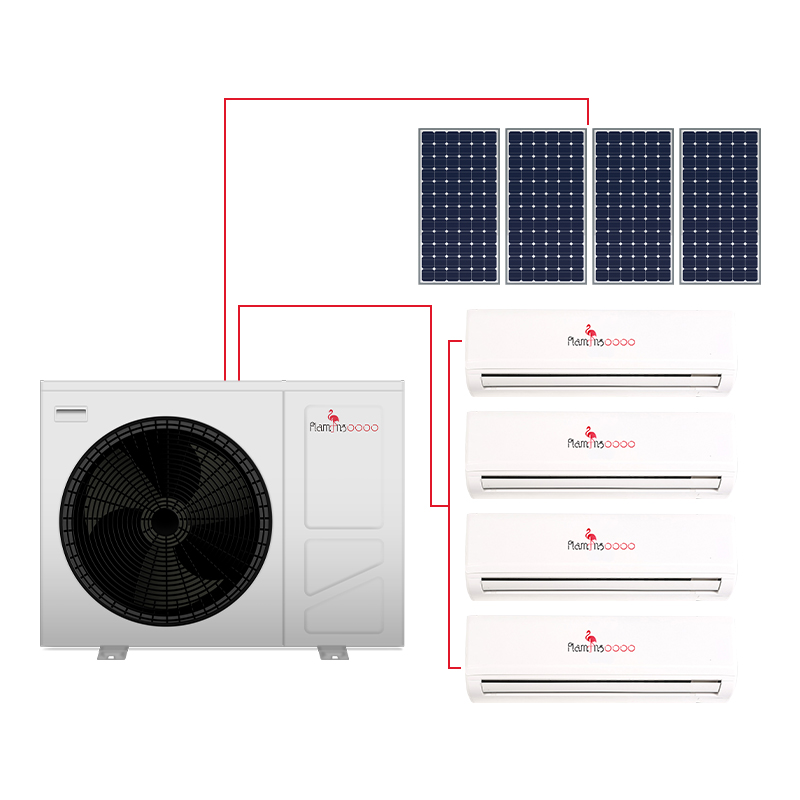
R32, as an environmentally friendly refrigerant with low GWP value, demonstrates excellent energy efficiency in small to medium commercial scenarios. Flaminga's NL-B1S/R32 compact 3.5kW air-source heat pump is designed for small residential and light commercial applications, featuring Panasonic compressors and EVI enhanced vapor injection technology.
This unit adapts to ambient temperatures ranging from -25°C to 43°C, with a maximum outlet water temperature of 60°C. In cooling mode, it can provide 7-12°C chilled water, achieving combined heating, cooling, and domestic hot water supply. Notably, its operating noise is as low as 35dB(A), and energy efficiency is improved by up to 75% compared to fixed-speed units, perfectly embodying the unity of "optimal temperature" and "optimal experience."
2. R134a Refrigerant Series: Commercial Breakthrough with 75°C High-Temperature Hot Water
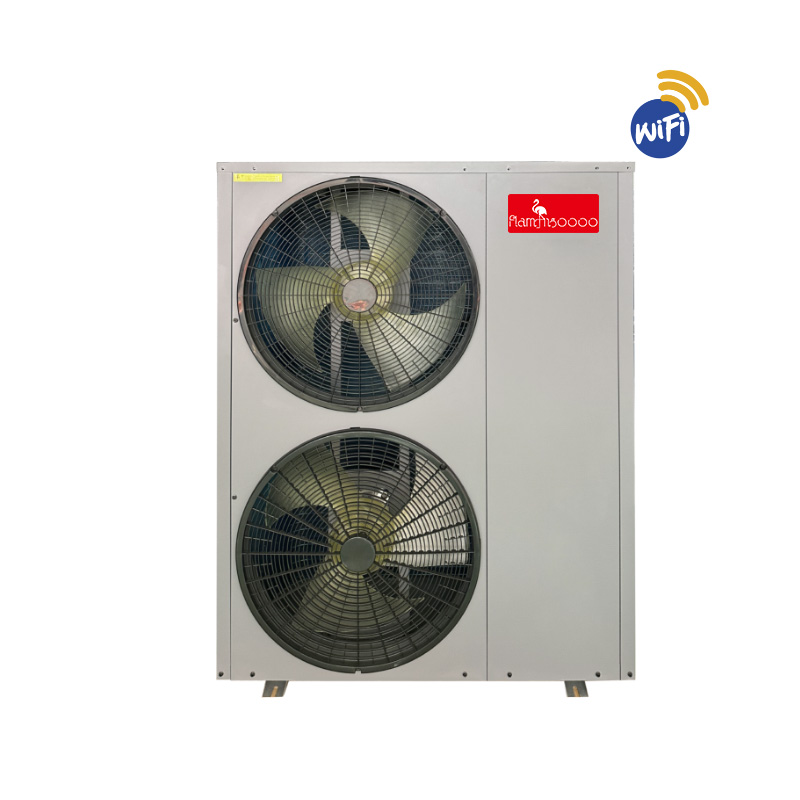
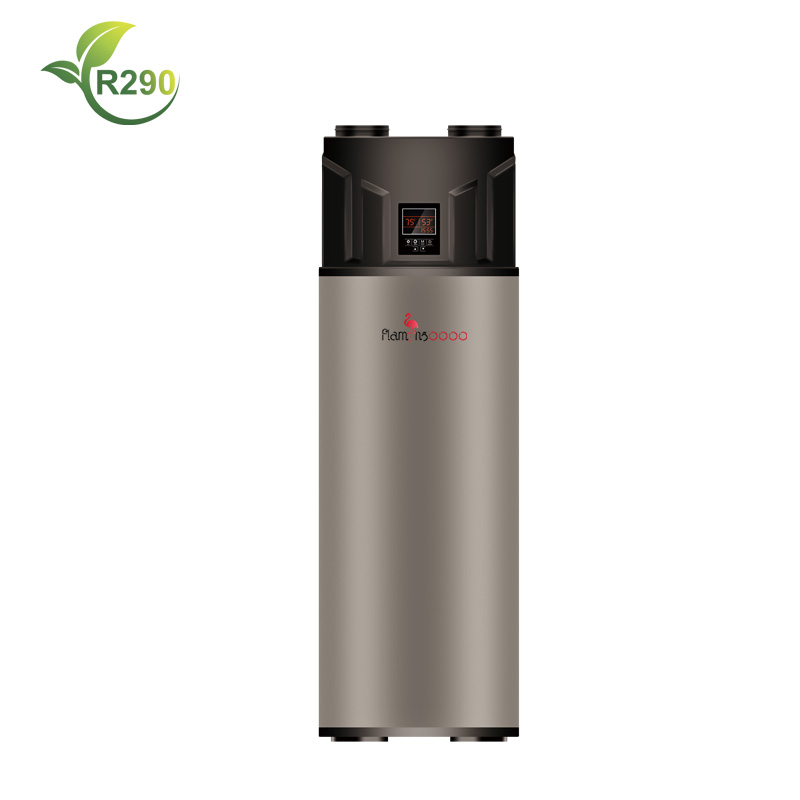
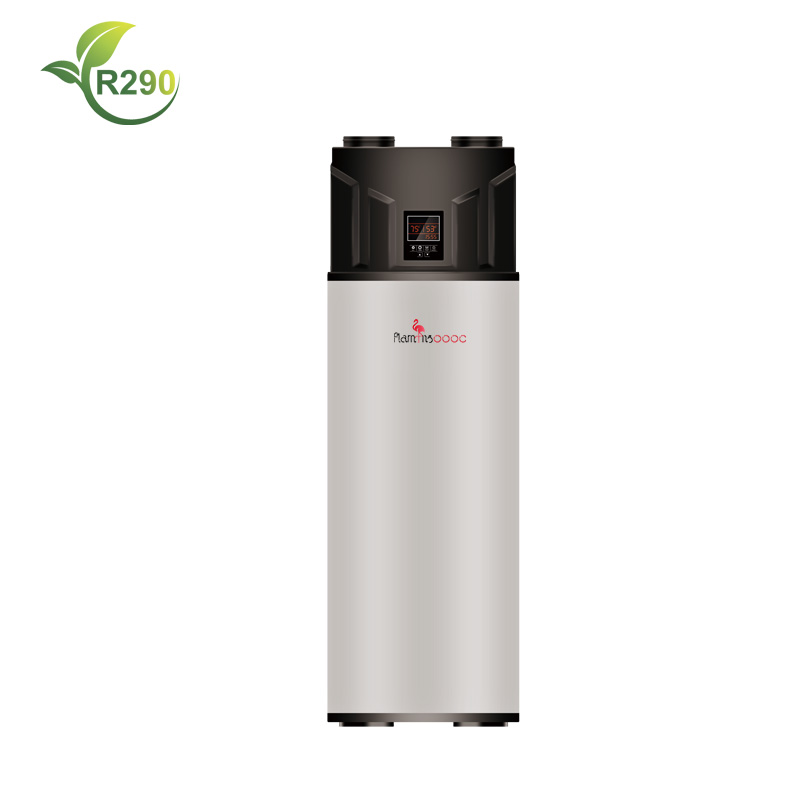
Targeting commercial scenarios with higher hot water temperature requirements, such as hotels and hospitals, Flaminga has launched the R134a integrated air-source heat pump water heater. This product uses environmentally friendly R134a refrigerant and high-efficiency compressors, operating stably within an ambient temperature range of -7°C to 45°C, with a rated outlet water temperature of 55°C and a maximum of 75°C.
The 75°C outlet water temperature has significant application value: it not only meets high-temperature cleaning needs in kitchens but can also be compatible with traditional radiator systems, providing clean heating solutions for old building renovations. Paired with 304 stainless steel water tanks, this series achieves the perfect combination of high-temperature hot water and long-term heat storage.
3. CO₂ Natural Refrigerant Series: Defining Industry Benchmarks for Extreme Temperatures
Flaminga's most groundbreaking technological innovation lies in combining CO₂ natural refrigerant with PV direct-drive technology, redefining the temperature limits of heat pumps.
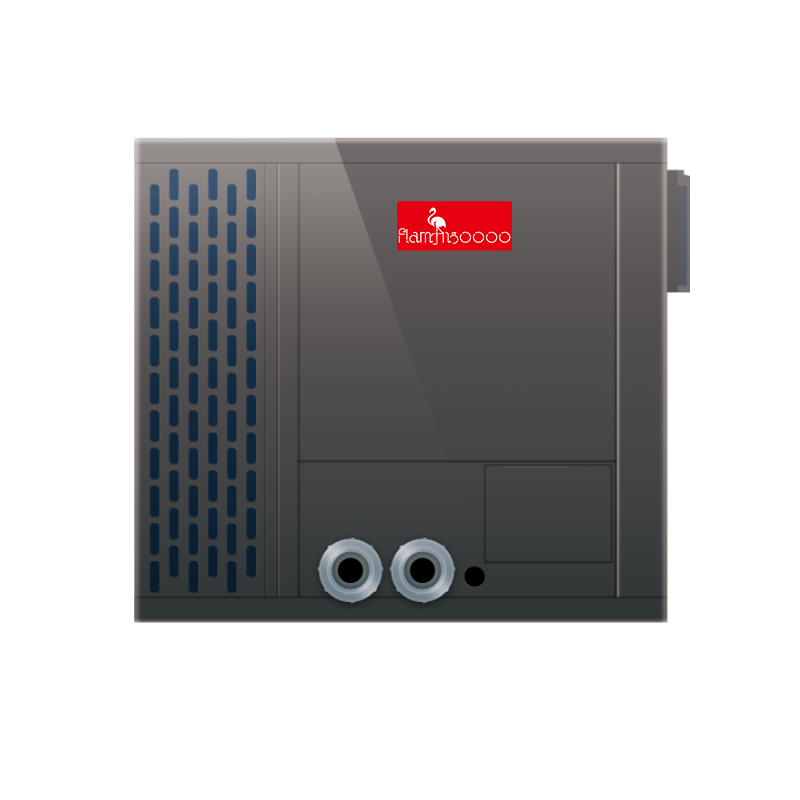
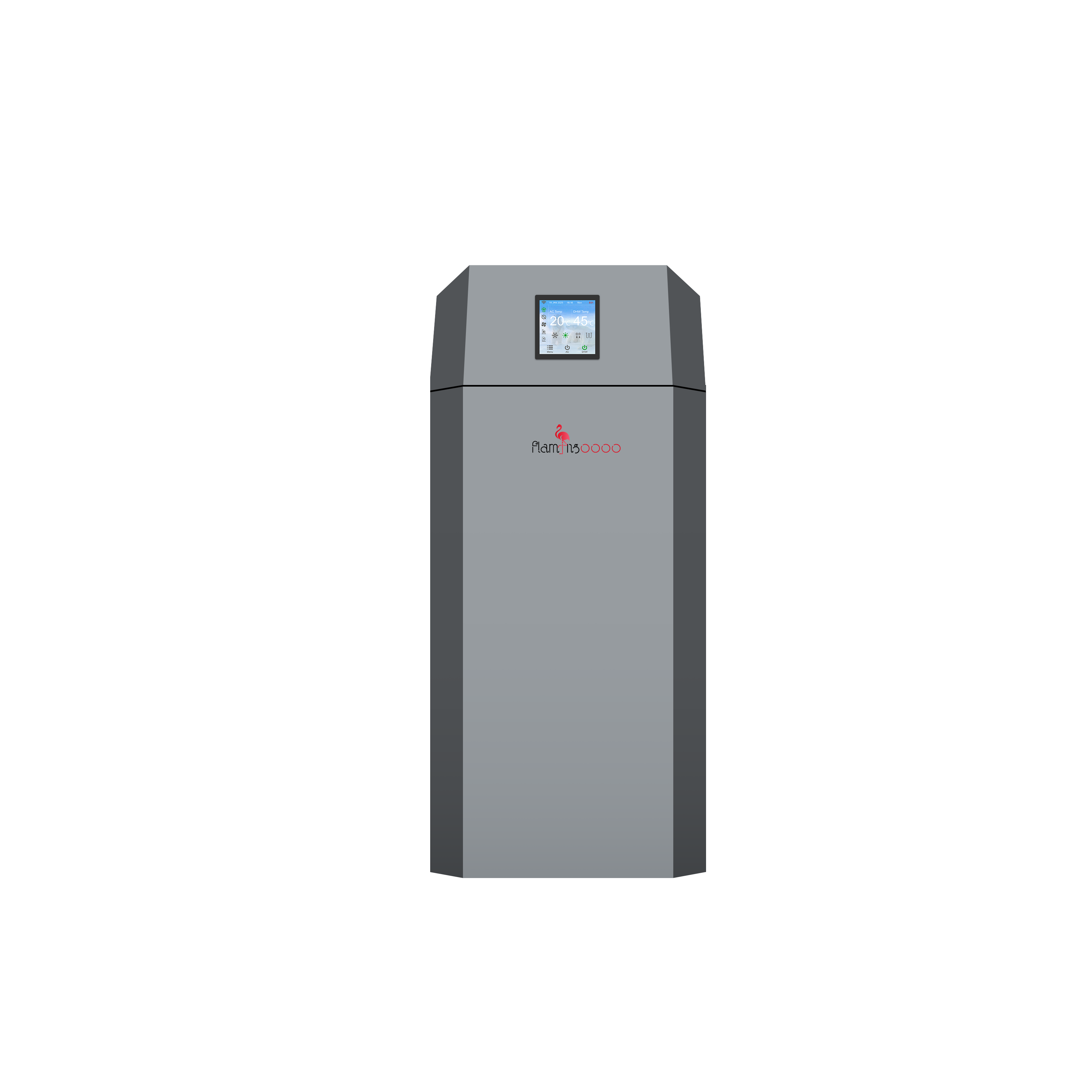
The globally launched PV Direct-Drive CO₂ Heat Pump in 2025 uses pure natural refrigerant CO₂ (GWP=1, ODP=0), operating stably in extreme cold environments down to -40°C while producing high-temperature hot water or steam up to 90-100°C. This technological breakthrough completely breaks the limitation of air-source heat pumps to low-temperature heating only, directly expanding application scenarios to industrial fields requiring high-temperature steam, such as food processing, textile printing and dyeing, and electroplating.
In terms of energy efficiency, the unit, optimized through AI algorithms, can improve efficiency by over 30% in PV direct-drive mode, achieving "zero electricity cost" operation under extreme ambient temperatures. For commercial users needing both severe cold heating and industrial heat sources, this technology undoubtedly sets a new industry benchmark.
| Flaminga Heat Pump Temperature Performance Matrix | Refrigerant | Ambient Temperature Range | Outlet Water Temperature Range | Core Application Scenarios |
|---|---|---|---|---|
| Compact Multi-Function Heat Pump | R32 | -25°C ~ 43°C | 12°C (cooling) ~ 60°C (heating) | Small residential, light commercial combined heating/cooling/hot water |
| Commercial Hot Water Integrated Unit | R134a | -7°C ~ 45°C | 55°C (rated) ~ 75°C (max) | Hotels, hospitals high-temperature hot water |
| PV Direct-Drive CO₂ Heat Pump | CO₂ (R744) | -40°C ~ 70°C | 90-100°C (hot water/steam) | Severe cold heating, industrial high-temperature applications |
III. Technology Frontier: Cascade Systems and Wide Temperature Range Breakthroughs
In the field of extreme temperature applications, cascade heat pump systems represent the current technology frontier. Research on R134a/CO₂ cascade air-source heat pumps conducted by Tsinghua University and Guangdong Midea HVAC Equipment Co., Ltd. shows that under wide temperature range operating conditions with an evaporation temperature of -50°C and a condensation temperature of 70°C, the optimal intermediate temperature of the system is approximately 2°C, corresponding to a maximum COP of 1.86.
This research reveals an important principle: through cascade technology, heat pumps can achieve high-temperature outlet water under extremely low ambient temperatures, and there exists an optimal intermediate temperature that maximizes system performance. The study also indicates that when an internal heat exchanger is added to the high-stage circuit with an efficiency of 0.9, the system COP and efficiency can be improved by 3.76% and 3.28%, respectively.
Industry application cases further confirm this technological direction. Aike Lengnuan's CO₂ air-source heat pump unit adopts an R744/R134a cascade system, with a minimum operating ambient temperature reaching -45°C and an outlet water temperature freely adjustable between 35-75°C, achieving a supply-return water temperature difference of 5-25°C. It has been stably applied in nearly 700 high-speed railway stations.
IV. Application Scenarios: How Flaminga Meets Different Temperature Requirements
Scenario 1: Winter Heating in Severe Cold Regions
In regions such as Northeast China and Inner Mongolia, where winter temperatures can drop below -30°C, traditional heat pumps struggle to operate stably. Flaminga's PV Direct-Drive CO₂ Heat Pump, with its low-temperature adaptability down to -40°C, can continuously output heating hot water above 60°C under extreme cold conditions, working with underfloor heating or radiator systems to achieve clean heating.
Scenario 2: High-Temperature Hot Water for Hotels and Hospitals
Hotels, hospitals, and similar facilities not only require large quantities of domestic hot water but also demand water temperatures meeting sterilization standards (typically above 60°C). Flaminga's R134a Commercial Hot Water Integrated Unit has a maximum outlet temperature of 75°C, and combined with 304 stainless steel water tanks, enables high-temperature hot water storage and round-the-clock supply.
Scenario 3: Industrial Heat Sources for Food Processing
Industries such as food processing and textile printing and dyeing require hot water or steam above 90°C for processes like sterilization and bleaching. Flaminga's CO₂ Heat Pump can heat 15°C inlet water to above 90°C within 2-3 minutes, directly replacing traditional oil or gas boilers.
Scenario 4: Combined Heating, Cooling, and Hot Water for Small Commercial Complexes
For venues such as small hotels and clubs that need simultaneous solutions for heating, cooling, and hot water, Flaminga's R32 Multi-Function Heat Pump provides an integrated solution: 60°C heating hot water in winter, 12°C chilled water in summer, and year-round domestic hot water supply.
V. Industry Trends: From "Fixed Temperature" to "Dynamic Matching"
Looking ahead, the concept of "optimal operating temperature" for heat pumps will undergo profound evolution.
First, wide temperature range becomes standard. With the application of EVI enhanced vapor injection, cascade systems, and new refrigerants, the operating boundaries of heat pumps will expand from the traditional -20°C~40°C to -40°C~50°C, with outlet water temperatures extending from 55°C to over 100°C.
Second, intelligent dynamic regulation. Through AI algorithms and IoT technology, heat pumps will adjust operating strategies dynamically based on ambient temperature, load demands, and electricity price signals, achieving optimal energy efficiency under different operating conditions.
Third, deep scenario customization. Targeting the temperature requirements of different industries, heat pumps will move towards "dedicated machines for dedicated uses"—specialized units for severe cold regions, high-temperature industrial applications, constant-temperature swimming pools, and other细分 categories will become increasingly diverse.
Fourth, multi-energy complementary integration. Heat pumps will deeply integrate with photovoltaic systems, energy storage, and waste heat recovery systems, achieving wide temperature range supply while minimizing operating costs.
"What is the optimal operating temperature for heat pumps?" This question is evolving from a single technical parameter into a multi-dimensional systems engineering proposition. For commercial users, the true "optimal" means: stable operation under the harshest environments, efficient output at the most needed temperature points, and economic returns along the most concerning cost lines.
With its complete product matrix and continuous technological innovation, Flaminga provides diverse answers for users in different industries and scenarios. Whether it's the energy efficiency balance of R32, the high-temperature breakthrough of R134a, or the极限挑战 of CO₂, Flaminga is always committed to making every degree of thermal energy utilized most effectively.
In the wave of energy transition, Flaminga will continue to break through temperature boundaries, allowing heat pump technology intelligently manufactured in China to warm every corner of the world.
