
Is Bigger Always Better for Heat Pumps? Flamigo Redefines Industry Standards with Technological Innovation
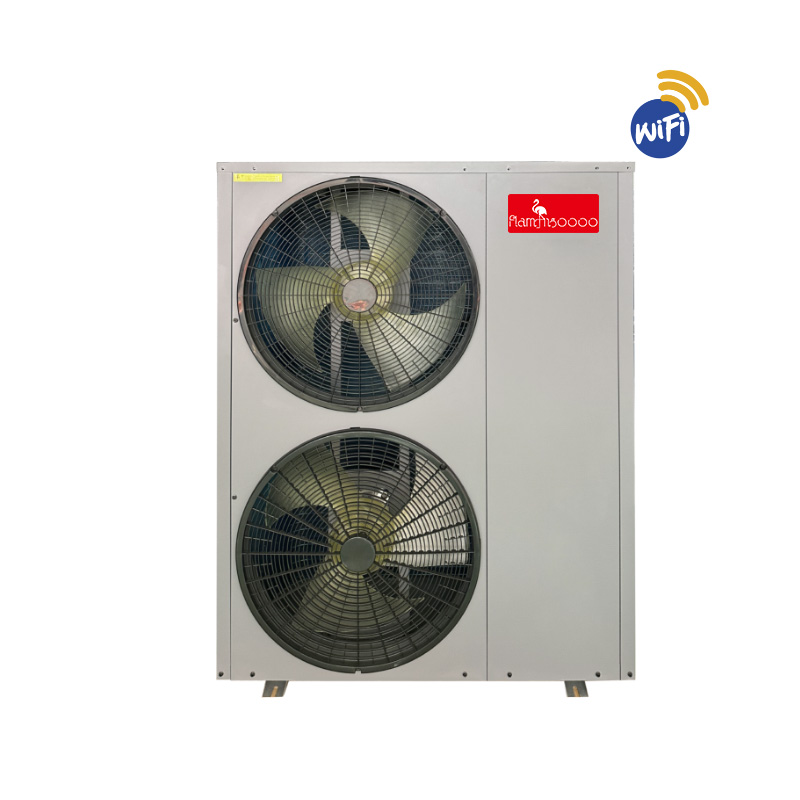
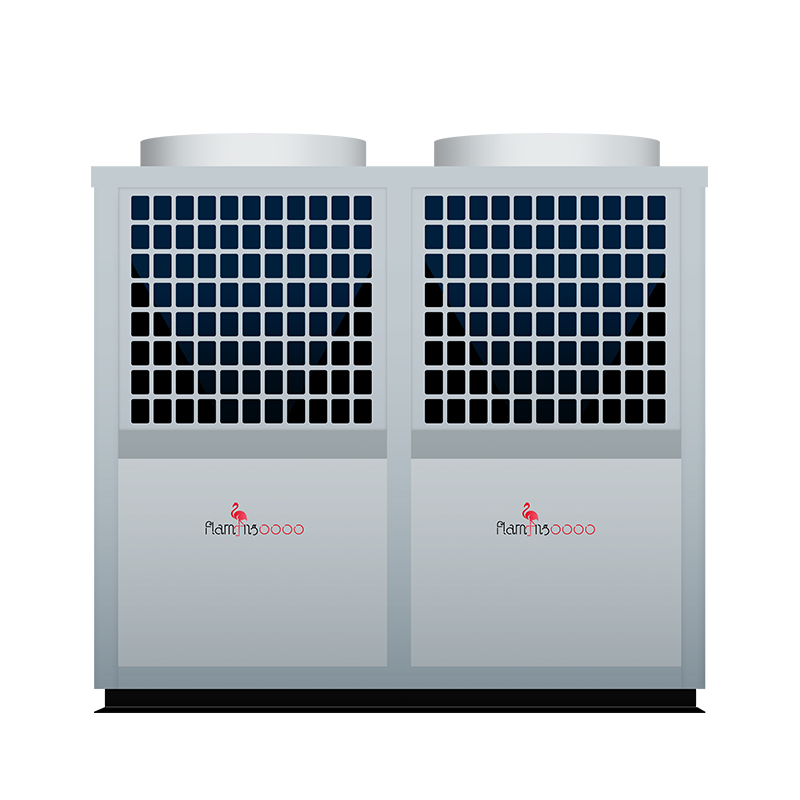
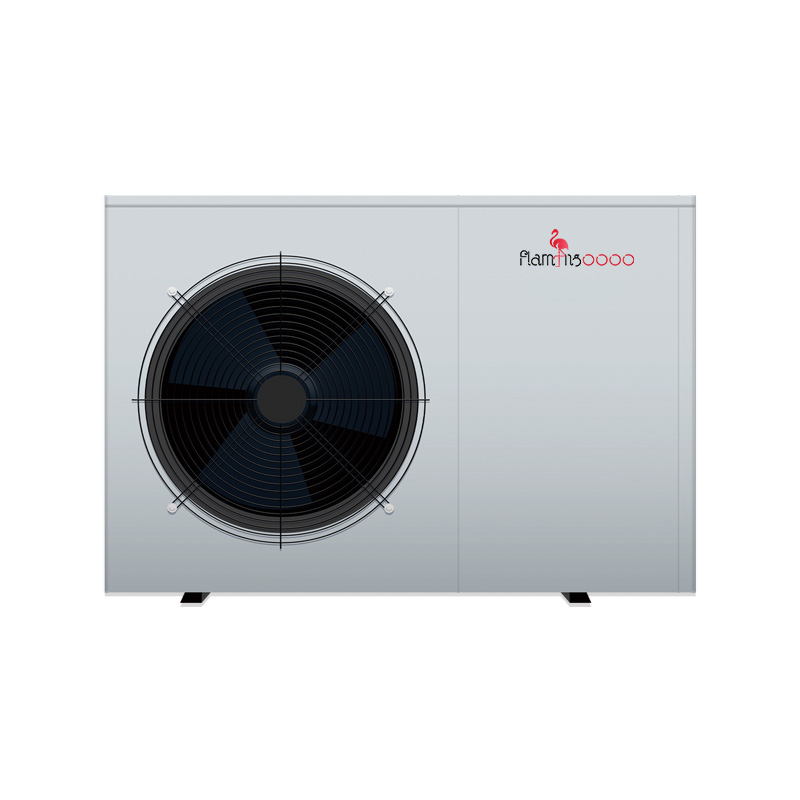
In the product showroom of Foshan Flamigo New Energy Technology Co., Ltd., a heating contractor from northern China carefully compared two heat pump models that differed nearly twofold in physical size, only to be surprised that their rated heating capacities were identical.
In recent years, with the deepening of China's "Dual Carbon" strategy, heat pumps have gained widespread market attention as an efficient and clean heating method. Data from the International Energy Agency shows that China's heat pump market grew by over 15% year-on-year in 2023. However, a common misconception has quietly spread—many consumers and contractors believe heat pump size directly determines its performance.
Facing this cognitive misunderstanding, Flamigo New Energy is breaking the traditional notion that "bigger is better" through continuous technological innovation, guiding the heat pump industry toward more efficient, compact, and intelligent development.
01 The Size Myth: A Common Industry Misconception
In the heat pump market, the relationship between size and performance is often oversimplified. Contractors and consumers tend to choose larger-looking heat pump equipment, believing "larger size means stronger heating capacity."
This perception is closely tied to the industry's development history. When early heat pump technology was immature, larger heat exchange areas and internal space were indeed needed to guarantee basic performance. Traditional thinking held that larger heat exchangers meant larger heat exchange areas, and more copper tubes and fins meant higher efficiency.
In a heating renovation project in northern China, contractors initially selected three large commercial heat pumps for a 2,000-square-meter building, occupying over 15 square meters. However, after assessment by Flamigo engineers, just two ultra-low-temperature inverter heat pumps, 30% smaller in volume, met all heating requirements, improving overall energy efficiency by 25% and saving nearly 80,000 RMB in initial investment.
This "size determines performance" myth not only increases user installation costs and space requirements but can also lead to energy waste. In reality, heat pump performance is determined by multiple factors including compressor efficiency, heat exchanger design, control systems, and refrigerant properties. Simply enlarging size without optimizing internal design may actually decrease performance due to increased refrigerant charge and pressure drop.
02 Performance Decoded: The Multidimensional Factors Determining Heat Pump Efficiency
The performance of modern heat pumps no longer relies solely on physical size. Flamigo's R&D Director points out: "Heat pump performance is like the barrel effect—it depends on the协同 coordination of multiple technological elements, not a single factor like size."
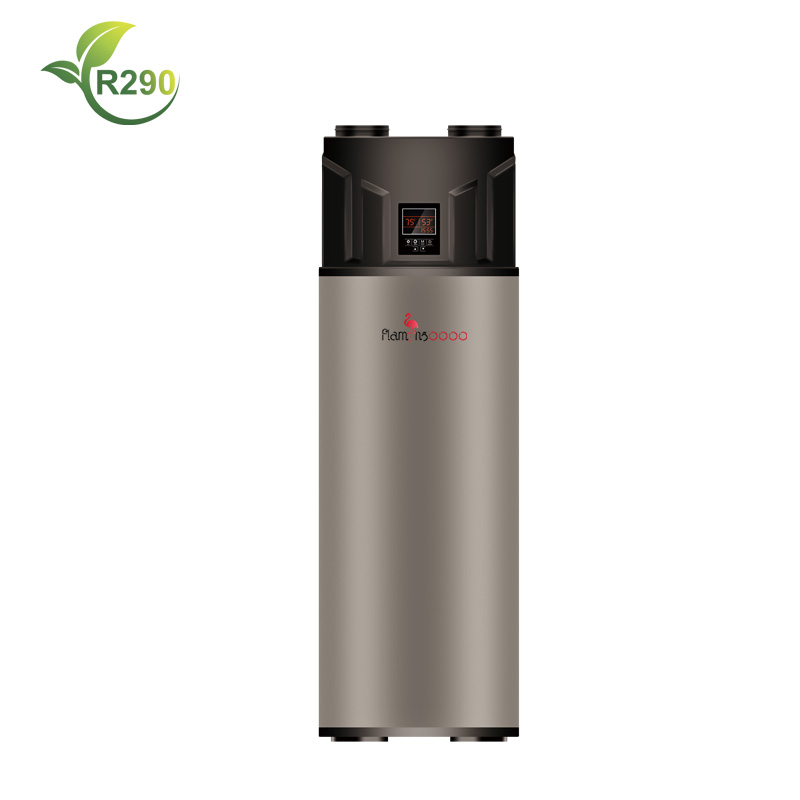
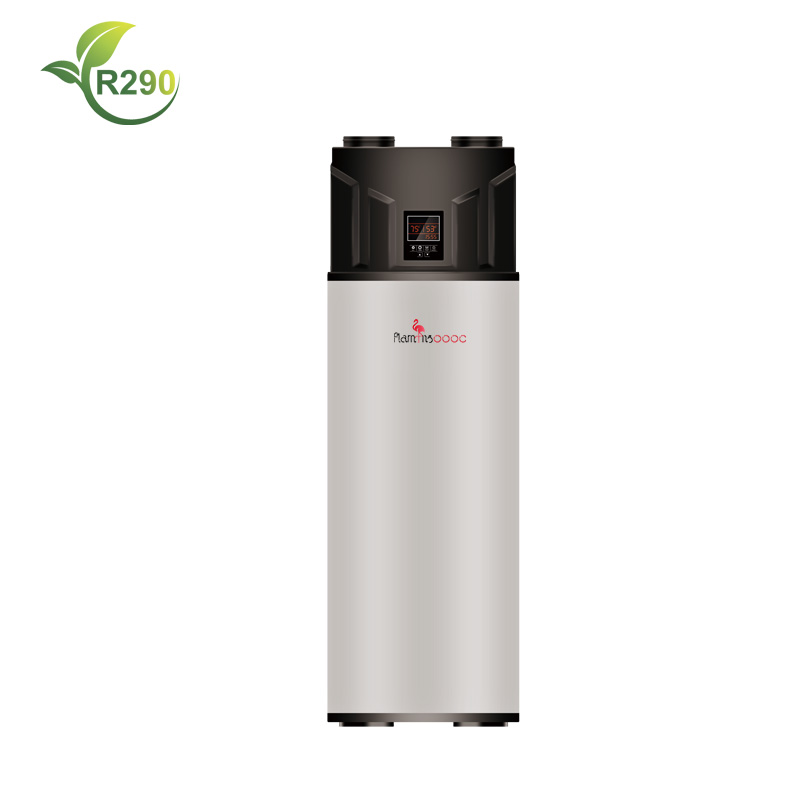
The compressor, as the "heart" of the heat pump, directly affects overall efficiency through its technological sophistication. Compressors utilizing full DC inverter technology can automatically adjust operating frequency based on ambient temperature, achieving 30%-40% higher efficiency compared to traditional fixed-speed compressors. The environmentally friendly R290 refrigerant adopted by Flamigo offers higher heating capacity per unit volume, enabling stronger heat exchange with the same charge amount.
Optimization of heat exchanger design is equally crucial. The application of micro-channel parallel flow heat exchange technology improves efficiency by over 20% in compact designs compared to traditional fin-and-tube heat exchangers. Regarding control systems, Flamigo's self-developed AI intelligent algorithm achieves millisecond-level dynamic matching between ambient temperature, user demand, and equipment operating status.
Installation methods and system integration are also key factors influencing performance. Proper hydraulic balance design, accurate load calculation, and professional installation techniques often improve overall system efficiency more effectively than simply increasing equipment size. Research indicates professional installation and commissioning can improve overall heat pump system efficiency by 15%-25%.
03 The Flamigo Technological Path: Achieving High Performance in Small Size
Facing the industry trend toward miniaturization and higher efficiency, Flamigo New Energy has chosen a differentiated development path driven by technological innovation.
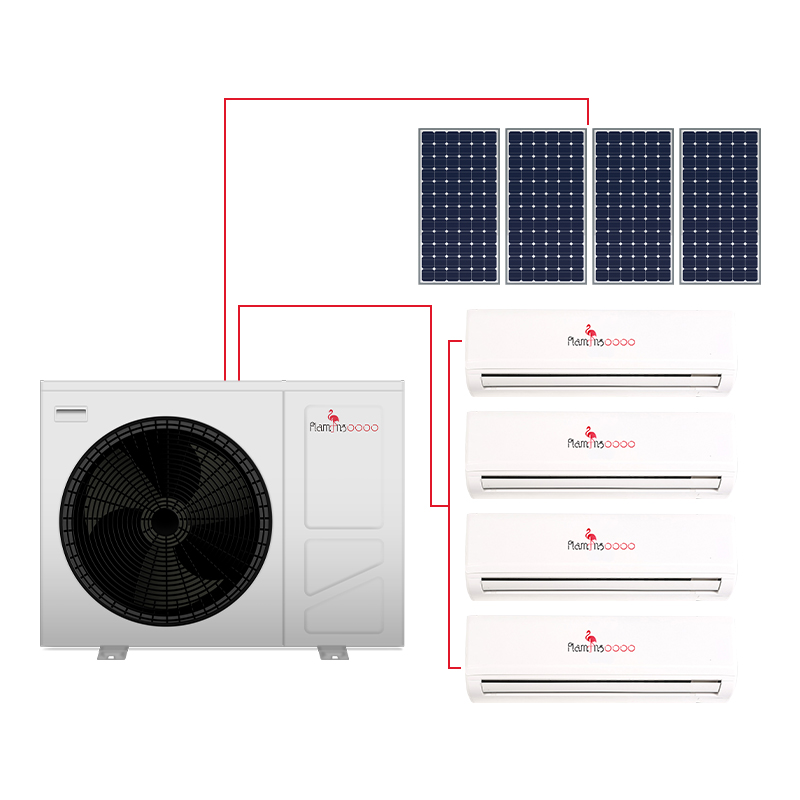
The company's established -35°C ultra-low-temperature laboratory provides extreme environment testing conditions for product development. Here, engineers continuously push the performance boundaries of heat pump technology. Among their innovations, photovoltaic direct-drive inverter technology stands as Flamigo's core breakthrough. This system directly powers the DC inverter compressor with photovoltaic panels, reducing energy conversion losses and improving system efficiency by up to 15%.
Another Flamigo breakthrough is the "Tri-Energy Complementary Intelligent Switching System." This system integrates air energy, solar energy, and electrical energy, using AI algorithms to determine the optimal energy combination in real-time, maximizing renewable energy use while ensuring stable heating supply. In a practical application at a residential community in Hebei, this system helped users reduce traditional electricity consumption by over 40%.
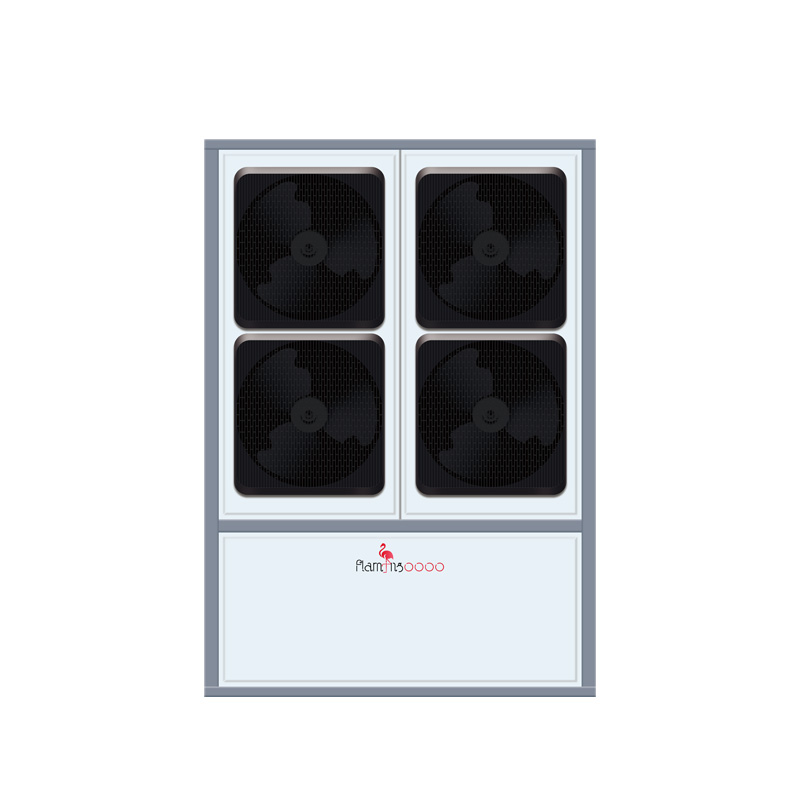
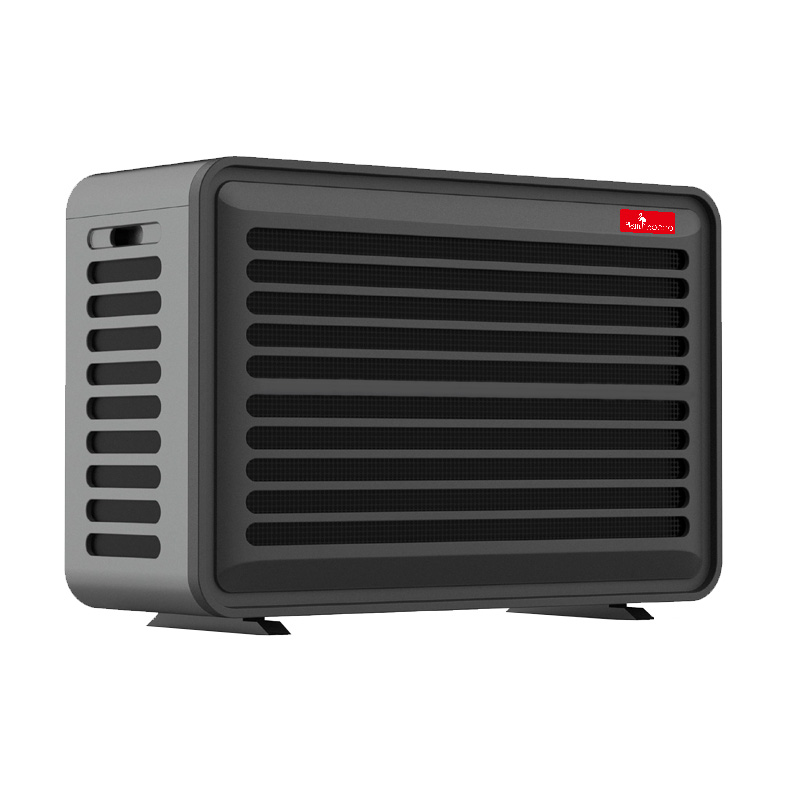
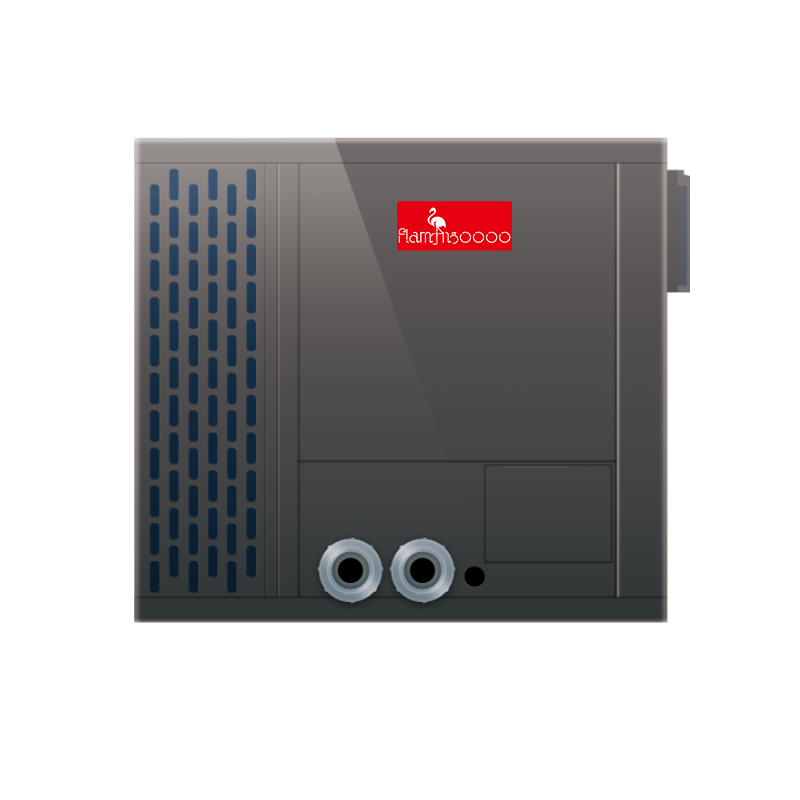
Compact design is a distinctive feature of Flamigo products. By adopting high-efficiency micro-channel heat exchangers, optimizing internal piping layout, and using high-density insulation materials, Flamigo has successfully reduced heat pump volume by 30% while maintaining or even improving performance metrics. Taking the company's latest "Polaris" series ultra-low-temperature heat pump as an example, its heating capacity per unit volume reaches 1.5 times the industry average.
The table below compares key metrics between traditional large heat pumps and Flamigo's compact models:
| Comparison Dimension | Traditional Large Heat Pump | Flamigo Compact Heat Pump | Performance Improvement |
|---|---|---|---|
| Heating Capacity per Unit Volume (kW/m³) | 8-12 | 15-20 | ~60% |
| Comprehensive COP | 2.8-3.2 | 3.5-4.2 | ~25% |
| Installation Footprint (m²/10kW) | 1.5-2.0 | 0.8-1.2 | Reduced by ~40% |
| Heating Capacity Decline at -15°C | 25%-30% | <15% | Improved by >40% |
| Noise Level (dB) | 62-68 | 55-60 | Reduced by ~15% |
04 Advantages of Miniaturization: Full-Cycle Value from Manufacturing to Use
The advantages of heat pump miniaturization extend throughout the product's entire lifecycle. From a manufacturing perspective, compact design reduces raw material usage by approximately 25%, directly lowering consumption of key materials like copper tubes and aluminum foil, aligning with green manufacturing principles.
In logistics and transportation, a 30% volume reduction means more equipment can be loaded per shipment, lowering logistics costs by over 20%. For distributors, warehouse space utilization improves, enabling more flexible inventory turnover.
During the installation phase, compact heat pumps demonstrate clear advantages. Traditional large heat pumps often face location limitations due to their size, while miniaturized products can be flexibly installed on balconies, rooftops, or even exterior walls, greatly expanding application scenarios. In a renovation project for an old residential compound in Beijing, Flamigo's compact heat pumps were successfully installed in narrow outdoor AC unit spaces, solving the problem of having no suitable location for traditional large equipment.
During operation, the energy-saving benefits of compact heat pumps become even more significant. Utilizing full DC inverter technology and intelligent control systems, the equipment can precisely adjust output based on actual load, avoiding the energy waste of "using a cannon to kill a mosquito." Actual operational data shows Flamigo's compact heat pumps achieve over 35% higher efficiency than traditional equipment under partial load conditions.
Ease of maintenance is another notable advantage. The modular design of compact heat pumps makes key components easier to inspect and replace, reducing mean time to repair by 40%. The addition of intelligent remote monitoring systems allows over 90% of common faults to be pre-identified through online diagnostics, preventing unexpected downtime.
05 Scenario-Based Applications: Flamigo's Adaptive Product Innovation
Different application scenarios demand varied heat pump specifications. Flamigo has developed multiple product series targeting specific needs, moving beyond a "one-size-fits-all" design approach.
In severely cold northern regions, stable ultra-low-temperature operation is the core requirement. Flamigo's "Polaris" series employs vapor injection technology and environmentally friendly R290 refrigerant, maintaining efficient operation even in extreme -35°C environments, with heating capacity decline controlled at an industry-leading level below 15%. This series has performed excellently in several winter heating projects in Inner Mongolia, with a continuous operation failure rate below 0.5%.
For urban residences and small commercial spaces, space constraints and noise control are primary concerns. Flamigo's "Whisper King" series employs multiple noise reduction technologies, keeping operational noise below 55 decibels while being 25% smaller than comparable products. In a high-end apartment project in Shanghai, this series was successfully installed within an enclosed balcony space, fully meeting the property's noise and aesthetic requirements.
The rural "Coal-to-Electricity" market requires cost-effective and easy-to-maintain products. Flamigo's "Benefiting the People" series developed for this need maintains core performance while optimizing cost structure, priced 10%-15% lower than similar products, with key components using standardized designs allowing basic maintenance by village technicians after simple training.
Industrial and commercial applications place higher demands on heat pumps' intelligent integration capabilities. Flamigo's commercial series products support multi-unit parallel connection and integration with energy management systems, allowing operational mode adjustment based on production schedules. In an application at an auto parts factory in Guangzhou, this system helped the enterprise save 22% on energy costs during peak production periods.
06 Industry Trends: Four Directions in Heat Pump Technology Development
With technological advancement and market maturation, the heat pump industry is clearly developing in four directions, none of which rely solely on increasing equipment size.
Higher Efficiency is the primary direction. The International Institute of Refrigeration predicts that by 2030, the average COP for commercial heat pumps will increase from the current 3.0-3.5 to 4.0-4.5. Achieving this goal depends mainly on advances in compressor technology, heat exchanger design, and control algorithms, not on increasing equipment size.
Integration is becoming a new focus. Heat pumps are evolving from single heating devices into components of comprehensive energy systems. Flamigo's photovoltaic direct-drive heat pump is a typical example, achieving seamless integration of solar and air energy. In an industrial park in Zhejiang, this integrated system meets 80% of the building's heating demand, with the payback period shortened to 4.2 years.
Intelligence continues to advance. The application of IoT, big data, and artificial intelligence enables heat pumps to learn user habits, predict weather changes, and automatically optimize operational strategies. Flamigo's intelligent heat pump system can already predict heating demand 24 hours in advance, dynamically adjusting equipment operation to avoid energy waste.
Environmental Sustainability requirements are increasingly strict. With global restrictions on high-GWP refrigerants, natural refrigerants like R290 will become standard. These refrigerants pose higher demands on system design but also drive heat pumps toward more compact and efficient development.
07 Flamigo's Future Roadmap: Leading Industry Transformation Through Technological Innovation
Confronting industry changes, Flamigo New Energy has established a clear technology development roadmap. The company plans to invest 8% of its sales revenue in R&D over the next three years, focusing on breakthroughs in key technologies for compact and efficient heat pumps.
In materials science, Flamigo is collaborating with universities to develop new hydrophilic coatings and high-efficiency thermal conductive materials, aiming to further improve heat exchanger efficiency by 15%-20%. Simultaneously, the company is developing a new generation of micro-channel heat exchangers to reduce volume by another 25% for the same heat exchange capacity.
Intelligent control algorithms are another key investment area. Flamigo's R&D team is developing deep learning-based load prediction algorithms expected to further improve overall system efficiency by 10%-15%. This algorithm can analyze historical data, weather forecasts, and user habits to achieve proactive energy management.
Regarding system integration, Flamigo is focused on creating "Heat Pump+" energy solutions, deeply integrating heat pumps with photovoltaic, energy storage, and waste heat recovery systems. The prototype "Zero-Carbon Heating System" under testing at the company's Zhejiang pilot base already achieves 100% of building heating from renewable energy sources.
For the installation service环节, Flamigo has developed standardized installation procedures and intelligent diagnostic tools, reducing installation time by 30% and increasing first-time installation qualification rate to over 98%. The company has also established a technical support network covering major Chinese cities to ensure users receive timely professional service.
The latest report from the European Heat Pump Association shows that the market share of compact heat pumps in the EU grew to 38% in 2023, while the share of traditional large heat pumps fell by 12 percentage points. Market preference is shifting toward efficient, compact products.
At Flamigo New Energy's testing center, next-generation prototypes are undergoing endurance tests. One unit, with a volume only 60% that of traditional models, achieves a COP of 4.3 under standard conditions, setting a new industry record.
Heat pump technology has progressed beyond the phase of simply pursuing larger size, entering a new era focused on efficiency, intelligence, and integration. Through continuous innovation, Flamigo New Energy not only answers the question "Is bigger always better for heat pumps?" but also demonstrates with product performance that appropriate miniaturization combined with technological innovation can achieve higher comprehensive value.
