
European Market Barometer: Inverter Heat Pumps Exceed 70% Penetration – Fixed-Speed Models Are Rapidly Exiting
1. European Heat Pump Market: From a Slump Back to Growth
After a difficult period of demand contraction in 2023 and the first half of 2024, the market began showing signs of recovery in the second half of 2025. Preliminary data from the European Heat Pump Association (EHPA) shows that around 2.62 million residential heat pumps were sold across 16 European countries in 2025, an increase of 10.3% year-on-year, bringing the total installed base in Europe to nearly 28 million units.
In 2026, growth has accelerated further. In the first quarter of 2026, approximately 575,000 residential heat pumps were sold in 11 European countries, a 17% year-on-year increase. France, Germany, and Poland recorded an average growth rate of 25%. The key driver behind this surge is the sharp rise in energy prices following geopolitical tensions. In March 2026, a blockade in the Strait of Hormuz pushed European natural gas futures up nearly 84% year-to-date. As gas heating costs soared, heat pumps became even more economically attractive as an energy-saving, low-carbon, and cost-effective alternative.
However, growth is not uniform across all countries. Austria saw a 30% sales drop due to a lack of government subsidies, while Poland’s growth was hindered by widespread misinformation. This contrast underscores a key insight from EHPA Director General Paul Kenny: “Government subsidy policy determines market behavior.”
2. Inverter Technology: From a Differentiator to a Market Entry Barrier
Looking at the market’s technology structure, inverter heat pumps now hold over 70% market share in Europe – with even higher ratios in mature markets such as Germany, France, Sweden, and Norway. This milestone reflects that Europe’s rigid demand for high-efficiency technology is driving the industry toward an “all-inverter era.”
Technology advantages that secure dominance
The core breakthrough of inverter heat pumps is stepless compressor speed regulation. Traditional fixed-speed units can only operate at full capacity or stop completely, using frequent on/off cycling to maintain temperature. This leads to temperature fluctuations, higher noise, and significant energy waste.
Inverter heat pumps, by contrast, adjust compressor speed continuously based on real-time heating demand. When the set temperature is approached, the compressor runs at a low speed, maintaining stable conditions while dramatically reducing energy use.
Key advantages include:
Significant energy savings – Inverter models eliminate frequent start-stop losses, delivering much higher real-world efficiency.
Precise temperature control – Continuous adjustment avoids the hot-cold swings typical of fixed-speed units.
Lower noise – Low-speed operation greatly reduces sound levels – critical for dense European urban housing.
Strong low-temperature heating – With enhanced vapor injection, inverter heat pumps can operate stably at -25°C or even lower, making them viable in severe cold climates.
Longer equipment life – Fewer start-stop cycles reduce mechanical wear and maintenance costs.
As a result, inverter technology has moved rapidly from being a premium differentiator to a de facto entry requirement for the European market. Fixed-speed models are being squeezed into a shrinking niche as European countries tighten building energy codes and raise subsidy eligibility thresholds.
Policy acceleration
The EU’s REPowerEU plan (targeting 30 million additional heat pumps by 2030) and the revised Energy Performance of Buildings Directive (EPBD) (phasing out support for stand-alone fossil-fuel boilers from 2025) provide the top-level policy framework driving heat pump growth. The EHPA also notes that €88 billion in annual fossil-fuel boiler subsidies in Europe is now being redirected toward heat pumps. Germany has made heat pumps the preferred new-building heating system, requiring at least 65% renewable energy for new installations.
Although fixed-speed models have a lower upfront cost, their lower efficiency makes them increasingly uncompetitive in this policy environment. As subsidies shift toward inverter technology, the cost-performance equation is rapidly tilting in favor of variable-speed solutions.
3. Flamingo: A Chinese Pioneer in European Inverter Heat Pumps
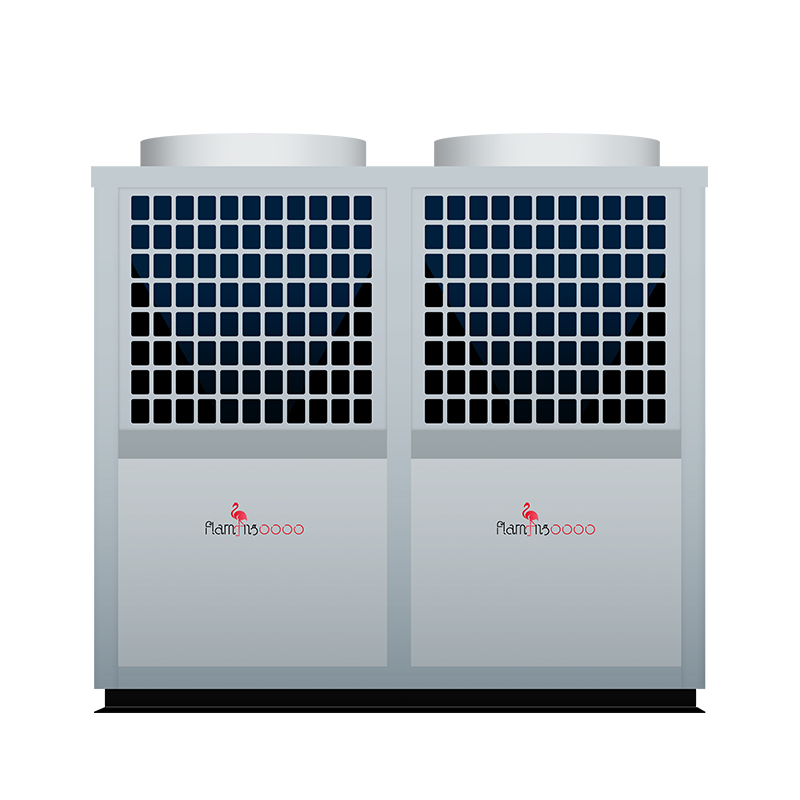
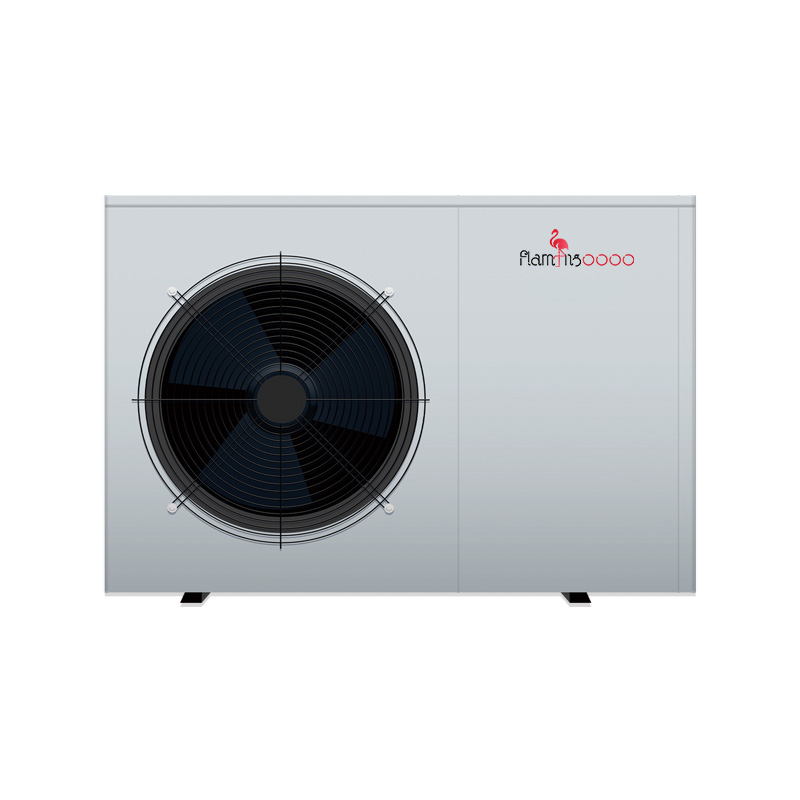
Amid this technology shift, Chinese companies are moving from OEM manufacturing to a central position in the global supply chain. China accounted for 58% of global air-source heat pump production in 2024, and over 50% of China’s heat pump exports go to Europe. Guangdong Flamingo New Energy Technology Co., Ltd. is seizing this historic opportunity, leveraging its robust DC inverter technology and full-scenario product portfolio to enter the high-end European market.
Core technology: DC inverter drives efficiency gains
DC inverter technology is the foundation of Flamingo’s product line. All Flamingo heat pumps use variable-speed DC compressors that precisely match output to real-time load – delivering “exactly what is needed, when it’s needed.” According to Flamingo’s published data, DC inverter commercial heat pumps can achieve energy savings of up to 75% compared to fixed-speed alternatives.
More notably, Flamingo’s DC inverter heat pumps achieve outstanding COP (Coefficient of Performance) figures, with a heating COP of up to 4.84 under certain conditions – meaning one unit of electricity delivers nearly five units of heat, several times more efficient than traditional electric boilers. In commercial applications, this efficiency directly translates into significantly lower operating costs.
Flamingo’s product manager notes that the company’s commercial heat pumps are equipped with compressors from top-tier suppliers such as Panasonic, Copeland, and Danfoss, and offer multiple eco-friendly refrigerant options (R32, R410a). They operate stably across a wide ambient temperature range of -25°C to 43°C.
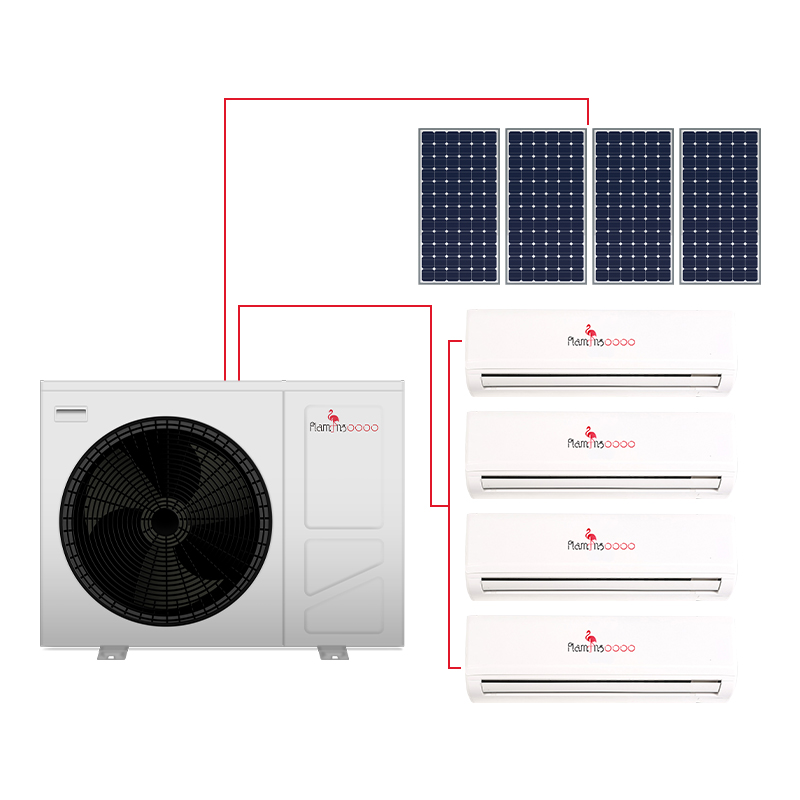
Flamingo has also deeply integrated direct PV drive technology, seamlessly connecting DC inverter heat pumps with solar PV systems to cover up to 95% of the unit’s power demand. This “solar-storage-flexible” integrated solution aligns perfectly with Europe’s rapidly growing emphasis on energy self-sufficiency and self-consumption of solar power.
Full product portfolio
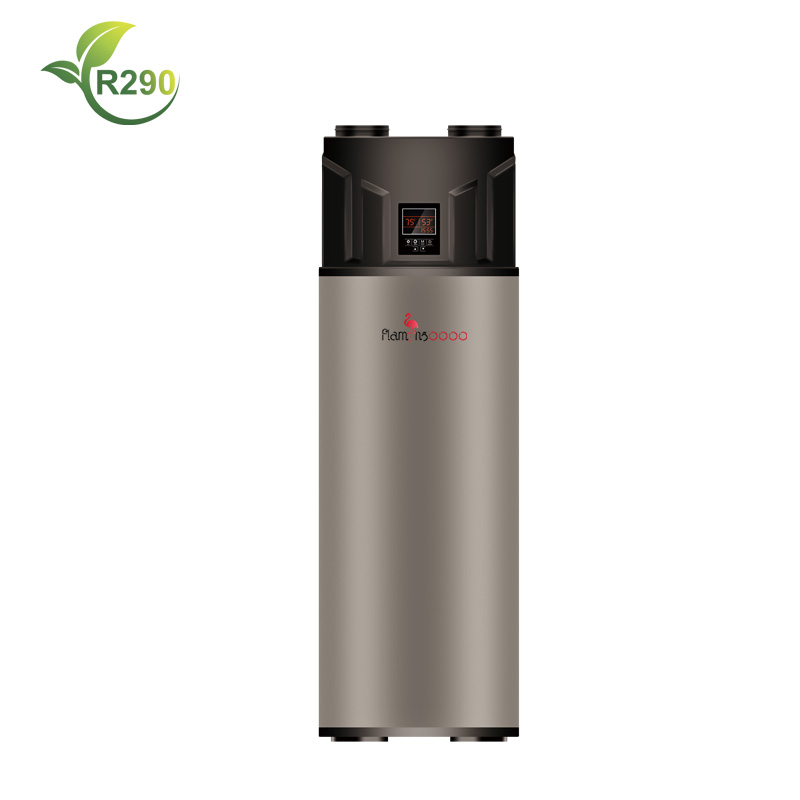
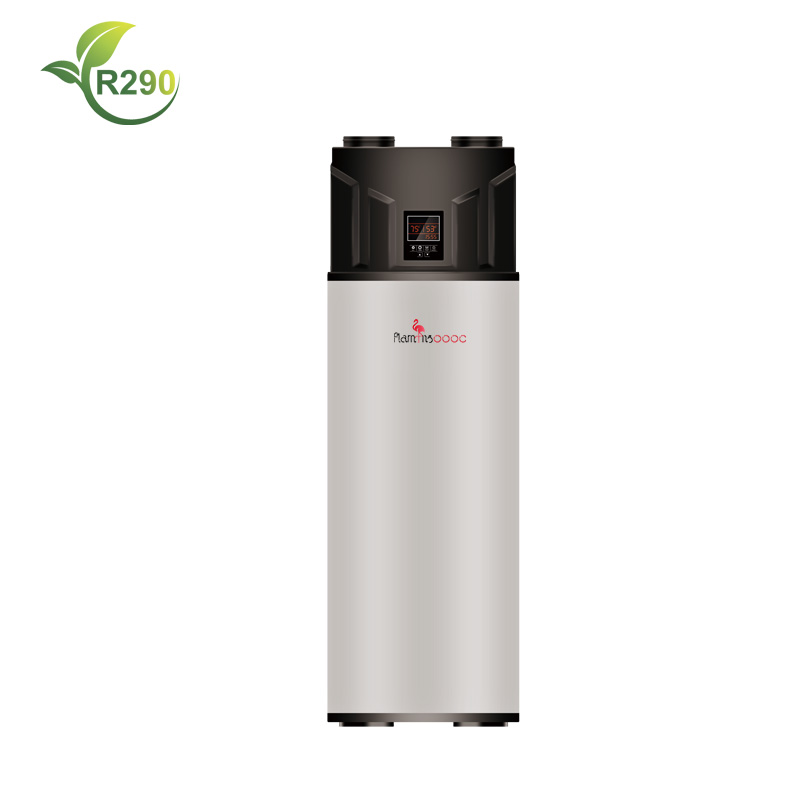
Flamingo has built a comprehensive product matrix covering residential, commercial, and industrial scenarios:
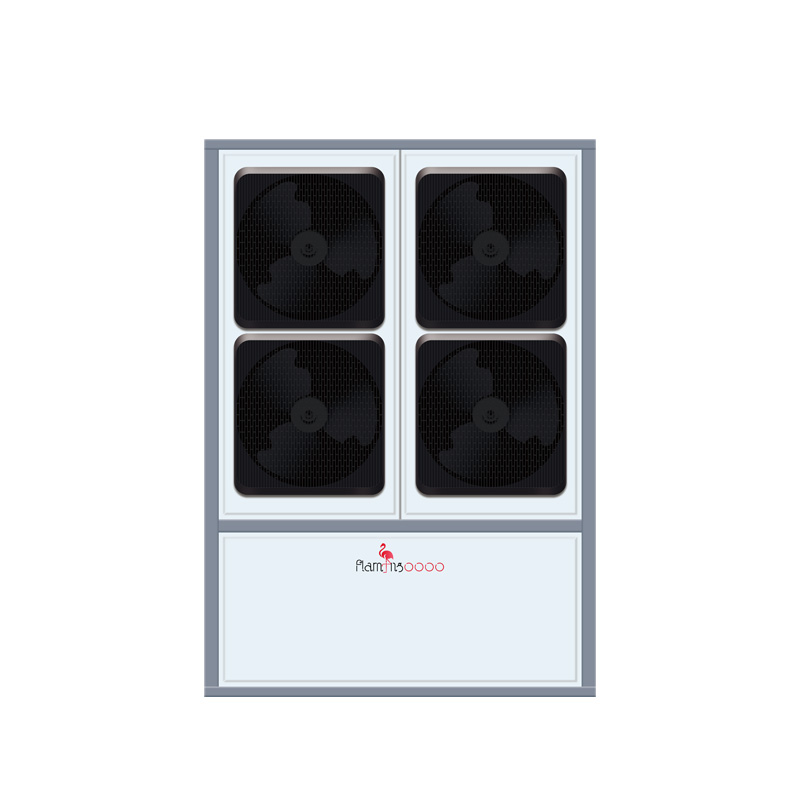
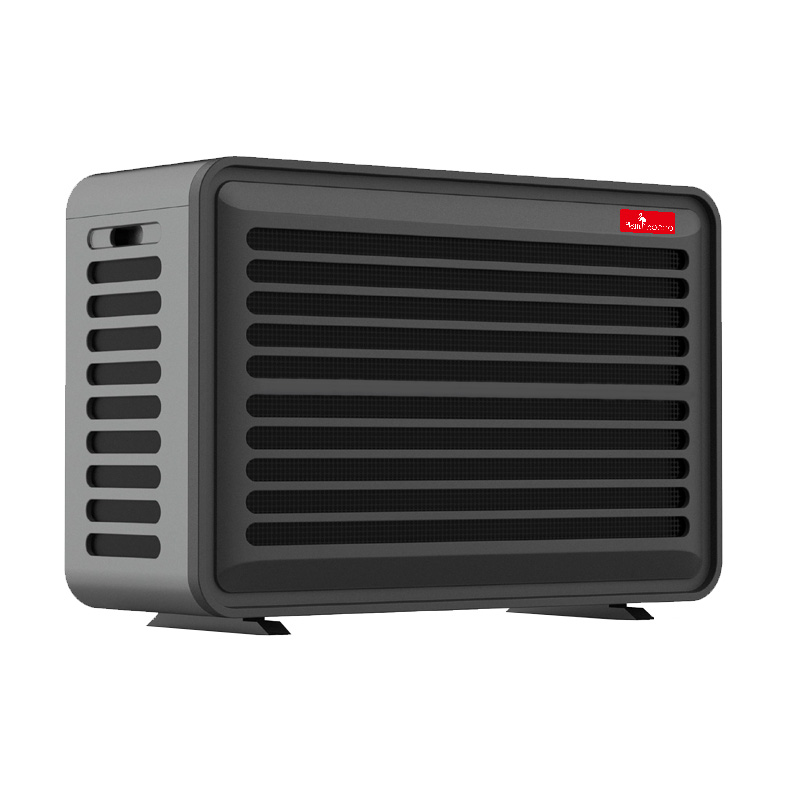
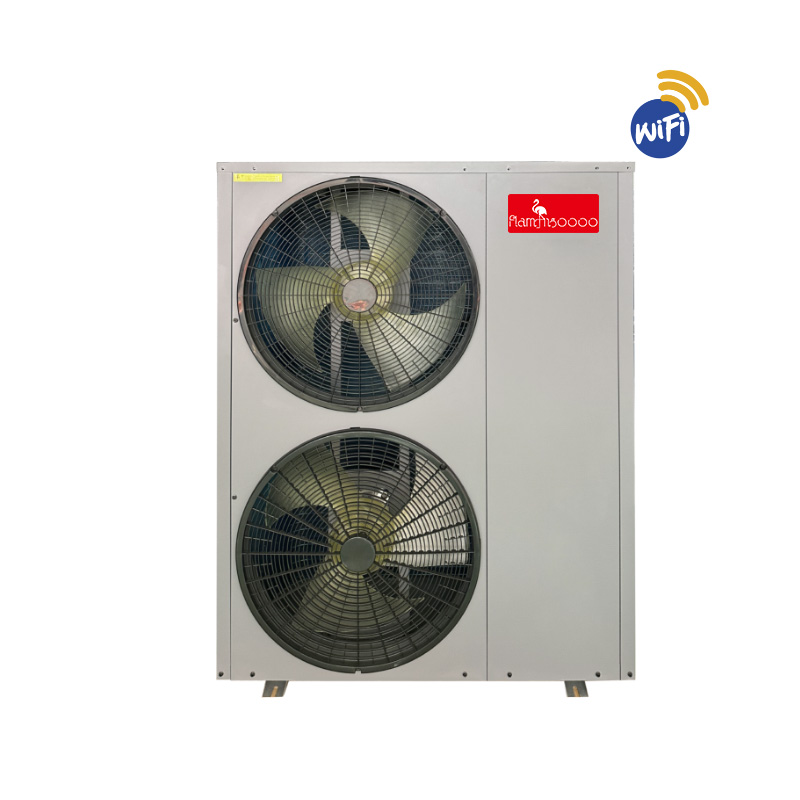
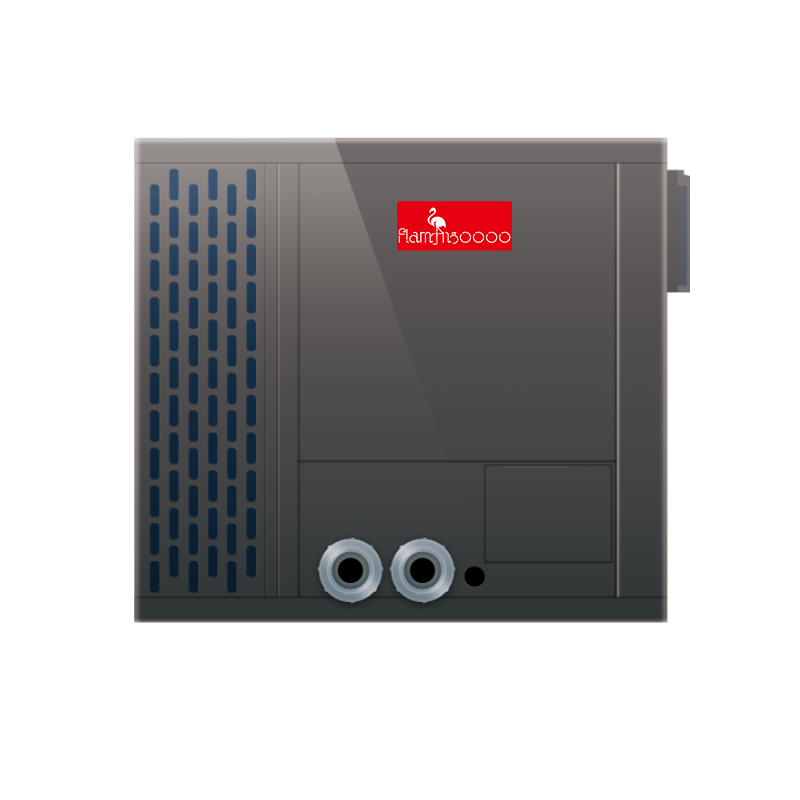
6P and 30P direct-PV air-source heat pumps – For residential and small commercial use; DC inverter technology, R32 refrigerant, AI smart regulation, multiple proprietary patents.
Direct-PV CO₂ heat pumps – A globally leading fluorine-free product using natural CO₂ refrigerant, capable of -40°C heating and 100°C hot water output. Fully compliant with strict European F-gas regulations, with multiple proprietary patents.
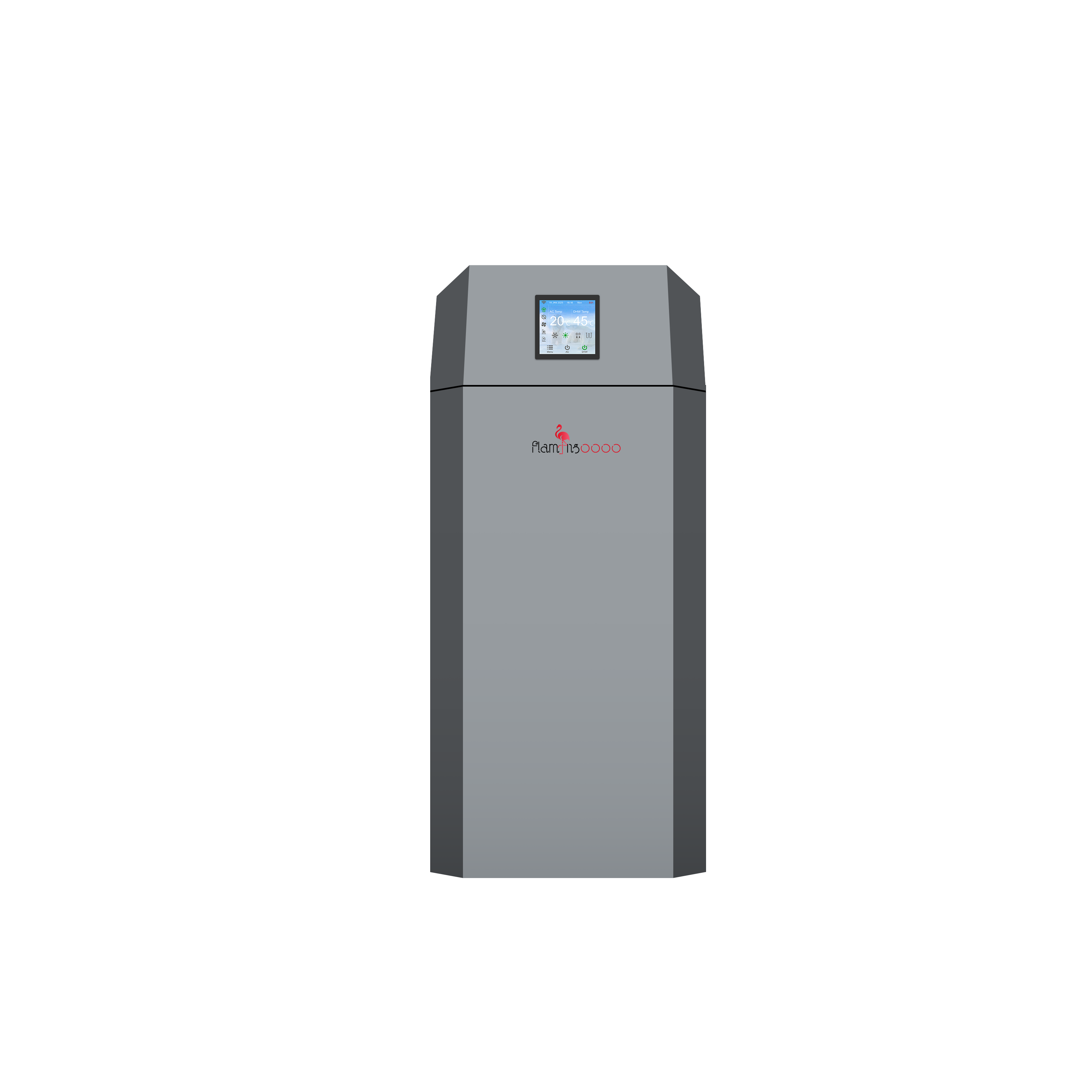
Direct-PV water/ground source heat pumps – Dual-system design with liquid cooling technology; over 30% more efficient than conventional air-source units, and over 60% overall energy saving when combined with PV direct drive; AI smart regulation.
Magnetic bearing heat pumps – For commercial and industrial high-efficiency applications; quiet, energy-saving, reduced maintenance.
Energy storage liquid cooling systems – Integrated solutions for data center thermal management and building heating/cooling.
This full-scenario portfolio gives Flamingo significant flexibility to address different European market segments – from residential heating retrofits in France, to commercial hot water systems in Polish industrial parks, to “solar + storage + heat pump” integrated solutions for German homeowners.
Strategic expansion in Europe
Flamingo has been active and pragmatic in its overseas expansion. Its products are now sold in Europe, North America, the Middle East, Australia, and other developed regions.
In November 2025, Flamingo made a strong impression at the Madrid International Heat Pump Expo. Over three days, the Flamingo booth attracted a large number of professional visitors from Europe, North America, and the Middle East. The team established substantial partnerships with key distributors and system integrators from Italy, France, Poland, and other countries, signing several strategic cooperation agreements on site. A Spanish energy solutions provider commented: “Flamingo’s high-efficiency product standards and adaptability are impressive – we look forward to bringing these green energy solutions to local customers.”
In April 2026, Flamingo again showcased its strengths at the ISH China & CIHE 2026 exhibition in Beijing, unveiling four “hard-core” heat pump products. A German HVAC engineer who visited the booth remarked: “Direct-PV solutions have huge potential in Europe – Flamingo’s technical maturity and product details are truly impressive.”
Flamingo’s founder, Zou Zhizhong, has stated: “We look forward to using global stages like ISH to work with industry peers to drive the green energy revolution and let Chinese ‘smart manufacturing’ benefit the world’s carbon neutrality process.” By the end of 2025, Flamingo was operating in more than 20 countries, serving diverse climate conditions from Nordic cold to southern European warmth.
4. Industry Outlook: The Next Phase of Inverter Competition
Inverter heat pump penetration exceeding 70% is a milestone for Europe’s heat pump industry. At the same time, it means the “inverterization” process is not yet complete, and the remaining market share will be harder won.
First, price remains the biggest barrier to inverter technology adoption in price-sensitive segments. Fixed-speed models still have a short remaining lifecycle in parts of Southern and Eastern Europe where subsidies are limited. However, as EU efficiency regulations tighten, consumer awareness grows, and “solar+storage+heat pump” integrated solutions mature, inverter technology will close the cost gap through total system savings.
Second, inverter technology itself is rapidly evolving – from simple stepless speed control to intelligent AI-based load forecasting, and from stand-alone operation to deep integration with PV, storage, and energy management systems. “Full inverter” is no longer the end point; intelligent inverter is the new frontier. Flamingo’s integration of AI smart control in its latest products is a step in this direction – using real-time sensing of environmental conditions and user behavior to optimize operation parameters autonomously.
Finally, Chinese heat pump companies are facing a historic window of opportunity. The REPowerEU plan and the Net-Zero Industry Act require that 60% of local demand be met by domestic production, creating a short-term supply gap in Europe. At the same time, as trade protectionism rises and local production requirements intensify, the way forward for Chinese companies lies in continuous technology investment and brand building – moving from product exports to technology exports and even standard-setting.
As EHPA’s Paul Kenny warned: “European countries must act quickly to make heat pumps and electricity the most competitive choice by lowering taxes, and to consolidate this through stable policy. Otherwise, Europe will remain dependent on fossil fuel imports from unreliable partners.”
Under the twin pressures of energy security and climate goals, inverter heat pumps are unequivocally the best path to decarbonizing Europe’s heating sector. The retreat of fixed-speed models is not merely the end of a technology era, but the beginning of a new one – efficient, intelligent, and green.
