
Does Water Quality Matter for Heat Pump Water Heaters?
Heat pump water heaters extract low‑grade heat from the ambient environment to heat domestic water, and their core heat‑exchange components are highly sensitive to water quality. Water quality directly affects equipment reliability, operational efficiency, and service life.
Flamingo explicitly states in its official technical guidelines that water‑source heat pump systems have stringent water quality requirements. The main issues caused by poor water quality include:
Scaling risk. When calcium and magnesium ions dissolved in water encounter high temperatures and alkaline conditions, they readily form hard scale such as calcium carbonate. Flamingo notes that hard water can lead to scale accumulation in pipes, thereby reducing system efficiency. Scale blocks the micro‑channels of heat exchangers, severely impairing heat transfer. Research data show that when inlet water hardness exceeds 150 mg/L (as CaCO₃), scaling rates increase by an average of about 2.3 times for every 10°C rise in water temperature.
Corrosion hazards. Under high‑chloride water conditions, chloride ions can corrode stainless steel components, leading to equipment failure. Flamingo emphasizes that pH level is equally crucial; ideally, water should remain neutral, typically between 7.5 and 8.5, to prevent corrosion of pipes and other parts. Industry standards indicate that when chloride content exceeds 250 mg/L, some manufacturers’ warranties may no longer cover stainless steel heat exchangers.
Contaminant impact. Water containing dirt, debris, and chemical residues can clog the system and reduce efficiency. Impurities, sludge, air, and other contaminants increase system resistance, lower heat‑exchanger performance, disrupt flow stability, and ultimately lead to higher power consumption and reduced output.
2. Flamingo Product Portfolio: Solutions for Every Scenario
Flamingo has built a comprehensive heat pump product matrix, covering both domestic and commercial applications.
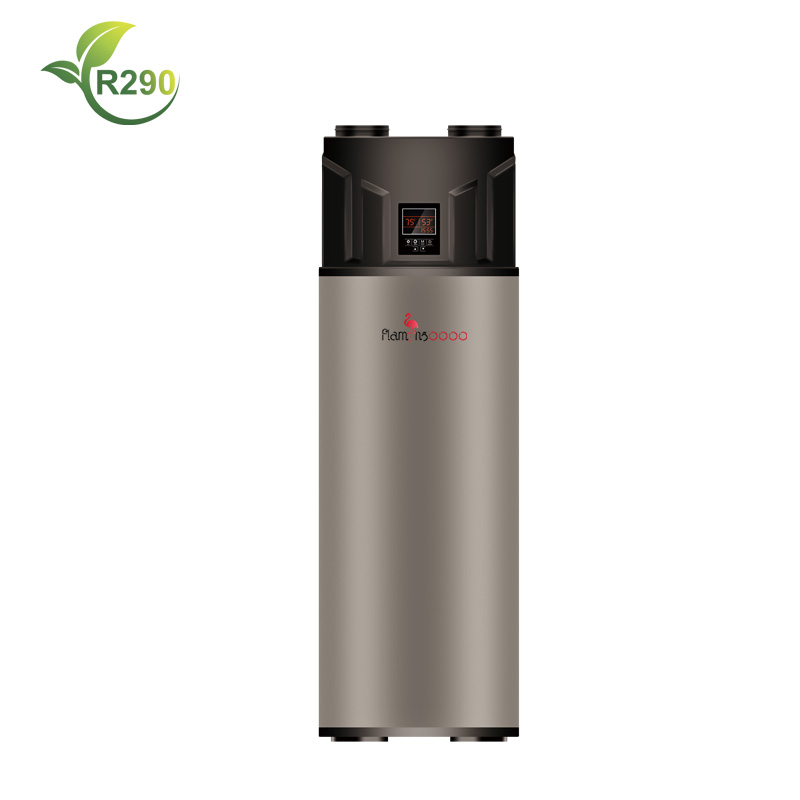
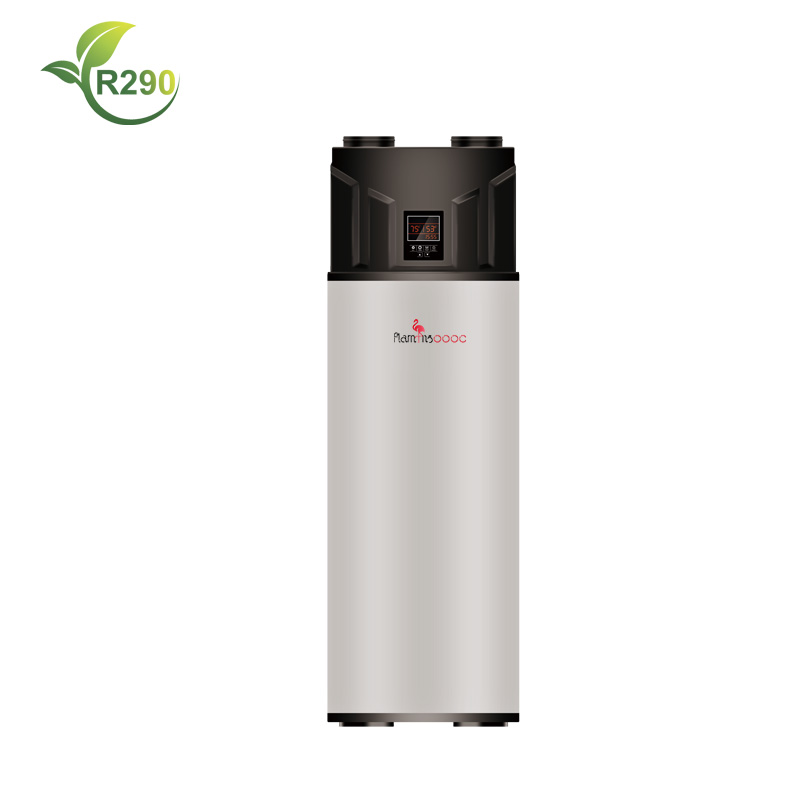
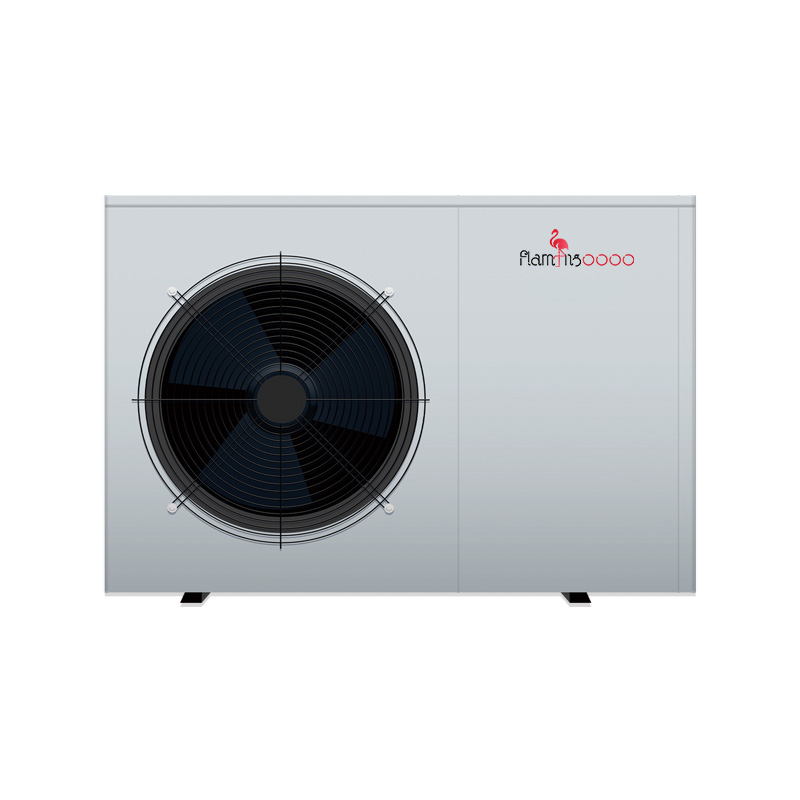
In the domestic sector, Flamingo offers two series of all‑in‑one domestic hot‑water heat pumps: the R290 and R134a series. The R290 series uses the globally most energy‑efficient R290 refrigerant and a high‑efficiency compressor, equipped with a 200‑L stainless steel water tank, reaching a maximum outlet temperature of 75°C, with a heating capacity of 1.8 kW and a rated input power of only 470 W. The R134a series features a 300‑L large‑capacity SUS304 stainless steel tank, also reaching 75°C, making it ideal for large families or high‑consumption households. All domestic models come standard with a built‑in Wi‑Fi smart module, allowing users to monitor tank temperature and view historical energy consumption via a mobile app.
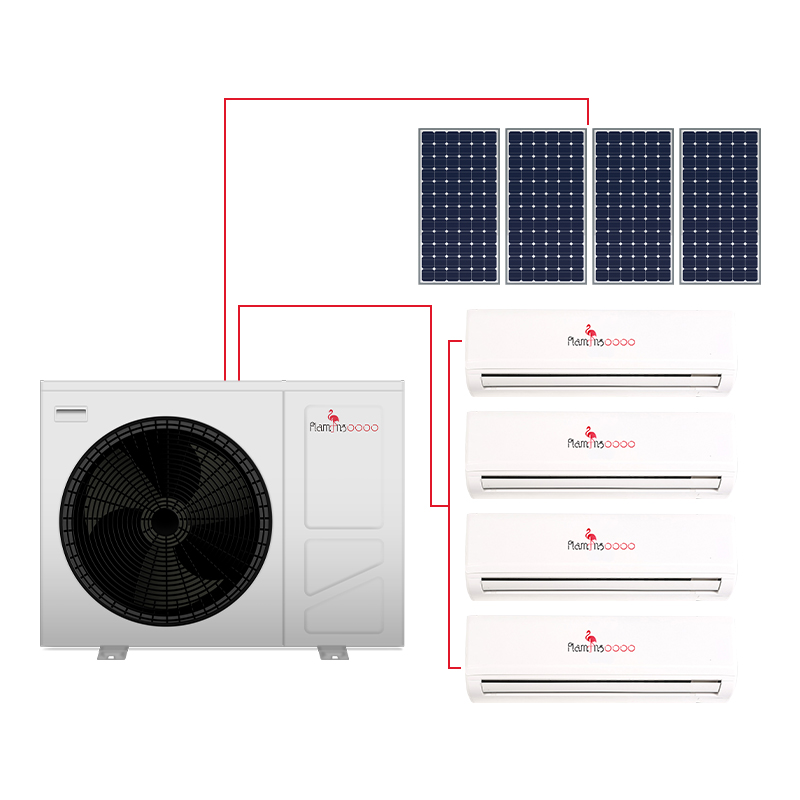
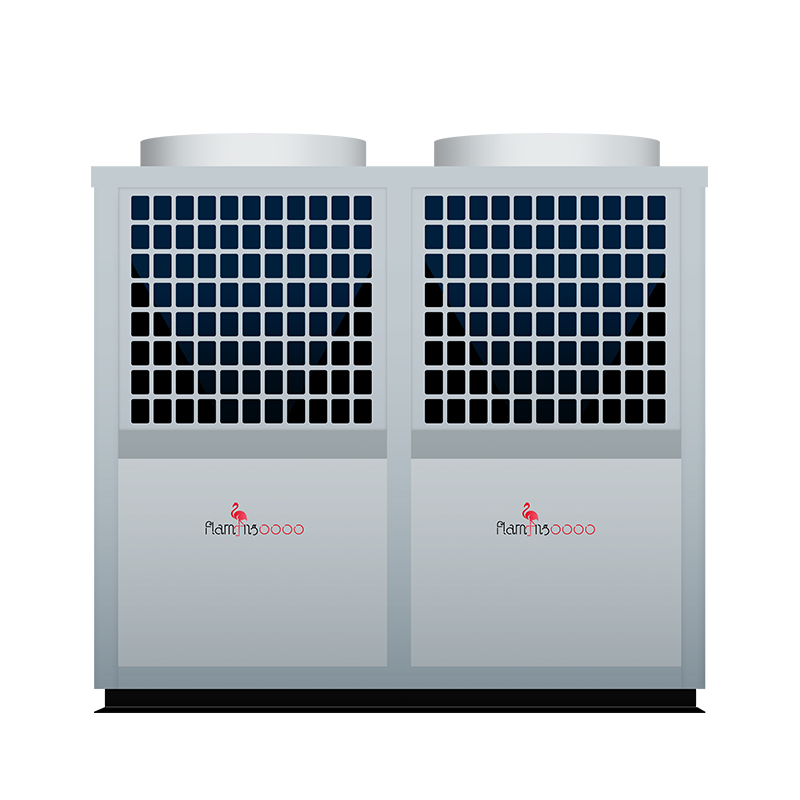
In the commercial sector, Flamingo supplies central hot‑water heat pumps ranging from 11 kW to 230 kW, capable of stable operation in ambient temperatures from ‑10°C to 43°C, with a maximum outlet temperature of 60°C. Its R410A commercial hybrid hot‑water heat pumps use well‑known brand compressors and feature advanced remote monitoring systems for distributed integrated control. Additionally, Flamingo has launched photovoltaic (PV) direct‑drive heat pumps. At the 2025 China Heating Exhibition, the company showcased four innovative products, among which the 30HP PV direct‑drive water‑source heat pump achieves over 30% energy savings compared to air‑source heat pumps, and when combined with direct‑drive PV functionality, the energy‑saving effect can increase by at least 60%.
3. Tank Liner Technology: The First Line of Defense for Water Quality Management
The water tank liner is the core component of a heat pump water heater and the first barrier against water quality degradation. Flamingo employs a multi‑layered protection strategy for its tank liners.
Stainless steel liner system. Flamingo’s domestic water heaters are all equipped with stainless steel tanks as standard. The R290 series uses a 200‑L stainless steel tank, while the R134a series features a SUS304 stainless steel tank. Stainless steel offers excellent corrosion resistance and durability, ensuring long‑term stable operation in various environments and keeping water clean and pure. Some high‑end models are further upgraded to 316L stainless steel, which provides even superior resistance to corrosion.
Enamel (glass‑lined) tank technology. In addition to stainless steel, certain Flamingo models adopt high‑strength enamel‑lined tanks. The enamel layer has a glass‑like dense structure that effectively isolates water and scale from the metal substrate, resisting corrosion from chlorides and impurities. This completely prevents the tank from rusting or leaking, extending the service life of the water heater by 3 to 5 times compared to ordinary metal liners.
Double‑layer insulated tank design. Flamingo’s double‑layer stainless steel insulated tanks feature a unique dual‑layer construction that not only enhances structural strength but also creates an air insulation layer between the two layers, effectively reducing heat transfer and maintaining stable water temperature for extended periods. The tanks are insulated with 50‑mm thick polyurethane foam, and various stainless steel materials (304, 316, 2205, etc.) are available, with capacities customizable from 60 L to 2,000 L.
Passivation anti‑corrosion treatment. After welding, the inner surface of the stainless steel tank undergoes a special passivation process to form a dense protective film. Tests show that SUS304 stainless steel that has been passivated shows virtually no rust after two months of immersion in 5% saltwater, whereas untreated samples exhibit severe rusting even in clean water. This process significantly enhances the tank’s corrosion resistance.
Anti‑corrosion design details. In addition to the standard inlet and outlet ports, the bottom of Flamingo tanks is equipped with a P/T pressure‑relief valve, auxiliary electric heating, temperature sensors, and a corrosion‑resistant magnesium anode rod. The magnesium rod acts as a sacrificial anode, corroding preferentially to protect the tank liner, further extending the equipment’s service life. For special applications such as swimming pool heat pumps, Flamingo also employs anti‑corrosion designs to ensure reliable operation in hotels, hospitals, schools, and other demanding environments.
4. Water Quality Management: From “Reactive Response” to “Proactive Protection”
Flamingo advocates a systematic approach to water quality management in the face of water‑quality challenges.
Clear water quality standards. Flamingo’s technical guidelines for water‑source heat pumps stipulate that the system water must be pure and free of impurities, with a neutral pH (between 7.5 and 8.5) and free from dirt, debris, and chemical residues.
Water treatment solutions. If the available water source does not meet the requirements, Flamingo recommends installing water treatment systems, including filtration systems to remove impurities, water softeners to address hardness issues, and pH regulation systems to ensure the water remains within the ideal range.
Regular maintenance. Flamingo emphasizes that routine maintenance is essential for maintaining water quality. This includes periodic cleaning of the system to remove accumulated impurities and regular water quality testing. Users should follow the manufacturer’s maintenance guidelines and address any issues promptly.
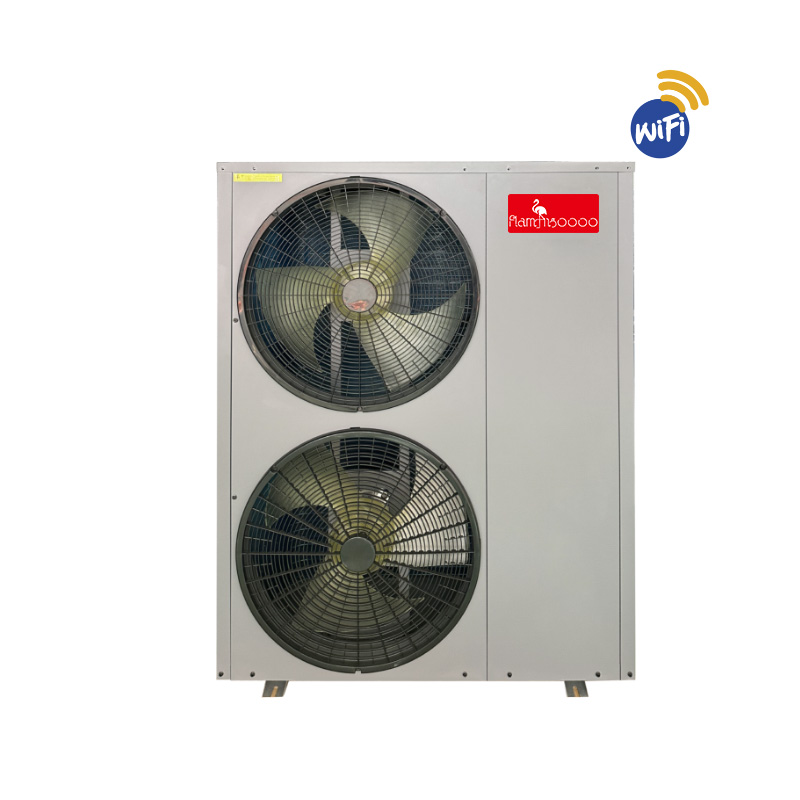
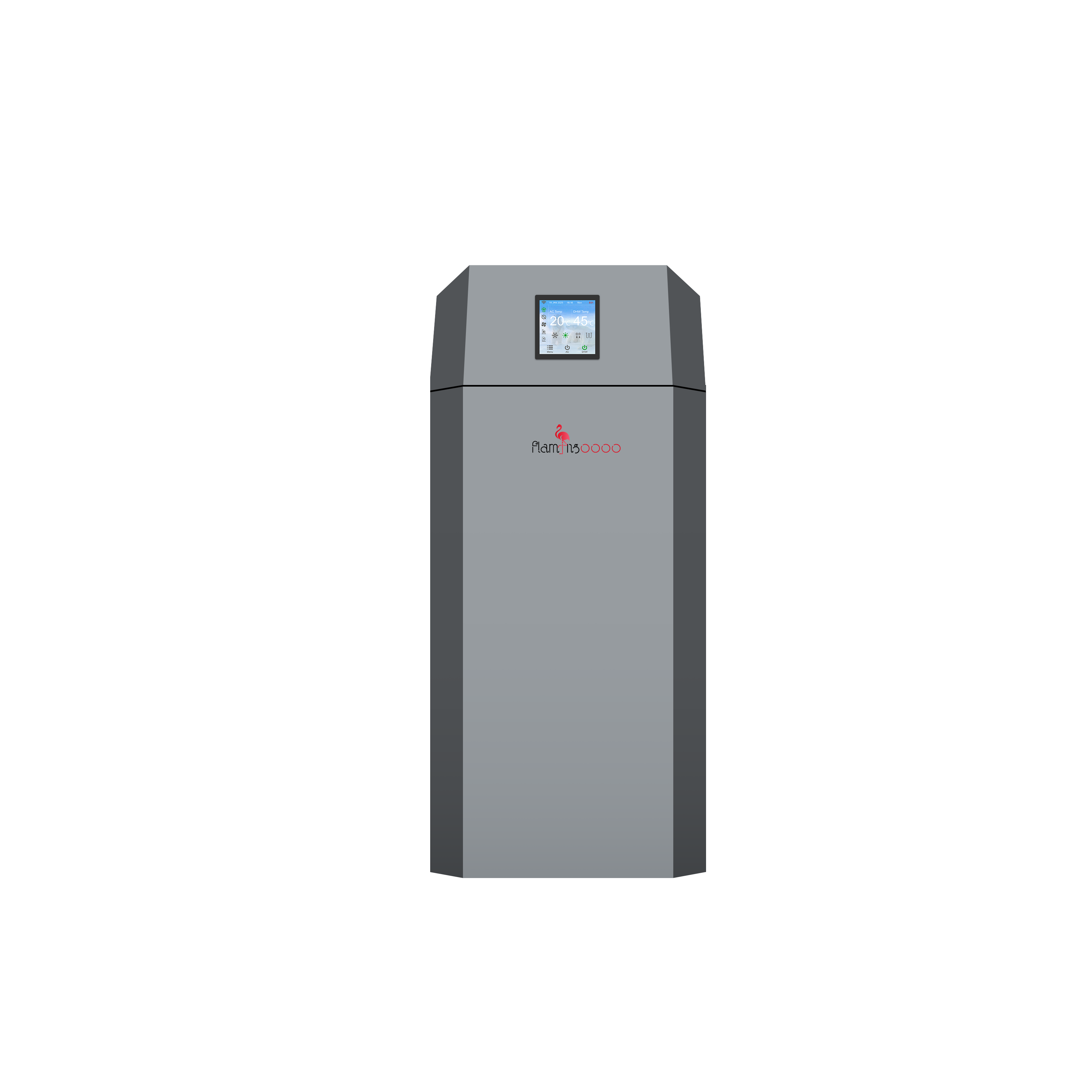
Smart monitoring. All Flamingo products come standard with Wi‑Fi smart modules, enabling users to monitor tank temperature and view historical energy consumption in real time via a mobile app. This functionality not only enhances user convenience but also provides valuable data support for water quality management and equipment maintenance.
5. Industry Outlook: Water Quality Management Becomes a New Competitive Arena
As consumers increasingly prioritize healthy water usage and product durability, water quality management is moving from the “backstage” to the forefront. In April 2025, China’s National Development and Reform Commission and five other government departments jointly issued the “Action Plan for Promoting High‑Quality Development of the Heat Pump Industry,” which explicitly encourages the installation of heat pump water heaters in residential buildings to replace gas and electric resistance heaters. Driven by both favorable policies and market demand, companies that can effectively solve the water‑quality challenge will gain a significant competitive advantage.
Mr. Zou Zhizhong, founder of Flamingo, commented: “Heat pump technology is evolving from a single device towards a systematic energy solution.” In this evolution, water quality management will undoubtedly become a core component of systematic solutions. From stainless steel liners to enamel‑lined tanks, from passivation treatment to intelligent monitoring, Flamingo is setting a benchmark for water quality management in the heat pump water heater industry through its full‑industry‑chain technology layout.
