


Can Heat Pumps Be Used with Solar Systems?
Against the dual pressures of volatile global fossil fuel prices and the urgent drive toward "carbon neutrality" goals, building heating and industrial energy consumption are undergoing a profound green transformation. As two core technologies in the clean energy sector, heat pumps and solar energy systems are often regarded as a "golden pairing." However, a persistent question has long troubled the industry: How exactly can heat pumps be integrated efficiently and stably with solar systems?
Addressing this core industry pain point, Flamingo (Guangdong Flamingo New Energy Technology Co., Ltd.) , a pioneer in heat pump manufacturing, is providing its definitive answers through a series of innovative products. From CO₂ air-source heat pumps to photovoltaic direct-drive technology and cutting-edge PVT (Photovoltaic-Thermal) coupling solutions, Flamingo is committed to building a multi-energy complementary, synergistically optimized zero-carbon energy system.
I. Why "Coupling"? Solving the Intermittency Challenge of Renewable Energy
Solar energy is clean and inexhaustible, but its inherent intermittency and instability make it difficult to rely on solely for continuous heating demands. Energy is abundant during sunny daylight hours but drops sharply at night or on cloudy/rainy days. Traditional solutions often rely on large-scale energy storage or grid power backup, which can compromise economic efficiency and overall energy savings.
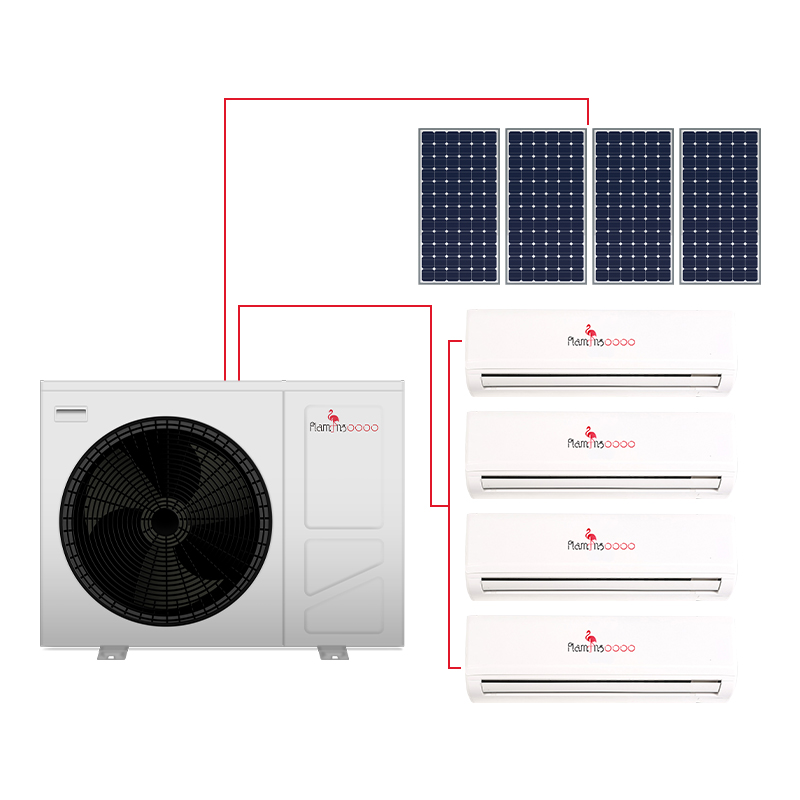
As a highly efficient "energy搬运工" (mover), a heat pump can use 1 part of electricity to drive 3-4 parts (or more) of thermal energy. When heat pumps meet solar energy, a remarkable synergy occurs: Solar PV systems provide clean electricity for the heat pump, effectively "using sunlight to create heat"; solar thermal systems provide a low-temperature heat source for the heat pump, raising the temperature on the evaporation side and thereby significantly improving the Coefficient of Performance (COP).
"This is not merely simple addition, but a deep technological integration." Flamingo's Chief Technology Officer stated at a recent technical seminar. "Our goal is to use intelligent control and innovative design to make solar systems the 'power station' and 'efficiency booster' for heat pumps, ultimately achieving an energy-saving effect where 1+1 > 2."
II. Flamingo's "Photoelectric Synergy" Solution: PV Direct-Drive Heat Pump Technology
Among the various coupling pathways, the combination of photovoltaics and air-source heat pumps is currently one of the most widely adopted and technologically mature routes. Flamingo has achieved remarkable technological breakthroughs in this field.
1. Disruptive Product: CO₂ Full DC Inverter PV Direct-Drive Heat Pump
Since 2025, Flamingo has successively launched several industry-influencing PV direct-drive heat pump products, particularly its application in CO₂ refrigerant technology, setting a new benchmark for the industry.
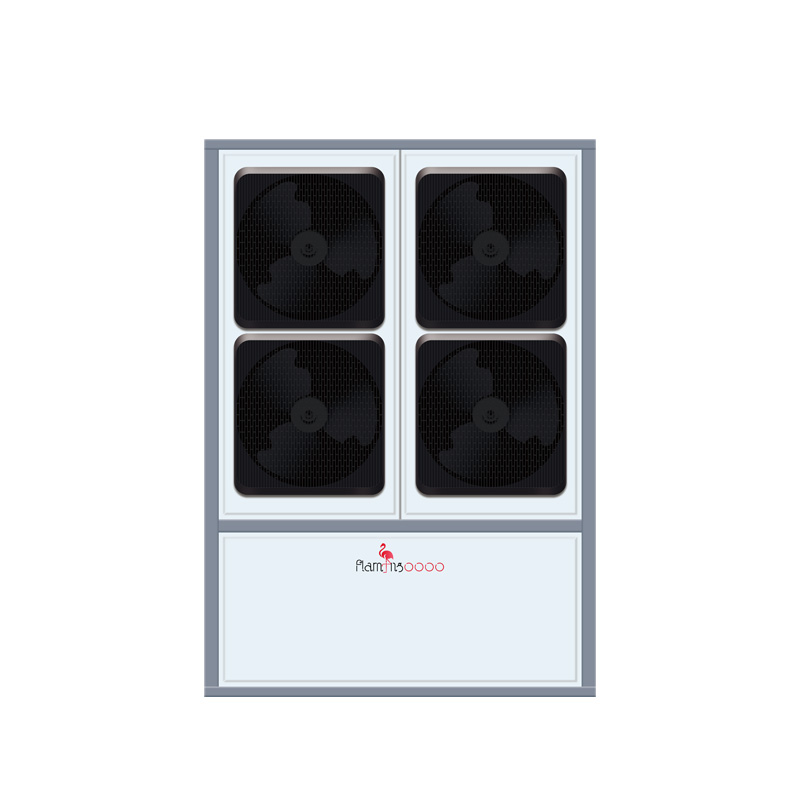
Flamingo's developed CO₂ Full DC Inverter PV Direct-Drive Heat Pump utilizes the natural refrigerant CO₂ (R744). It boasts a Global Warming Potential (GWP) of 1 and an Ozone Depletion Potential (ODP) of 0, fully complying with the Kigali Amendment and future global refrigerant environmental requirements. The most significant technological highlight of this product lies in its PV direct-drive technology.
In traditional "PV + Heat Pump" models, the direct current (DC) generated by PV panels must be converted to alternating current (AC) via an inverter before being supplied to the heat pump. This process incurs a conversion loss of approximately 5-10%. Flamingo's PV direct-drive technology, however, uses a smart inverter and control algorithms to achieve direct matching between the PV DC power and the heat pump's DC compressor, eliminating the AC/DC conversion stage and enhancing overall system efficiency.
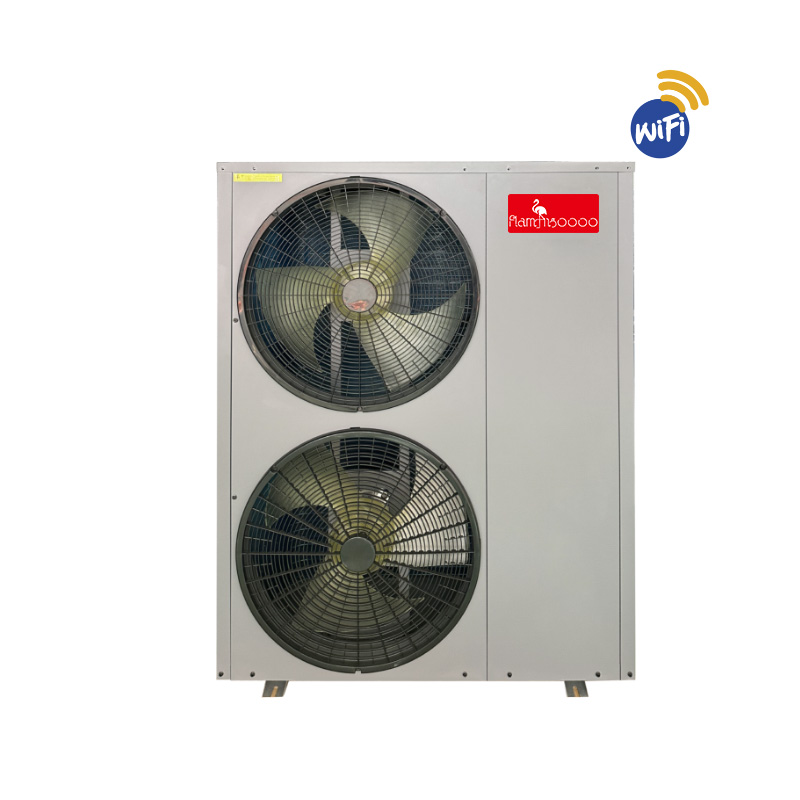
According to tests, Flamingo's PV direct-drive heat pump, equipped with AI optimization algorithms, achieves an overall efficiency increase of over 30% compared to traditional AC-coupled systems. During periods of ample sunlight, the system can even operate completely independently of the grid, achieving "zero-carbon operation." For systems equipped with battery storage, surplus PV power can be stored for use at night or on cloudy/rainy days, further reducing reliance on the grid.
2. Breakthrough in Extreme Cold Environments
For the combination of solar energy and heat pumps, high latitudes and extreme cold regions have long been considered technical "forbidden zones." Low temperatures reduce heat pump heating capacity, while winter solar irradiance is also low. Flamingo's CO₂ heat pump offers a dual solution: On one hand, it employs DC inverter technology and high-power Panasonic compressors, enabling stable operation within an extreme wide temperature range from -35°C to 70°C, providing ample heating hot water even in severe cold environments. On the other hand, the system's intelligent control logic prioritizes utilizing limited solar irradiance for supplementary light or preheating, ensuring maximum energy utilization under extreme weather conditions.
In March 2025, at the HPE China Heat Pump Expo held in Shijiazhuang, Flamingo's exhibited PV direct-drive CO₂ heat pump became a centerpiece attraction. The product not only delivers powerful heating in -35°C environments but can also produce high-temperature hot water or steam up to 90°C or even 100°C, meeting diverse needs ranging from centralized heating to industrial high-temperature thermal applications. This characteristic positions it for broad application prospects in industrial decarbonization sectors such as food processing and textile dyeing.
III. Advanced "Solar-Thermal Synergy": Deep Integration of PVT + Dual-Source Heat Pumps
If PV direct drive solves the "electricity supply" problem for heat pumps, PVT (Photovoltaic-Thermal) technology goes a step further by simultaneously addressing the "heat supply" problem. This is widely regarded as one of the next-generation high-efficiency energy utilization technologies in the global HVAC industry.
1. Technical Principles and Advantages of PVT
PVT modules integrate heat exchange channels on the backside of traditional PV panels, using a cooling medium (such as water or antifreeze) to带走 (carry away) the waste heat generated during photovoltaic cell electricity production. This achieves two goals in one:
For Photovoltaics: It lowers the operating temperature of the cells (crystalline silicon cell efficiency drops by about 0.4%-0.5% for every 1°C temperature increase), potentially boosting PV power generation efficiency by approximately 8%-15%;
For Heat Pumps: The collected heat can serve as a low-temperature heat source for the heat pump (e.g., for recharging boreholes in ground-source heat pump systems, or as preheated air for air-source heat pumps), significantly raising the temperature at the heat pump evaporator inlet.
This "combined heat and power" model substantially increases the comprehensive utilization rate of solar energy. Relevant data indicates that the combined solar-thermal efficiency of PVT systems can exceed 76.7%, with total energy output far surpassing that of standalone PV or solar thermal systems.
2. Flamingo's PVT Technology Reserve and Industry Vision
Although PVT technology is currently on the cusp of a breakthrough in China, leading companies have already begun active布局 (strategic positioning). As an ISO-certified enterprise holding 12 patents in renewable energy heating, Flamingo has keenly identified this trend and incorporated PVT compatibility into its technology roadmap.
For example, Flamingo's ground-source heat pump series achieve an impressive annual Coefficient of Performance (COP) exceeding 5.2, making them ideal partners for integration with PVT systems. By injecting heat generated by PVT back into the ground, the long-standing issue of soil temperature imbalance caused by prolonged ground-source heat pump operation can be effectively addressed. Surplus heat from PVT during summer can be used to recharge the ground, which is then extracted for heating in winter, achieving soil thermal balance and ensuring system efficiency for decades.
3. Dual-Source Synergy: Intelligent Switching Between Air Source and PVT
Industry innovation extends even further. Addressing the痛点 (pain point) of "PVT + Heat Pump" systems—namely, how to provide backup when PVT cannot generate heat at night or during extended cloudy/rainy periods—Flamingo is also关注 (paying close attention to) and participating in the technological evolution towards "dual-source heat pumps."
Drawing on the latest industry trends, dual-source heat pump systems that integrate air source and PVT thermal sources are emerging. These systems incorporate intelligent algorithms that analyze the efficiency of both heat sources in real-time and automatically switch operating modes: Prioritize the efficient PVT heat source during the day, utilizing solar direct heating and PV power; automatically switch to air-source mode at night or during cloudy/rainy weather, ensuring stable heating supply using ambient thermal energy.
A relevant R&D leader at Flamingo revealed that the company is developing, based on its existing PV direct-drive platform, an intelligent control system compatible with both air source and future PVT inputs, aiming to provide users with an uninterrupted, high-efficiency, round-the-clock clean heating solution.
IV. Real-World Decarbonization Data: From Pilot Projects to Global Applications
Theoretical advantages ultimately need validation from real-world data. Globally, integrated "Heat Pump + Solar" energy solutions are delivering impressive results.
Industrial Application Scenario: At a printing and dyeing plant in Jiaxing, Zhejiang Province, following a technological retrofit similar to PVT+Heat Pump, the Phase I project installed 280 modules, generating approximately 700 kWh of electricity and producing about 40 tons of thermal energy daily, reducing annual energy consumption by about 30%. The plant owner plans to proceed with Phase II, aiming to boost overall energy savings to around 70%.
Commercial/Residential Scenario: In a community in Sweden, 94 PVT panels coupled with four 40kW heat pumps resulted in an average increase of 2.8°C in the brine temperature on the ground source side, significantly improving heat pump efficiency. The community's CO₂ emissions plummeted from 490 tons per year to just 8.8 tons, achieving a remarkable 98% reduction, and its energy label jumped from Class G to Class C.
Public Building Scenario: A pilot "Solar + Air-Source Heat Pump" system at a village committee office in Huzhu County, Qinghai Province, China, utilized heat pipe collectors coupled with thermal storage. Data shows the project saves 32,497 kWh of electricity annually and reduces CO₂ emissions by 32,399 kg, demonstrating the feasibility of this technology in severe cold plateau regions.
These cases repeatedly validate a fact: Through scientific design and intelligent control, the combination of heat pumps and solar energy is not only technically feasible but also offers significant economic and environmental advantages.
V. Future Outlook: Moving Towards a "Carbon-Negative" Energy System
As global consensus on "dual carbon" goals strengthens, the coupling of heat pumps and solar energy is transitioning from "optional" to "essential." The International Energy Agency indicates that global heat pump installations will continue to surge in the coming decade, and the proportion of renewable electricity supporting them will increase correspondingly.
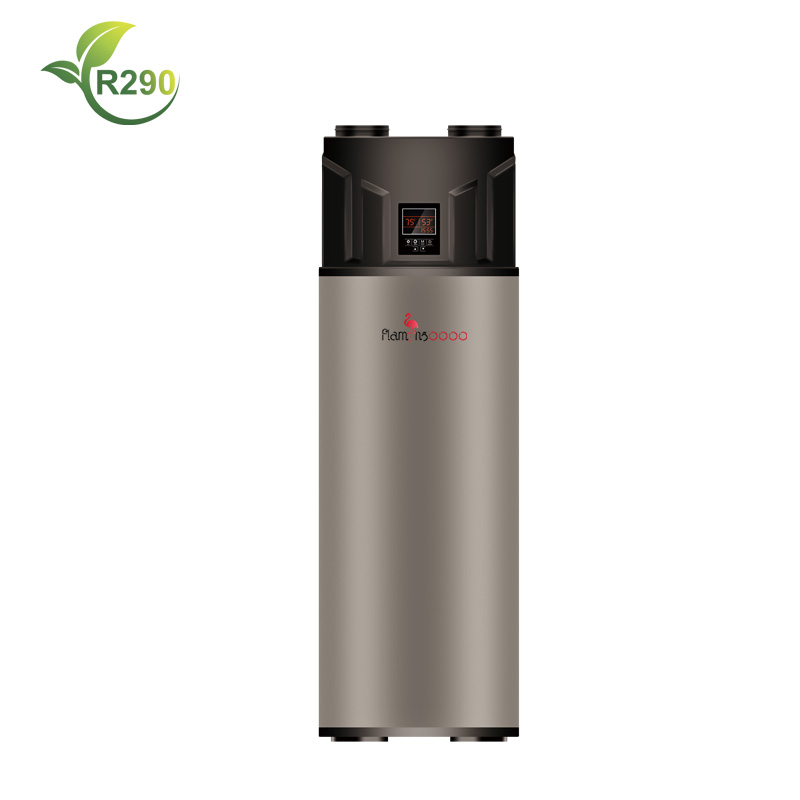
Facing this historic opportunity, Flamingo is actively布局 (positioning itself) for the next generation of technology. The company's 50,000-square-meter modern factory in Guangdong houses a -45°C ultra-low temperature laboratory and an R290 explosion-proof production line, ensuring continued leadership in natural refrigerants and ultra-low temperature technology. Simultaneously, Flamingo is exploring deeper coupling of wind power and energy storage systems with its existing heat pump solutions. Cutting-edge academic research suggests that AI algorithm-optimized "wind + solar + heat pump + storage" systems could reduce residential energy costs by over 54.7% and decrease grid dependence by 75% .
"Our vision is to achieve not just carbon neutrality by 2030, but to move towards 'carbon-negative technologies'," stated a Flamingo executive, reflecting on the company's exhibition achievements in 2025. In the future, Flamingo plans to further expand its product lines, enabling its heat pumps to be compatible with a wider variety of renewable energy inputs, providing a "plug-and-play" zero-carbon energy solution for every home and factory worldwide.
Conclusion
Can heat pumps be used with solar systems?
Flamingo's answer is: Not only can they, they absolutely must. From PV direct-drive CO₂ heat pumps to future-oriented PVT and dual-source synergy technologies, Flamingo is demonstrating through action that the combination of heat pumps and solar energy is a critical piece of the puzzle in building a new energy system. This not only solves the problem of solar intermittency but also maximizes the energy-saving potential of heat pumps.
Amidst the global wave of energy transition, Flamingo will continue to be driven by technological innovation, partnering with global collaborators to jointly usher in a clean, efficient, and intelligent zero-carbon future.
